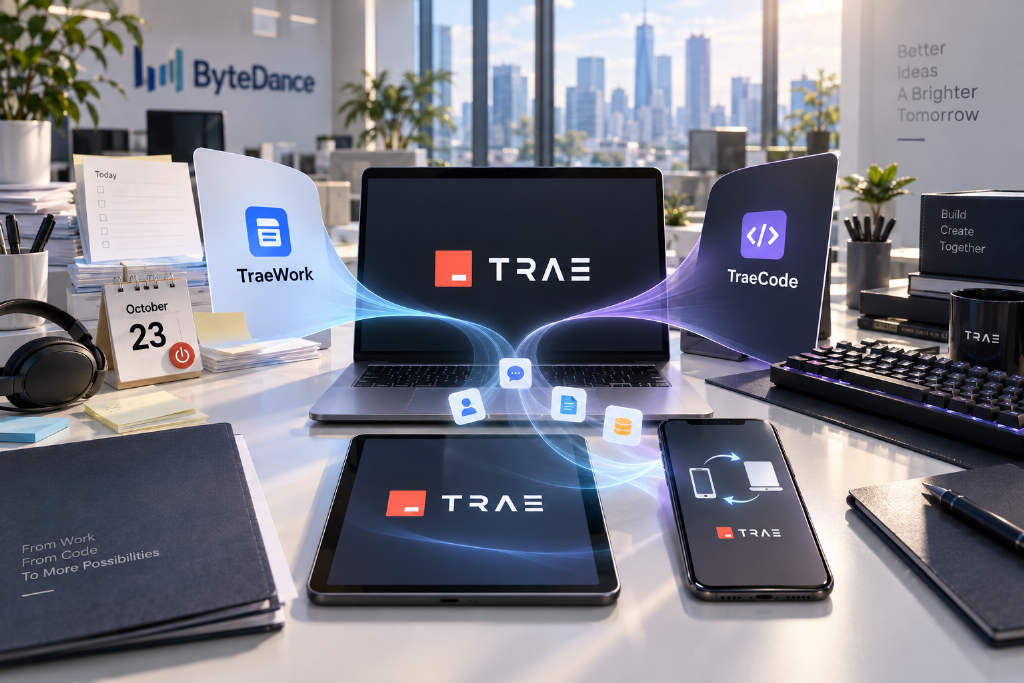
ByteDance said it is combining its AI office tool TraeWork and coding product TraeCode into a single upgraded platform called TRAE. The two standalone clients will be folded into one entry point, with the new product offering both an Agent mode and an IDE mode. Agent mode is designed to let AI move tasks forward automatically, while IDE mode keeps full code editing and debugging functions in place.
According to the company, the upgraded Agent mode can manage multiple projects at the same time, coordinate several AI agents working in parallel, and connect to SSH-based remote development environments. Users can ask the system to handle work starting from requirement analysis through page design, coding, testing, and delivery, then switch to IDE mode whenever manual code changes are needed.
ByteDance also said scheduled tasks, template libraries, and office functions from the older products will be integrated into TRAE, with support across desktop, web, and mobile. Official materials state that chat history, account information, local data, login status, and commercial credits will be migrated automatically. TraeWork users must start the upgrade manually in the client, while TraeCode users will receive an automatic update. The company’s documentation adds that TraeWork will stop service on Oct. 23, and users who do not upgrade by then will no longer be able to use it. Some developers have already complained in the official TRAE community that the new version opens in the Agent workspace by default and does not currently offer an option to change the default startup mode to IDE.
ByteDance said it will merge its AI office tool TraeWork and coding tool TraeCode into a newly upgraded product called TRAE. The two previously separate clients will be brought under one entry point, and the combined product will offer both Agent and IDE modes.
One entry point with Agent and IDE modes
According to the announcement, Agent mode is meant to let AI push tasks forward automatically, while IDE mode keeps full code editing and debugging capabilities. Users can switch to IDE mode at any time if they want to modify code themselves.
The new Agent mode supports managing multiple projects at once, coordinating several AI agents in parallel, and connecting to SSH remote development environments. ByteDance said users can have AI start from requirement analysis and carry work through page design, coding, testing, and delivery.
Existing functions will be folded into TRAE
Scheduled tasks, template libraries, and office functions from the original products will also be integrated into the new version. The company said the platform will support coordination across desktop, web, and mobile.
ByteDance said the upgrade will automatically migrate chat history, account information, local data, login status, and commercial credits. TraeWork users need to manually start the upgrade in the client, while TraeCode users will receive an automatic update.
TraeWork to end service on Oct. 23
Official documentation states that TraeWork will stop service on Oct. 23. Users who have not upgraded by that time will no longer be able to continue using it.
Some developers have already voiced dissatisfaction with the new version. In the official TRAE community, users said the software enters the Agent workspace by default after the upgrade, while the IDE mode they commonly used now requires a manual switch. They also said they could not currently find an option to change the default startup mode.
This article was originally published by Bit.Fan. For more cryptocurrency news and market insights, visit www.bit.fan. Disclaimer:
The market information, project data, and third-party content displayed on this platform are for industry information sharing only and do not constitute any form of investment advice or return commitment.
Cryptocurrency trading carries high risks. Users should fully assess their risk tolerance and make independent decisions. All profits, losses, and legal responsibilities are borne by the users themselves.