
The Untapped Potential of TCG Collectibles
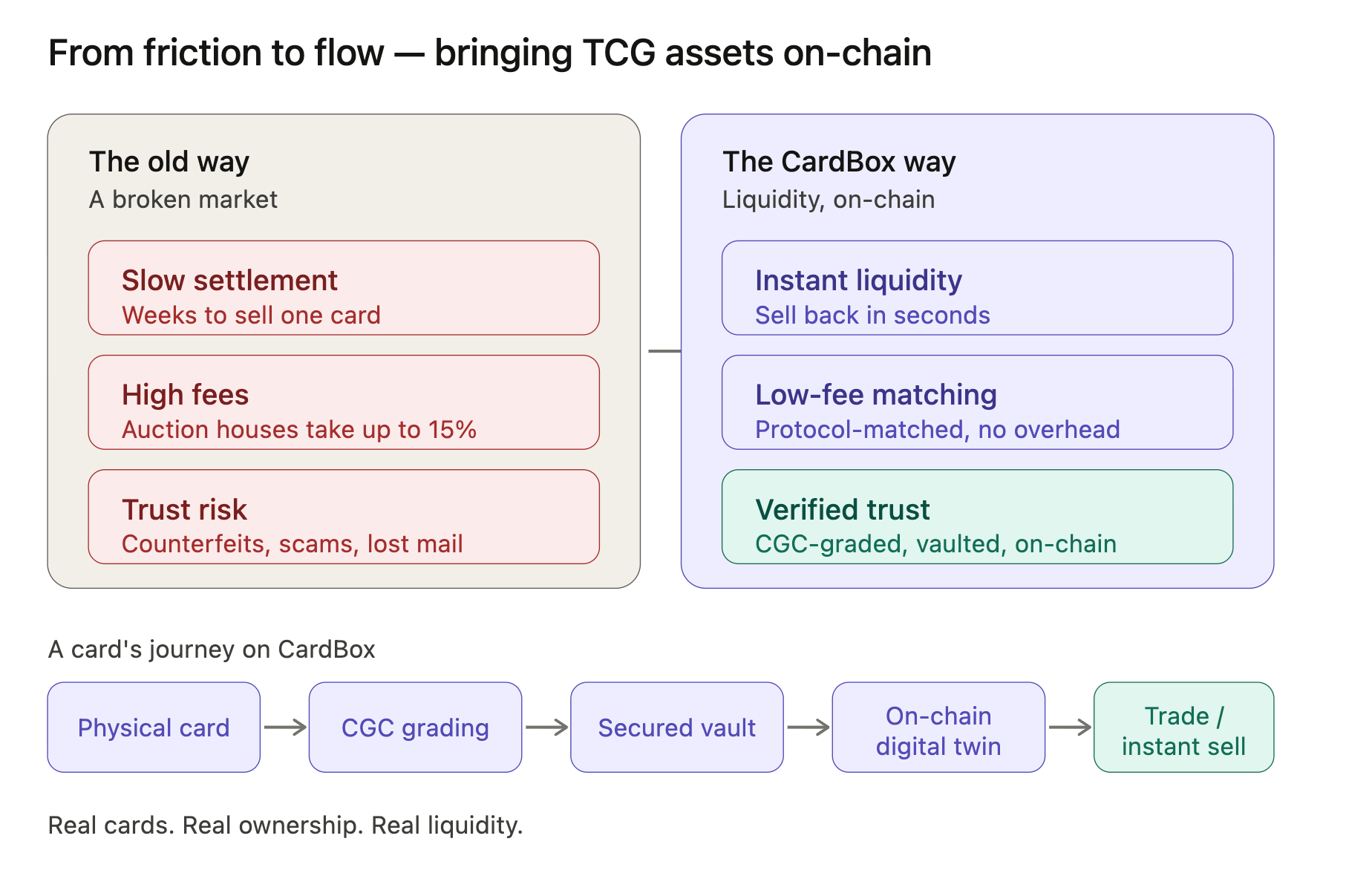
Since 2024, Real World Assets (RWA) have dominated Web3 narratives, but the focus has overwhelmingly been on traditional financial instruments like US Treasuries, real estate, and private credit. Yet a category of assets with strong consensus, high liquidity potential, and deep emotional value has remained stuck in inefficient offline markets: trading card games (TCG). The global TCG collectibles market, led by Pokémon cards, is estimated at approximately $13 billion, with projections to exceed $20 billion over the next decade. Blue-chip cards have delivered returns far exceeding mainstream financial assets over the past 20 years, but the market suffers from three persistent problems: low liquidity, high cross-border friction, and opaque transactions. A single card listing can take weeks to sell; auction houses charge up to 15% fees; peer-to-peer trades are rife with counterfeits and scams. This multi-billion-dollar cultural asset market has never been fully integrated into digital finance.
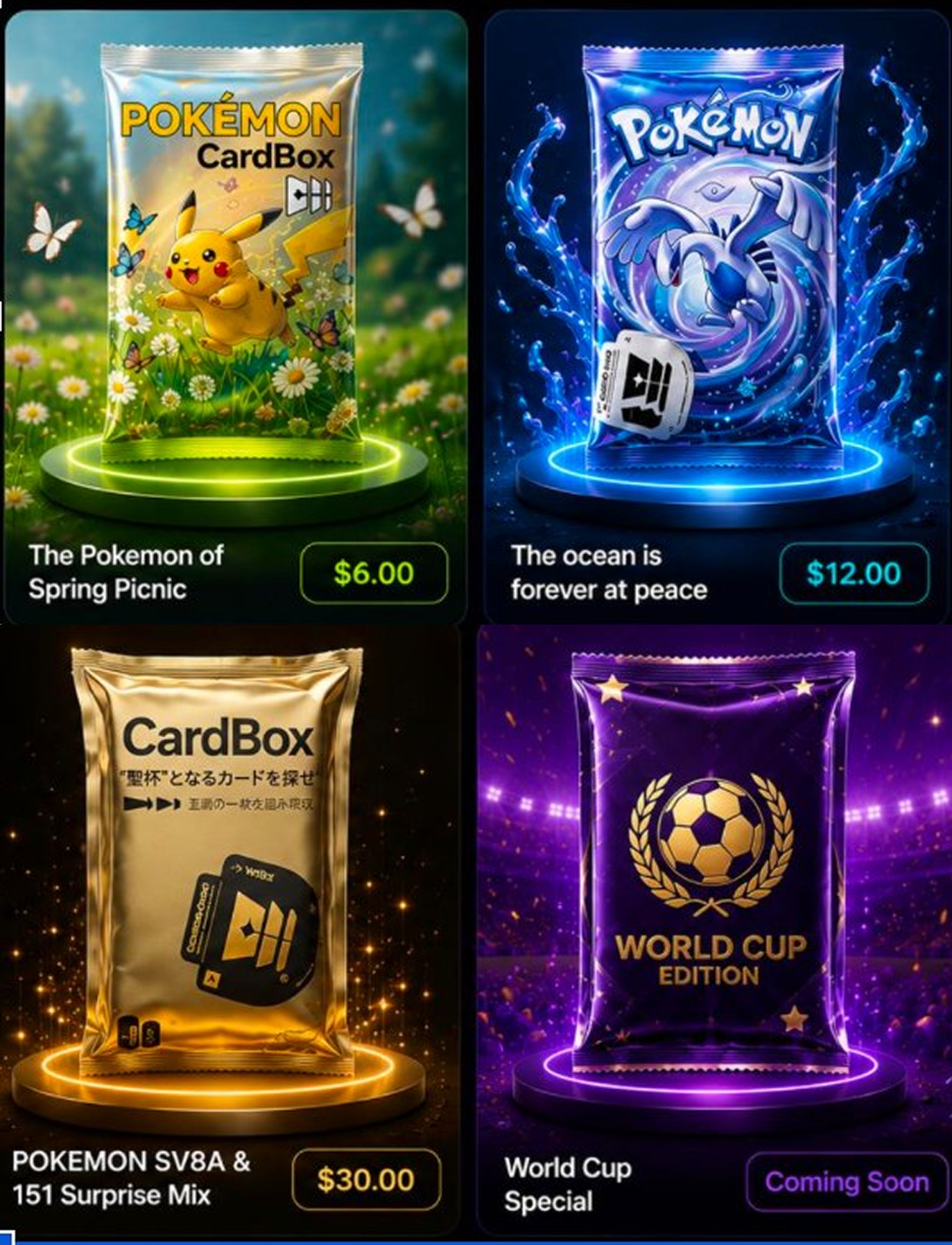
CardBox: From Blind-Box Retailer to TCG RWA Infrastructure
On the surface, CardBox offers blind-box card pulls, card trading, and instant buyback services. However, its long-term positioning is not as a retail platform but as a leading global TCG RWA infrastructure provider. By connecting asset owners, liquidity providers, and collectors worldwide, CardBox delivers core services including physical custody, digital title, liquidity networks, and trade matching for the TCG market. Simply put, CardBox's value lies not in how many cards it owns, but in building an open network that digitizes, liquidates, and globalizes collectible assets.
The hardest part of bringing cultural assets on-chain is not technology but trust. CardBox addresses this with a comprehensive stack: official brokerage partnership with CGC, embedding institutional-grade authentication into the Web3 workflow; distributed bank-grade vaults in the US, Japan, and South Korea, with full insurance for physically stored cards; instant settlement upon sale, with physical cards remaining in vaults while digital twins move freely on-chain; and verifiably fair blind-box mechanics enforced by smart contracts, with every asset backed 1:1 by physical inventory. Physical remains physical; circulation happens on-chain.
Real-World Validation: One Month of Beta Data
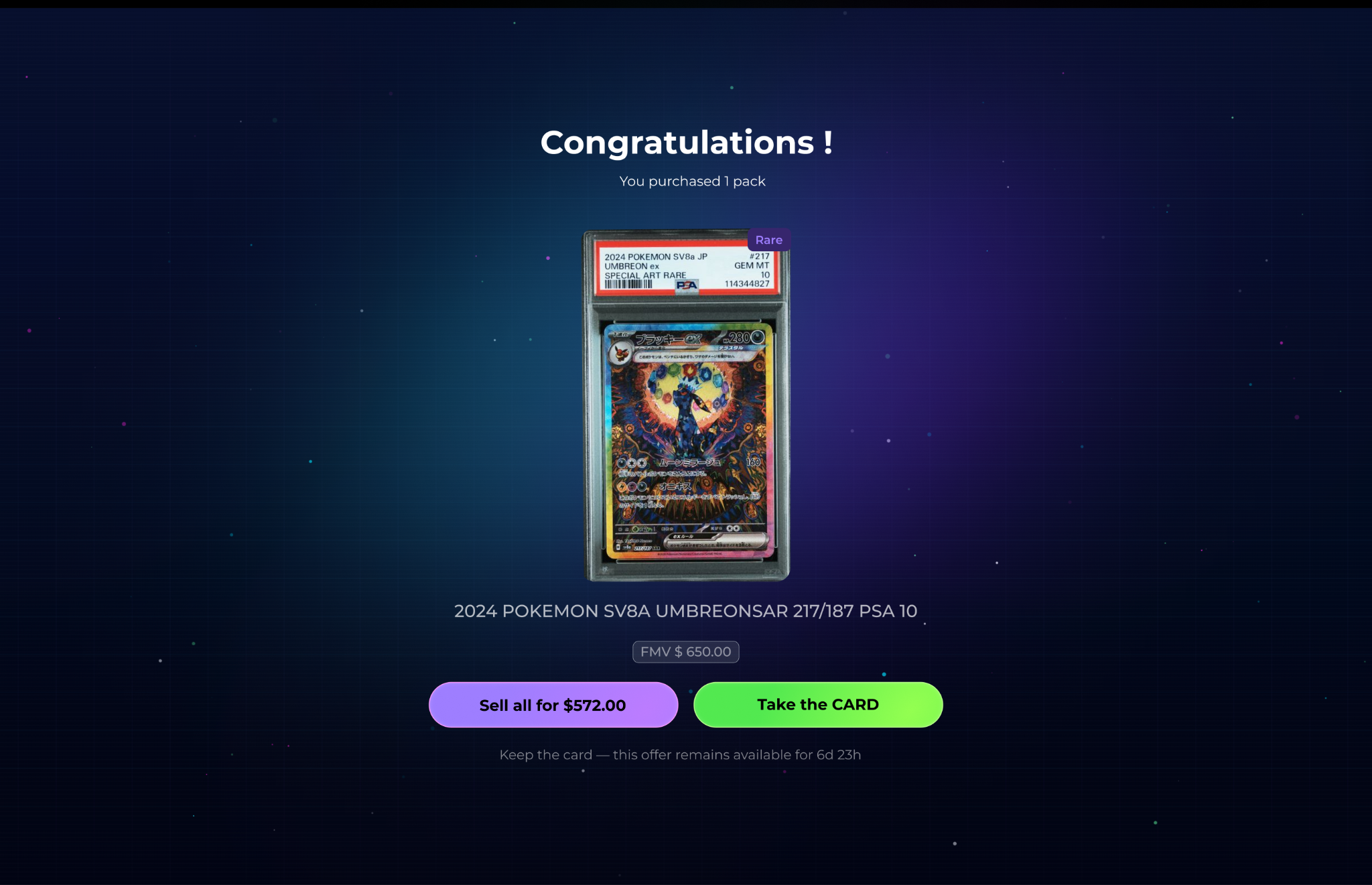
CardBox's growth is backed by real metrics, not narrative hype. Within one month of beta launch, the platform has generated a solid set of numbers (specific figures not detailed in the original source, but sufficient to demonstrate genuine demand). A recent user unboxed a 2024 Pokémon Umbreon SAR (PSA 10 GEM MT graded), valued at approximately $650. The user could either keep the physical card or instantly liquidate it on the platform with funds arriving immediately—thanks to CardBox's underlying liquidity network enabling instant matchmaking without mailing or waiting. This epitomizes CardBox's core value proposition: the joy of collecting and the liquidity of assets can now coexist frictionlessly.
Roadmap: Three Pillars to Build a Cultural Asset RWA Network
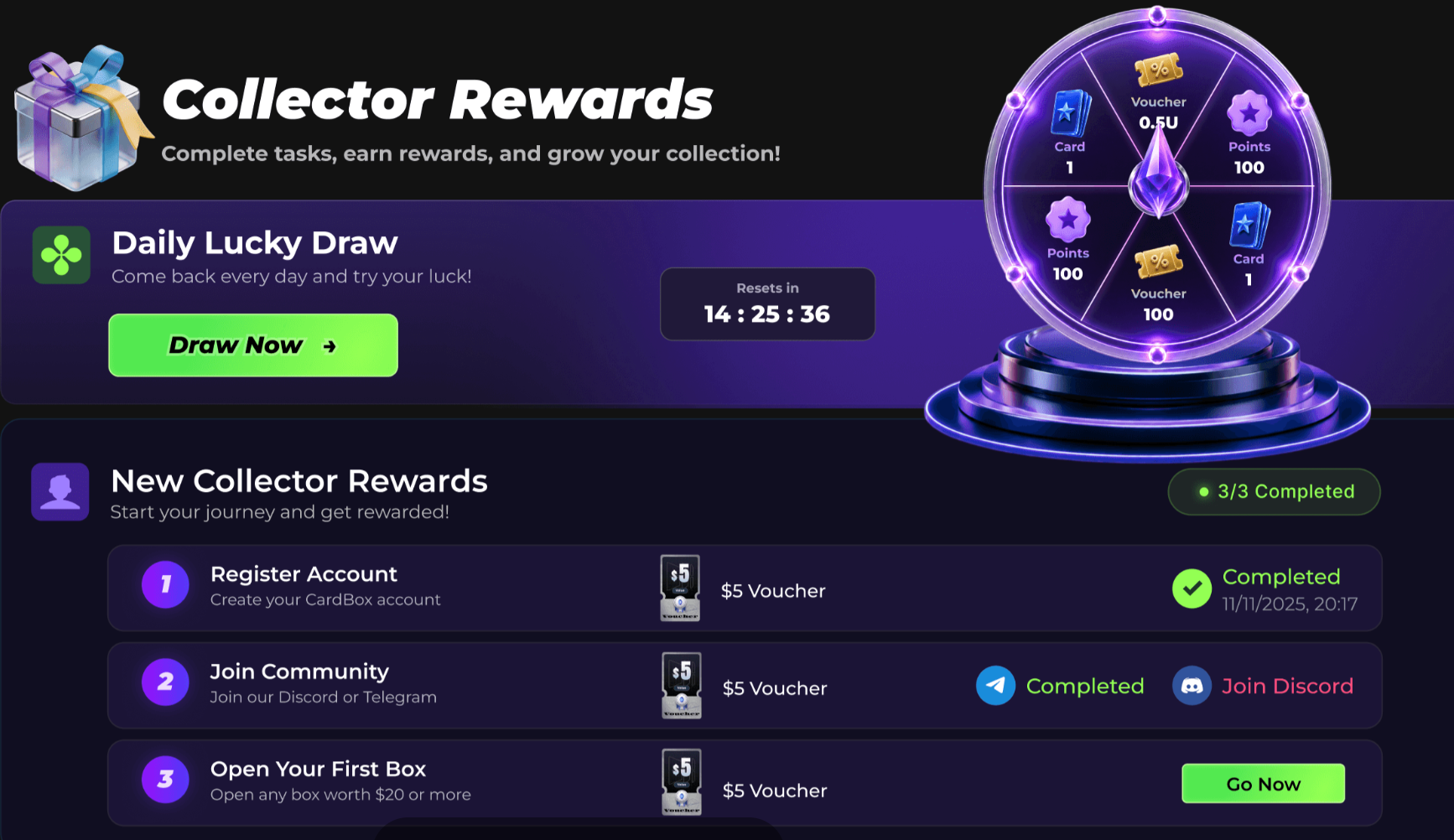
CardBox's next phase focuses on continuously enhancing asset liquidity and user engagement along three lines. First, transitioning from a self-operated model to an open asset network, gradually onboarding external card shops, dealers, and collection funds, expanding asset types from graded cards to booster packs and boxes. Second, launching a task-based reward system where users earn incentives through trading, collecting, and community participation, turning daily activity into a sustained driver of liquidity. More assets, more scenarios, higher engagement—these three pillars converge on one goal: a TCG RWA network with ever-thickening liquidity and ever-active users. The next chapter of RWA is not just about putting Treasuries on-chain. When culture itself becomes a liquid asset, CardBox aims to be the track that makes it flow.