
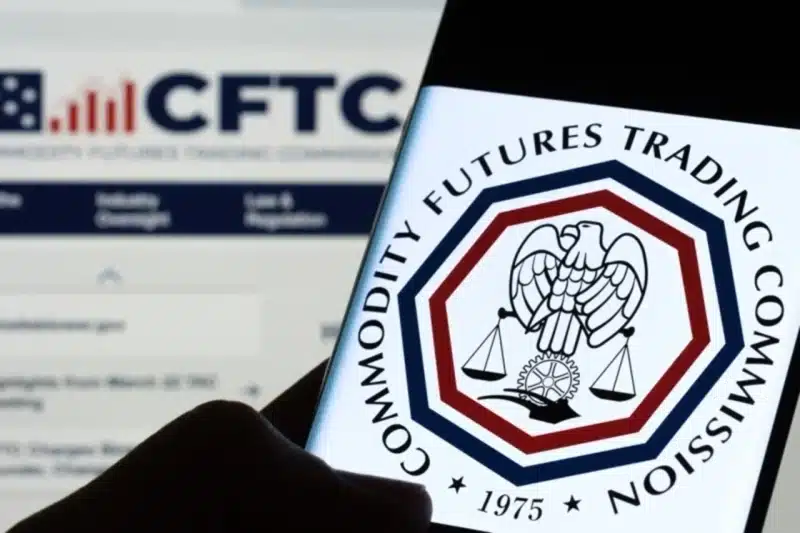
The U.S. Commodity Futures Trading Commission (CFTC) officially replaced its seal-like logo with a modern, tech-inspired design today, using a visual symbol to signal a shift in regulatory philosophy. The new logo abandons the classic black-and-white palette with red-and-blue octagonal border, adopting a deep blue base with sharp, flat lines that resemble a fintech brand's identity. The CFTC website states the update represents the agency's entry into "a new phase of supporting fintech and digital asset innovation."
Logo Design: From Classical Seal to Fintech Vibe
The new logo retains core elements of the original—a bald eagle, scales of justice, a wheel of commerce, and a farmer's plow—but abstracts and flattens them into a minimalist style. The dominant deep blue conveys trust and professionalism, paired with a red-and-blue double octagonal border inspired by traditional trading pits, now rendered with finer, more modern lines. The text "COMMODITY FUTURES TRADING COMMISSION" circles the outer ring alongside the founding year "1975" and stars, with wide, clean letter spacing. Overall, the design feels lighter and more technological, signaling the CFTC's pivot from conservative oversight to proactive support for blockchain, crypto, and AI innovation, while still upholding market integrity and investor protection.
Chairman's Vision: Keep Innovation Onshore, Prevent Capital Flight
CFTC Chairman Michael S. Selig has repeatedly emphasized in recent public remarks that this is more than a cosmetic update—it's a fundamental shift in regulatory philosophy. He stated the goal is to ensure innovation takes root in the U.S., preventing talent and capital from migrating to offshore platforms. Under acting Chairman Caroline D. Pham, the agency had already launched several milestone initiatives. After Selig took office, he established an Innovation Advisory Committee in January 2026, bringing together crypto exchanges, DeFi projects, traditional financial institutions, and venture capital representatives to craft "clear rules" for emerging technologies. Selig describes this era as the "golden age of U.S. financial markets," stressing that the CFTC will stick to its core principles—preventing fraud, manipulation, and systemic risk—while applying principles-based, flexible regulation to encourage responsible innovation.
The CFTC's recent actions align with the logo change. It previously allowed national trust banks to issue dollar-pegged stablecoins, expanding the stablecoin regulatory framework, and formed a committee to draft rules for AI and crypto prediction markets. The agency appears to be actively embracing crypto assets and fintech, rather than reacting passively. Crypto community reactions have been mixed: many welcome a more modern regulator image that could keep compliant projects in the U.S., but some warn that a logo is just a surface—what really matters is clear and enforceable rules, not slogans about a "golden age." Whether the CFTC can balance innovation with investor protection remains to be seen.