

Binance founder Changpeng Zhao says the legal issue that sent him to prison in the United States came down to a single early compliance failure: Binance served U.S. users before the exchange was registered there. In a recent interview, Zhao revisited the case, his four-month sentence, the memoir draft he wrote in prison, and the work that now fills his time after stepping away from Binance’s top job.
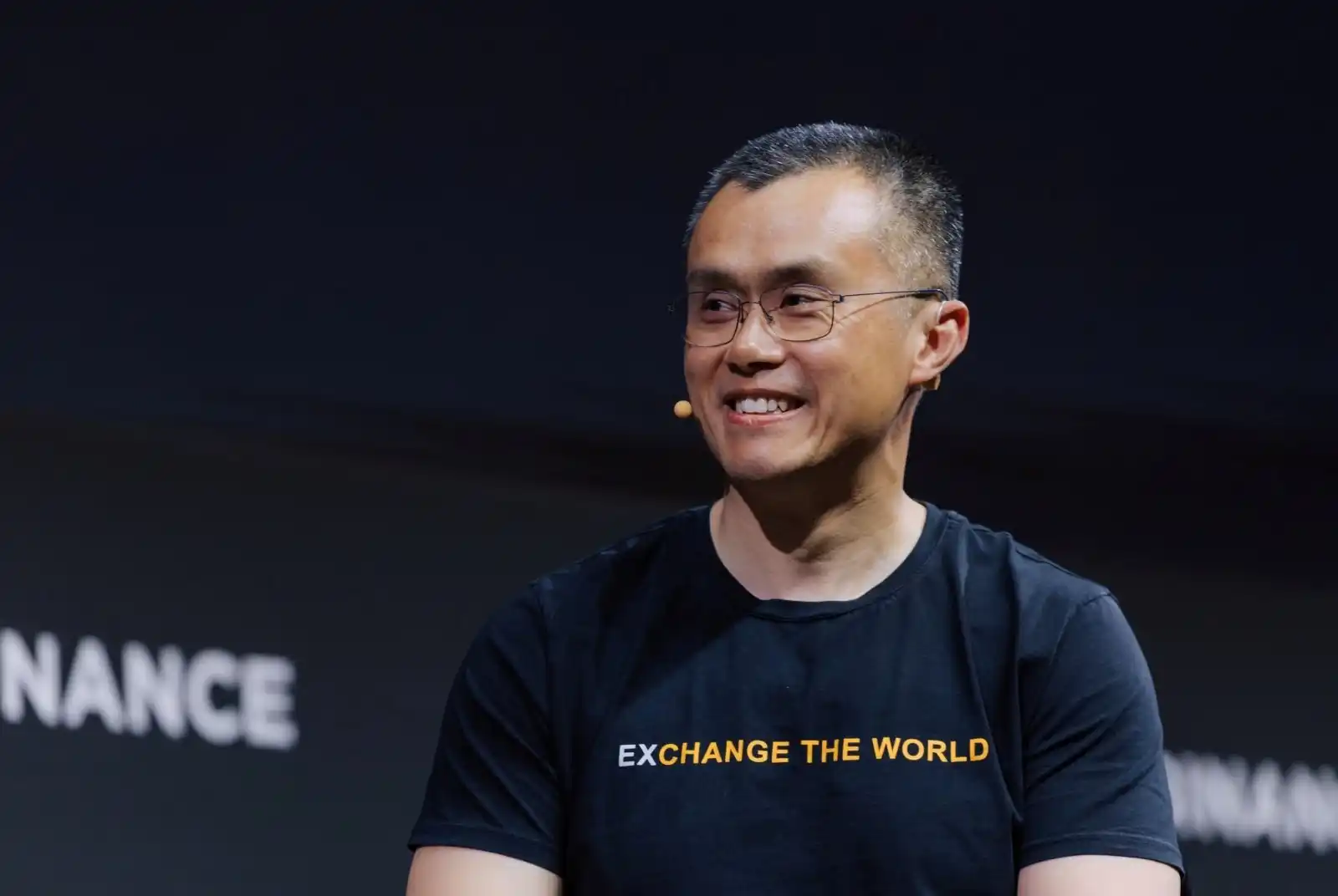
The report describes Zhao less as a swashbuckling crypto mogul and more as an engineer who treats life like a series of problems to solve. He appears on video in thin-framed glasses and a Binance T-shirt, understated in manner, far from the image often attached to the man who built the world’s largest crypto exchange.
That exchange, founded in July 2017, grew at extraordinary speed. The report says Binance became the world’s largest trading platform within months of launch. By 2025, its total trading volume had reached $34 trillion, topping the New York Stock Exchange’s annual stock trading total, while its user base climbed to 300 million, a figure the report compares with Netflix membership.
Zhao said the first 40 years of his life were “ordinary.” Building Binance changed that. He said the company, helped by good timing and good fortune, became “the fastest startup in history to reach $1 billion in profit.” He added that public fascination may even have started with photos of him in a hoodie. “My life really did begin to change, and it became so unbelievable that I think movies lack imagination. My reality is much crazier.”
The U.S. case and the prison term
According to the report, the U.S. Department of Justice brought charges against Binance and Zhao three years ago. The allegations included violations of the Bank Secrecy Act, operating an unlicensed money transmitting business, and breaches tied to sanctions rules under the International Emergency Economic Powers Act. By that stage, Binance had already shifted from Shanghai to Tokyo, then Singapore, and later Dubai.
Zhao summarized his case in direct terms: “I voluntarily flew to the U.S. and admitted violating one provision of the U.S. Bank Secrecy Act. Simply put, Binance served U.S. users in its early days, but it was not registered in the U.S. That is the entirety of my offense.”
He said he did not view the matter as involving fraud, money laundering, victims, or user losses. Even so, a U.S. court sentenced him to four months in prison. The report says he became the first person to be jailed for a Bank Secrecy Act violation of this kind.
Zhao also said he did not expect prison before going to the United States for negotiations. He thought the outcome might involve a fine or home detention, not incarceration. What mattered more to him at the time, he said, was resolving the matter and minimizing the damage to the industry and to Binance users.
He added that the U.S. government was relatively hostile to virtual currencies at the time, which made the result worse than he had expected. Still, he framed the episode within a broader outlook on life: “Overall, I think I’ve been very lucky in life already. When luck turns bad, maybe you have to take a little of that too. There is no absolute fairness and no absolute unfairness in this world. It depends on how you think about it.”
Writing in prison and the later pardon
The report says Zhao’s pace of life slowed sharply during the legal process. Inspired by prison consultant Michael Santos, he began planning a book.
While incarcerated, he used a shared computer with no internet access and no copy-and-paste function. He had 15 minutes a day and typed out the draft of his memoir, Binance Life, one word at a time. The report says the Traditional Chinese edition went on sale in mid-July.
It also says that one year after Zhao completed his prison term and paid the fines, U.S. President Donald Trump pardoned both Binance and Zhao, clearing their conviction records and ending a previously planned three-year Justice Department monitoring period.
From Jiangsu to Vancouver
The interview also turns personal. Zhao was born in Qingkou Town, Ganyu County, Jiangsu province, according to the report. At age 12, he moved with his family to Vancouver after his father went to Canada to pursue a PhD.
Zhao said many of his teenage friends were Taiwanese and that his first girlfriend was also Taiwanese. He said he has visited Taiwan more than 30 times and knows places across the island well. Growing up in a Chinese-speaking community dominated by relatively affluent Taiwanese immigrant families shaped the way he speaks Chinese, the report says, giving him what it describes as a distinctly Taiwanese accent.
He was once steered toward biology by the mother of a Taiwanese friend, with medicine in mind, but eventually gave that up and turned to programming instead.
Engineering background and the making of Binance
Before launching Binance, Zhao had already reached financial independence as an engineer, the report says. He worked at a well-known software company in Tokyo, then at Bloomberg in New York, where he led a 60-person team developing futures trading systems. He later returned to Shanghai and founded a fintech company that built systems for major exchanges.
That background gave Binance an edge in system stability, interface design and speed. The report says the exchange then built a wider ecosystem around the BNB token, BNB Chain and the trading platform itself.
Zhao said that when he first encountered digital currencies around 2013, many people wanted to build exchanges. The real question was whether they could do it better, faster, cheaper and with better service. By 2015, when he founded Bijie Tech, he already had a team, a system and a product. Turning that base into an exchange was enough to get the platform live.
He said He Yi joined as chief marketing officer, while the company also brought in customer service staff. It was his first consumer-facing business, and it taught him that customer support and market operations mattered as much as the technology.
“Based out of planet earth”
Zhang Ling, head of Yzi Labs, told the publication that Binance built an organization from day one that did not rely on physical borders. That meant not just countries, but time zones as well. If something went wrong anywhere, at any hour, someone at Binance would be available to handle it.
Before crypto regulation took shape around the world, the team even described itself as “based out of planet earth.” In an industry with few precedents and limited formal rules, the report says that kind of operation relied on shared mission, trust and accountability for outcomes.
Zhao laid out the advantages of decentralized work in practical terms. It cuts commuting time. It gives people greater flexibility. And for a platform that never stops running, having staff work from home across jurisdictions fits the business. It also opens global hiring, since talent does not need to relocate.
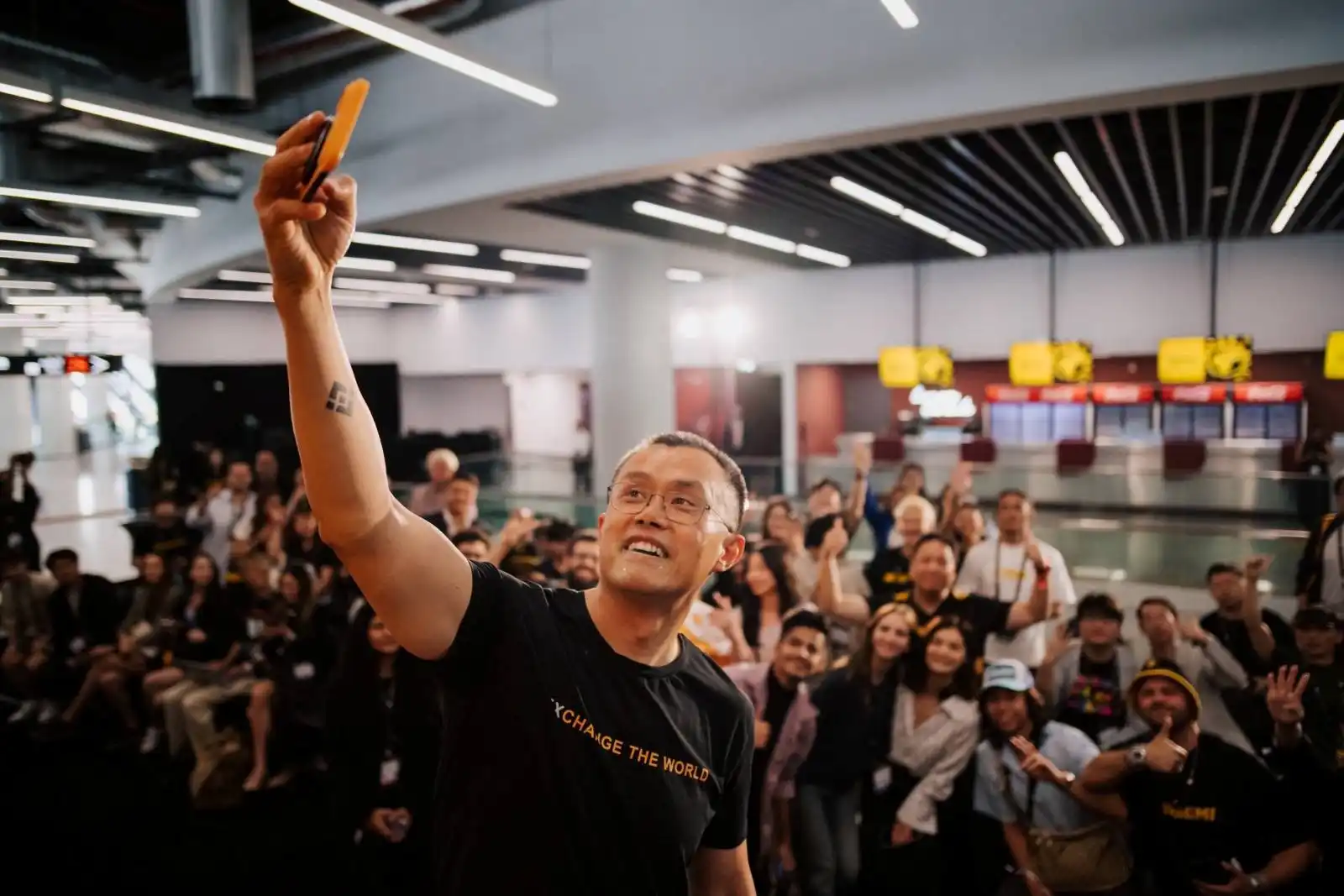
But he acknowledged the weaknesses. On one trip to Dubai, he met an employee who said that after three years at Binance, Zhao was only the third colleague he had ever seen in person. Face-to-face contact still matters, Zhao said. The other challenge is management: if you cannot see what people are doing every day, you have to manage by output.
That, he said, is the only way to build a global company quickly. The same logic applies to culture. Company values are not created by slogans, in his view. They are formed through repeated decisions and repeated actions. Over time, the team begins to understand how decisions will be made, and a shared culture takes shape.
He offered one example from Binance’s early years. After policy changes in China, Binance exited Chinese ICO users and spent an extra $6 million to compensate them for losses. Zhao said that amount was equal to 40% of the company’s assets at the time. He added that Binance did not legally need to spend the money because the losses were not its responsibility, but the company chose to do so because those people were its users.
Zhang Ling’s view of Zhao
Zhang co-founded Binance Labs with Zhao in 2018. The incubator later helped back projects including Polygon, Injective and Kava. Last year it was renamed Yzi Labs and expanded its investment scope. The report says it remains one of the few Binance-related efforts in which Zhao is still deeply involved after leaving the CEO role.
Zhang described Zhao as unusually sharp in judgment, quick and decisive, and emotionally steady under pressure. In her account, he does not get carried away by market noise or short-term panic. That kind of composure is rare among founders, she said.
Zhao’s own summary is simpler: “Most of the time, I’m thinking about how to solve the problem.” His reason is equally blunt: “There are always more opportunities in the future than in the past.”
Prison, family and education
The report says Zhao’s memoir spends substantial space on family memories. Time in prison slowed him down enough to look backward and reconsider what kind of life he wants.
He writes about his father as the first college student in their village, a man whose university studies were interrupted during the Cultural Revolution. Even in a village lit by kerosene lamps, his father never stopped learning. Ten years later, he was admitted to graduate study at the University of Science and Technology of China, then went on to the University of British Columbia for a doctorate, eventually becoming a professor and bringing the family to Vancouver.
Zhao says that story cemented his belief in the power of education. After leaving Binance, he founded the nonprofit education platform Giggle Academy.
The article also recounts a family habit that stayed with him. Whenever Zhao’s father reunited with the children after time apart, he carried a large camera and took pictures constantly. That helped spark Zhao’s own interest in photography.
Zhang recalled a Binance employee trip to Hokkaido in Japan, where she had brought her husband and daughter, who was not yet three years old. At the hotel, Zhao saw them together and told her, “Take more videos. When she grows up, those videos will be very precious.”
He said videos matter more than photos because his own children, once older, were drawn not to still images but to clips with sound, movement and traces of what that moment actually felt like.
Three areas of work after Binance
Zhao said his current schedule is split into three main parts.
The first is Giggle Academy. He said the free education platform now has a team of about 60 people. He joins several meetings a week but is not involved every day. The structure is already in place, he said, and the platform has more than 600,000 users. For a free platform less than a year and a half old, he said, that total is larger than the combined user count of 10 universities.
The second is YZi Labs, where he focuses on early-stage investment and incubation. He said that work has naturally led to another role as mentor to many founders.
The third is advisory work for governments. Zhao said he is currently advising 10 to 20 government bodies on how to improve their crypto regulatory frameworks.
Those three lines of work keep him busy enough already. He said the world changes quickly, and every one or two years it becomes hard to predict what he will be doing two years later. He added that he has been studying biotech and AI through his investment work, and does not rule out building something new in the future.
A simple personal test
Asked about his life goal, Zhao did not point to a target number or a specific milestone. His answer was more basic than that.
He said he wants to contribute to society in line with his ability. If that ability is small, then the contribution can be small. If it is large, then he should contribute as much as he can.
His real benchmark, he said, comes much later in life: to be satisfied with himself when he is old. If he can look back and say, “I did my best, right?”, that will be enough.