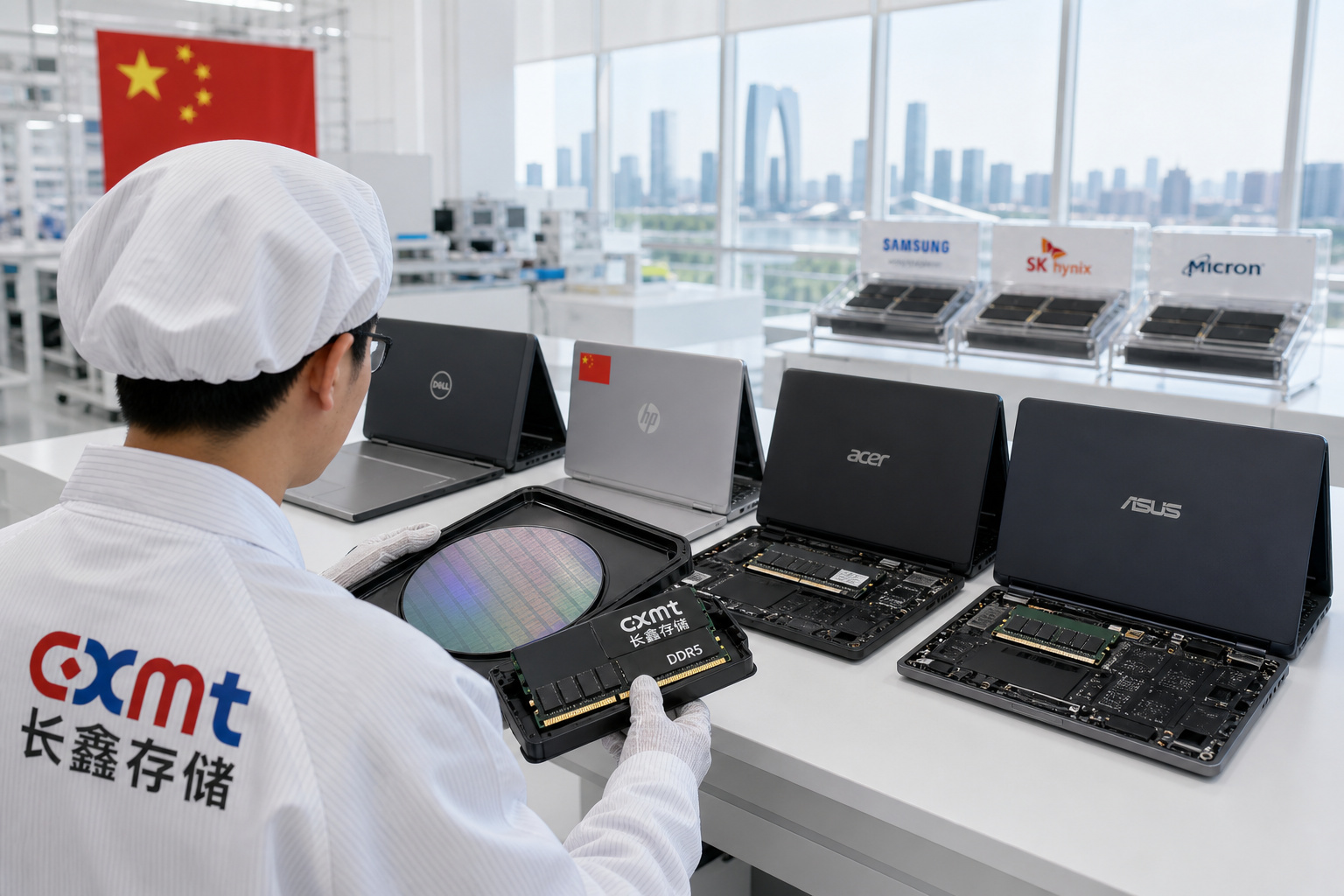
According to Kuai Technology via ChainCatcher, Changxin Memory's 17nm DDR5 chips have reached a yield rate above 90%, leaving the company just about two percentage points behind Samsung's 92-93% yield for comparable generation products. That places Changxin's technical indicators in the global first tier. Several leading PC manufacturers completed certification for Changxin DRAM around mid-year and have started small-batch deployments in some notebook lines. Adoption strategies, however, are far from uniform: Dell has completely prohibited the chips, HP only uses them in mainland China, while Acer and Asus are fitting them into models aimed at mainland China and other emerging markets. The immediate impact on prices from Samsung, SK Hynix and Micron remains limited, mainly because those three are still prioritizing LPDDR5 supply, whereas Changxin is concentrating on expanding DDR5 shipments. PC executives caution that the top three memory suppliers hold more than 90% of the global DRAM share, meaning large-scale adoption requires extreme care. For now, both the number of models using Changxin chips and the total quantities involved are very small.
Changxin closes yield gap with Samsung on DDR5
Changxin Memory's 17nm DDR5 chips have reportedly crossed the 90% yield-rate threshold. Samsung's same-generation products sit at 92% to 93%, leaving a gap of roughly two percentage points, according to a report from Kuai Technology cited by ChainCatcher. That puts Changxin's technical metrics into the global first tier.
Several major PC vendors completed certification of Changxin DRAM chips around mid-year, and some notebooks have started carrying small-volume shipments.
Brand strategies diverge
Vendors are taking markedly different positions. Dell has banned Changxin chips outright. HP restricts usage to the mainland China market. Acer and Asus, meanwhile, are putting the chips into models sold in mainland China and other emerging markets.
Limited pricing impact
The near-term effect on pricing from Samsung, SK Hynix and Micron remains limited. The main reason: those three are still tilting supply toward LPDDR5, while Changxin is focused on expanding DDR5 shipments.
PC executives caution that the top three suppliers hold more than 90% of the global DRAM market, so large-scale adoption demands careful handling. Actual adoption remains thin: only a limited number of laptop models use Changxin chips, and the volumes involved are small.
This article was originally published by Bit.Fan. For more cryptocurrency news and market insights, visit www.bit.fan. Disclaimer:
The market information, project data, and third-party content displayed on this platform are for industry information sharing only and do not constitute any form of investment advice or return commitment.
Cryptocurrency trading carries high risks. Users should fully assess their risk tolerance and make independent decisions. All profits, losses, and legal responsibilities are borne by the users themselves.