

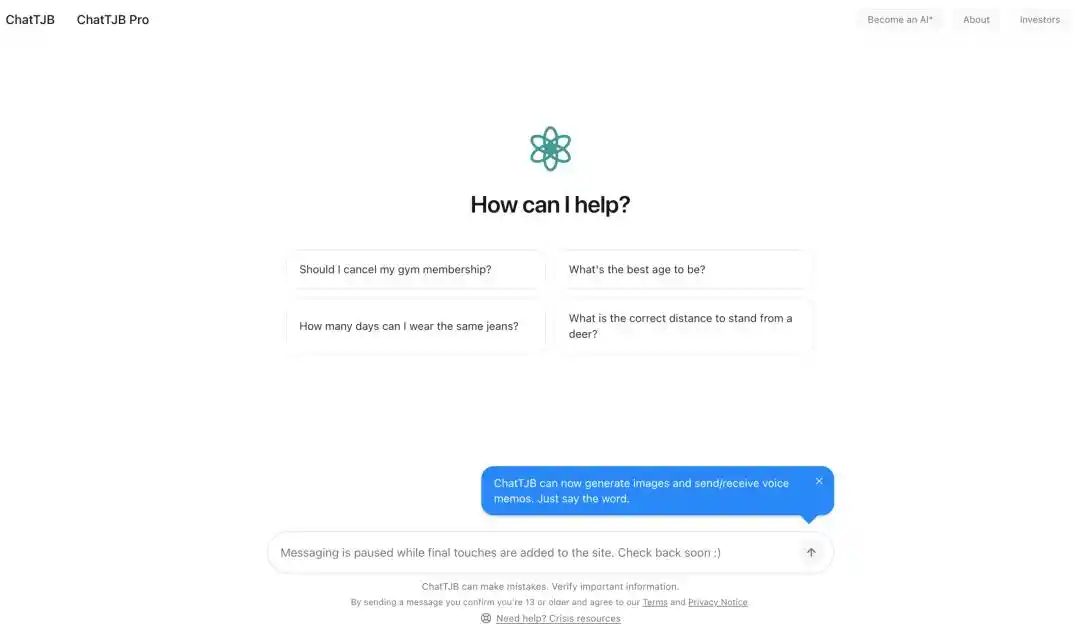
ChatTJB has picked up attention after a billboard in San Francisco promoted it as a new large language model. On the surface, the website looks like a regular AI product, with a chat interface, casual conversation features, image generation, technical documentation and a Pro membership page.
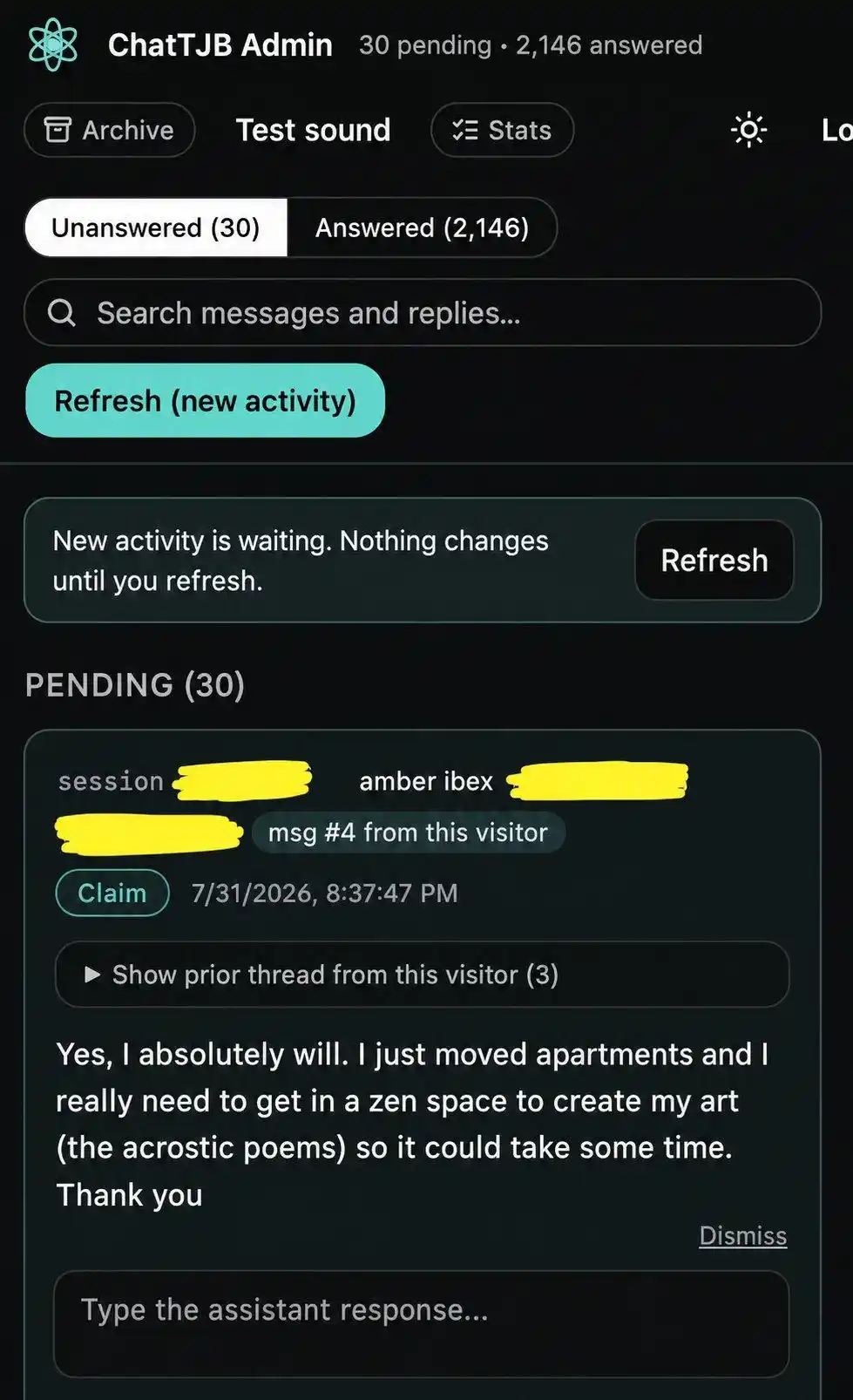
But ChatTJB is not an actual LLM. According to the project description, it is "manual intelligence, handcrafted by one human." Every user message is ultimately sent to a real person named Tucker, who reads it himself, thinks about it and types out a reply. Image generation requests are also handled by Tucker, who draws them by hand.
One person handles every request
The site jokingly describes ChatTJB as a "next-generation single-operator large language experience," or LLE. There is no GPU cluster and no model with billions of parameters. The whole system runs through Tucker alone.

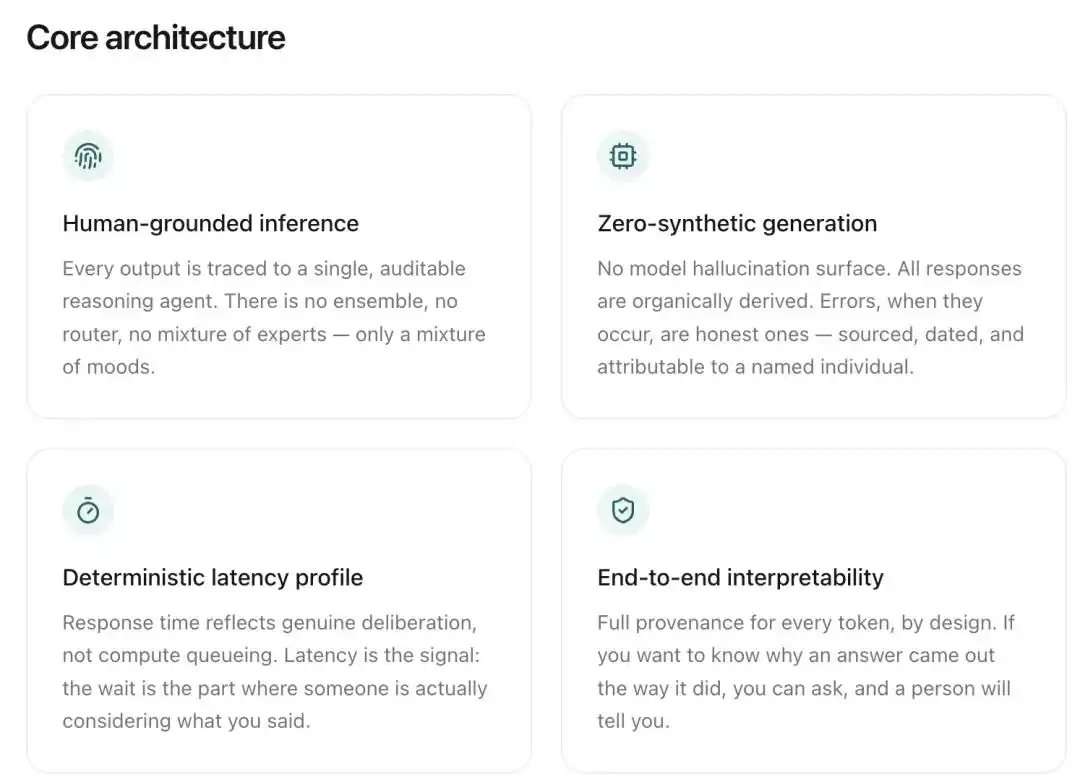
Tucker wraps that process in technical-sounding language, including a "human-powered reasoning layer," "zero synthetic generation," a "deterministic latency curve" and "end-to-end explainability." In practice, it means users send a question, Tucker sees it, thinks about it and replies when he is awake and willing to do so. The system's compute depends on how much sleep he got, its inference speed depends on how he feels, and maximum concurrency is capped at n=1.
The report says traffic has far exceeded expectations. Tucker has been talking with thousands of people a day, to the point that both of his thumbs are close to giving out from the typing load. Demand has become large enough that ChatTJB has paused access for new users.
Pro tier, investor page and a 528-month runway
The project also launched a Pro subscription. The site describes it in blunt terms: 「一个毫无意义、只为帮我还清广告牌费用的档位。除非你真的很想帮我付那块广告牌的钱,否则请千万别订阅。」
Its investor page keeps the same tone. The site says the project has "not generated revenue, not entered a hype cycle, and is actively not finding product-market fit." Training costs are described as a library card and a food delivery account. It says runway stands at 528 months, calculated using the average life expectancy of American men.
Shift toward a community project
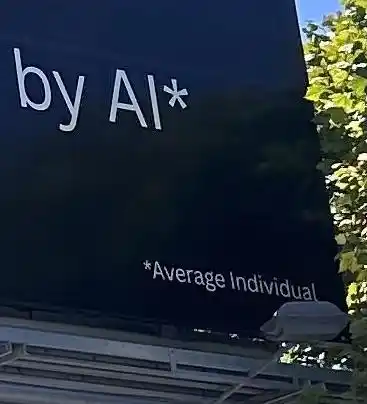
As the project grew, Tucker could no longer keep up with all incoming requests on his own. He decided to turn ChatTJB into a community project and recruit "AI volunteers." In this case, AI stands for Average Individual rather than artificial intelligence.
Each volunteer is required to pass a qualification test, and the platform says it has crisis-response resources and safety mechanisms in place. Each conversation will still be handled by the same person from start to finish, without being passed along midway.
Tucker said the project was originally intended as a short-term art piece and was not worth asking anyone to take risks for it. A formal statement at the end of the page says ChatTJB is a satire work and public art project, does not constitute a real investment opportunity, does not sell securities and does not accept funds. Any references to fundraising or capital allocation are part of the work itself.
From a joke to real conversations
The report says many visitors initially came to ChatTJB for fun, sending jokes or bait prompts to see how the "AI" would respond. But Tucker found that some people gradually started talking about things they actually cared about, and then stayed to keep the conversation going.
What stands out here is not speed. A model can answer countless people at once, but human attention cannot be copied without limit. A reply from a real person means real time was spent, and that someone else seriously engaged with the question. That process is inefficient and hard to scale, but it preserves a basic part of conversation: another person actually heard what you said and responded from lived experience.

A similar project: Your AI Slop Bores Me
Because ChatTJB is currently unavailable to new users, the original article also pointed to a similar platform, Your AI Slop Bores Me, at https://youraislopbores.me/ . The project was created by programmer Mihir Maroju and launched in March 2026. It works by having thousands of internet users collectively act as a "human large model."
It offers two modes. In "Human," users spend credits to submit writing or drawing requests. In "LARP as AI," participants receive a random stranger's request and must answer or create a drawing themselves within a set time, earning credits after completion. All outputs come from real people.
The article gives one example from a test run. After being asked to draw "一只小狗," the person on the other side simply copied the Chinese text back and replied, 「兄弟,我不懂啥意思」. When the prompt was resubmitted in English, the response was an abstract drawing.
The piece was originally published by the WeChat account Jiqizhixin (ID: almosthuman2014). It credits "关注好玩的机器之心" as the author and Yang Wen as editor.