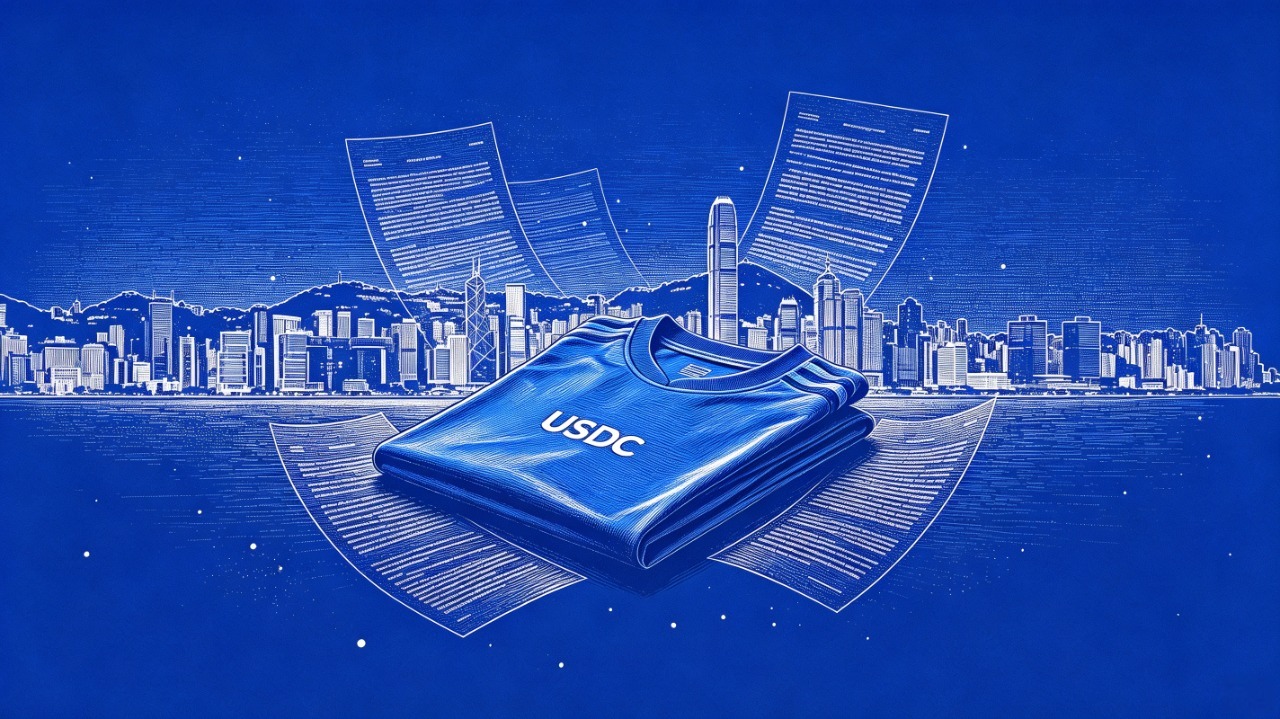
Chelsea announced in late August 2026 that Circle will become the club’s front-of-shirt sponsor for the 2026/27 season, putting the USDC logo on a Premier League jersey as a lead sponsor for the first time. The deal has triggered a compliance question in Hong Kong: because Circle is not a licensed stablecoin issuer in the city, would wearing the shirt, selling it, or showing it in television broadcasts cross the line set by Hong Kong’s Stablecoin Ordinance on actively promoting unauthorized stablecoins to the public?

HKMA declined to comment on the specific case
Hong Kong’s Monetary Authority said it would not comment on individual cases. It added that whether conduct amounts to active promotion depends on the specific circumstances, including the language used, the target audience, the domain name involved, and the broader promotional plan.
That leaves the boundary unclear for shirt displays, retail sales, and broadcast exposure. The article argues that the fact fans may feel the need to check the law before buying a jersey shows a gap between the rulebook and market reality. Sports sponsorships are inherently cross-border. A shirt carrying the USDC logo could be seen by large numbers of viewers in Hong Kong during Premier League broadcasts, yet there is still no clear answer on whether that counts as promotion under the ordinance.
Circle’s compliance-heavy approach meets a local gray area
The article describes Circle as one of the rare crypto companies that has consistently prioritized regulatory compliance. It says the company now holds more than 50 licenses and registrations.
In the United States, Circle was among the earliest companies to secure a New York BitLicense. After the GENIUS Act took effect in 2025, it applied for a national trust bank charter from the Office of the Comptroller of the Currency and received approval in July 2026.
In Europe, the article says Circle became the first global stablecoin issuer to fully comply with Markets in Crypto-Assets regulation, or MiCA. It also holds licenses in the U.K., Singapore, Bermuda, and Abu Dhabi.
Circle also discloses reserves weekly, undergoes independent audits, and offers 1:1 redemption, according to the article. Even so, the Hong Kong question raised by the Chelsea shirt sponsorship is blunt: is the jersey itself compliant?
Cross-border sponsorship conflicts have happened before
The article notes that this kind of regulatory mismatch between one market and another is not new. It points to earlier Premier League shirt sponsorships by offshore betting brands such as Fun88 and ManBetX, which gained access to the U.K. market through white-label arrangements in the Isle of Man or Malta and appeared on the front of Newcastle United and Wolverhampton Wanderers shirts.
But when those clubs traveled to China for friendlies in 2019, the sponsor logos were temporarily removed over concerns that they could violate local law. The comparison is used to show how a sponsorship structure that is legal in one jurisdiction can become problematic once it is carried across borders.
Hong Kong’s stablecoin regime started fast, then lost momentum
Hong Kong’s Stablecoin Ordinance took effect in August 2025 and, in the article’s telling, made the city one of the earliest markets to establish a full licensing framework. But the piece says the rollout has since gone from a strong start to a weaker follow-through.
There were 36 applicants in September last year. By August this year, the topic had largely faded from market discussion. The first two licenses went to Anchorpoint Financial, led by Standard Chartered, and HSBC, but the two groups have moved at very different speeds.
Standard Chartered is described as actively pushing ahead. In July this year, it worked with Circle to launch institutional-grade USDC access services. In August, it began the first-stage issuance of the Hong Kong dollar stablecoin HKDAP.
HSBC, by contrast, is portrayed as moving more slowly, with timelines slipping repeatedly. The article attributes that to the bank’s business structure, saying about 85% of its payment business revenue comes from deposit spread income, so stablecoins would divert deposits and directly undercut its existing model.
At the same time, players such as Ant Group, JD.com, and RD InnoTech, which the article says have clearer use cases and stronger incentives, have been unable to get in. It summarizes the market view this way: companies with real scenarios cannot enter, while companies without clear scenarios are the ones being pushed to build.
KYC requirements and limited licensing are seen as major frictions
The article identifies several structural issues in the rules. One is identification. It says the ordinance’s requirements nearly impose KYC at the holder level, making the framework more rigid than the U.S. GENIUS Act and directly raising friction costs for cross-border payments.
Another is licensing pace. Regulators have made clear that only a limited number of licenses will be granted in future rounds. With high thresholds and strict review, market sentiment quickly moved from early enthusiasm to wait-and-see caution.
In the Chelsea-Circle case, the definition of active promotion still depends on case-by-case judgment. That leaves retailers and market participants guessing, even though global sports sponsorships naturally generate cross-border visibility.
The article argues local licensing can fragment stablecoin networks
The piece says Hong Kong’s legislative intent deserves credit, and that the sequence of letting banks in first helped preserve a basic level of trust. But stablecoins derive much of their value from cross-border circulation and network effects.
If every jurisdiction requires fully localized licensing plus full-scale KYC, those networks become fragmented, and the efficiency gains that make stablecoins attractive for payments begin to fade. On that basis, the article suggests mutual recognition mechanisms, equivalence assessments, and separate wholesale-retail regulatory tiers as more realistic options.
It also says that while it is understandable for the HKMA not to comment on individual cases, clearer guidance on ordinary situations such as shirts, advertisements, and reposted materials would remove a large amount of avoidable compliance anxiety.
The issue also exposes a gap around dollar stablecoins in Hong Kong
The article adds that the Hong Kong dollar is pegged to the U.S. dollar, yet when the city designed rules for Hong Kong dollar stablecoins, it did not fully address a compliance path for already mature U.S. dollar stablecoins circulating in Hong Kong. In its view, the Chelsea-USDC sponsorship issue has now brought that gap into sharper focus.
It also points back to the debate around Hong Kong’s launch of spot crypto ETFs. Even after legalizing crypto assets and despite competition from firms such as BlackRock, Hong Kong still pressed ahead with spot crypto ETF products. The article says the amount of Bitcoin and Ether held in those ETFs is now lower than on the first day of listing.
Conclusion drawn by the original article
The article ends by saying Hong Kong has long been cautious in financial legislation, but its path toward compliance in a newer sector such as Web3 has also exposed gaps in professional judgment. Its final argument is that Hong Kong, which has often learned by following precedents elsewhere, may need to make changes of its own in Web3 regulation.
The original piece also carries a disclaimer saying markets involve risk, investment requires caution, and the article does not constitute investment advice. Readers should decide for themselves whether the opinions or conclusions discussed suit their own circumstances.