



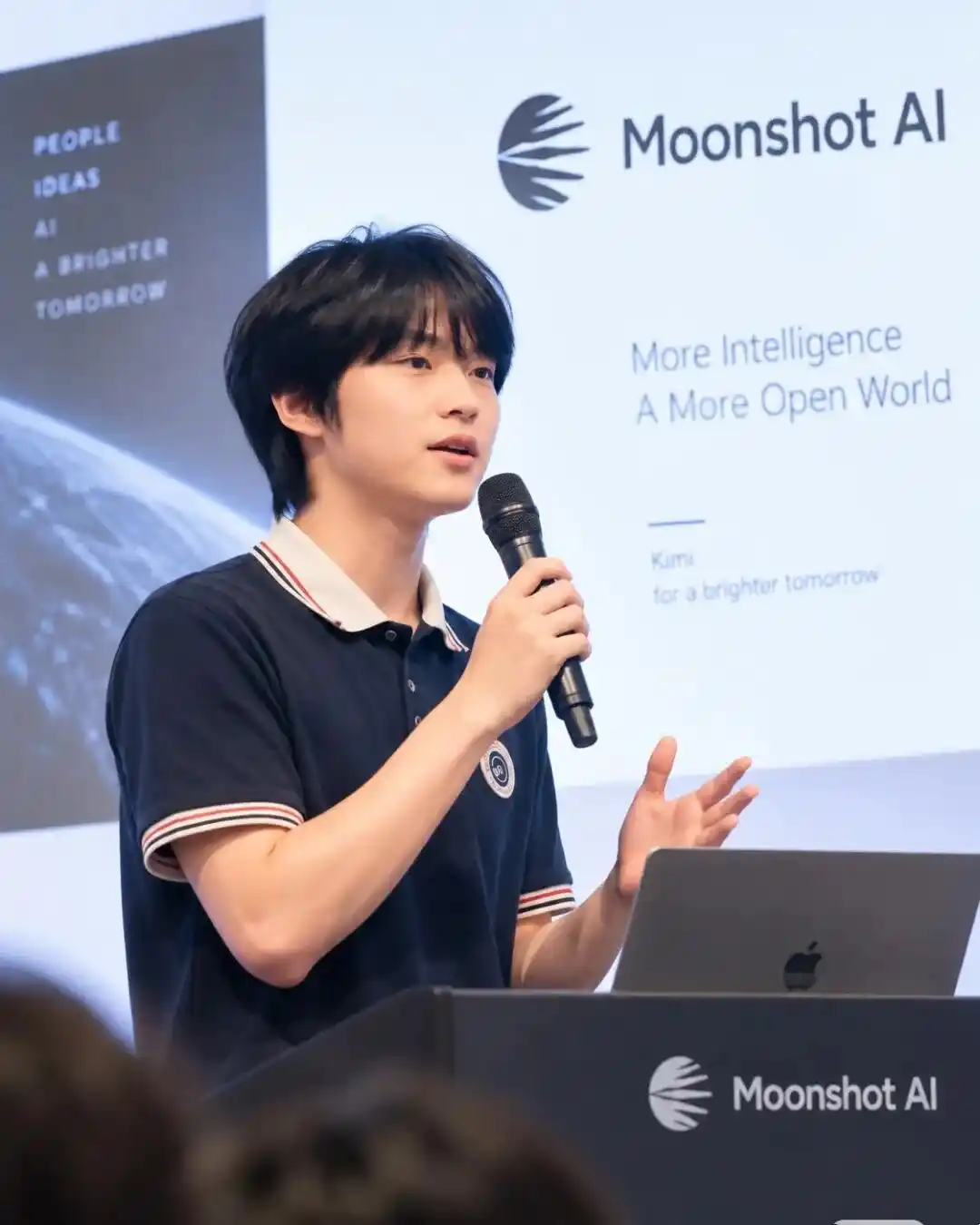
Chen Guangyu, a 17-year-old AI researcher from Shenzhen, has left Kimi, and that immediately kicked off a new round of guessing about where he lands next.
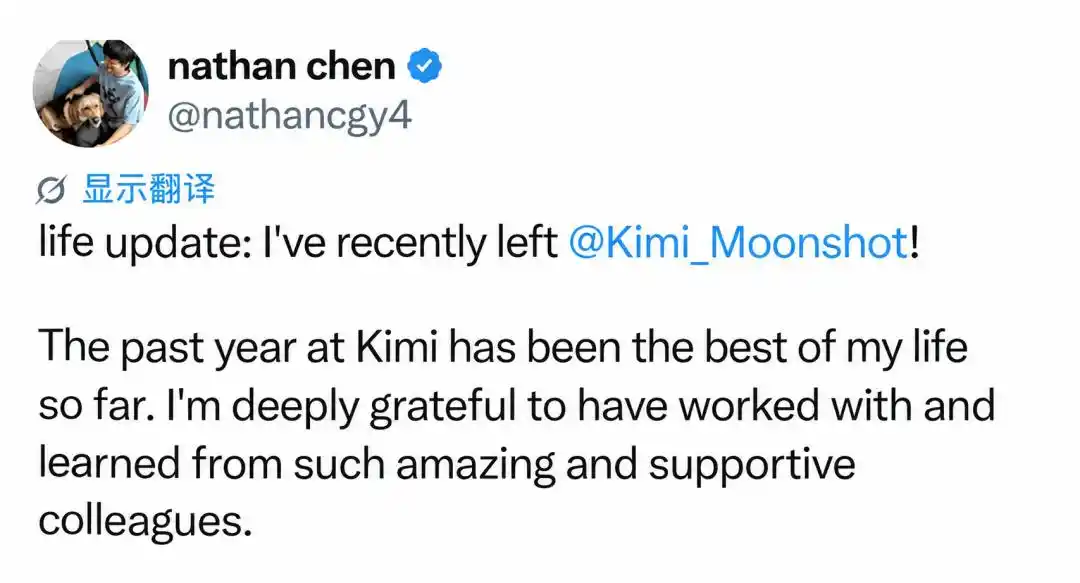
In a farewell post on social media on Oct. 15, Chen said the past year had been the best period of his life so far. He thanked the people around him and wrote, "Thanks for everything, especially to Du Yulun for believing in me back then and hiring me when I was 16." He gave no reason for leaving and said nothing about where he was headed. He closed with one more short line: "There is still much more worth exploring."
Departure from Kimi sparks questions about his next stop
Chen’s post said almost nothing beyond goodbye. That was enough. People started guessing right away.
Du Yulun said the two had several long talks before Chen left. He said he did not want to see him go, but still hoped Chen would keep exploring at this age and follow whatever new interests had caught his attention.
Fresh invitations showed up in the comments almost at once. Sholto Douglas, who leads scalable reinforcement learning at Anthropic, said he had just met Chen the week before and jokingly asked whether the plan was still Carnegie Mellon University. Then he added another question: did Chen want to come work together in San Francisco?
Chen replied, "Thanks, Sholto! I'm on my way to the Bay Area." That answer made some people think he might be joining Anthropic. But he quickly followed it with a short "no :)".
Paper reposted by Elon Musk later became part of Kimi K3
Chen last drew broad attention in March, back when he was still a high school senior. At that point, he appeared alongside Zhang Yu and Su Jianlin as a co-first author of the paper Attention Residuals.
Elon Musk later reposted the paper and called it "impressive," which pushed much more attention toward the teenage intern inside the Kimi team.
By July, Attention Residuals had been used in Kimi K3 and became one of the underlying technologies in the 2.8 trillion-parameter model. Chen also joined the preparation work ahead of the K3 release. In his farewell note, he looked back on that stretch, when he and his colleagues were working while watching the World Cup.
Million-dollar offer story overlaps with Chen’s profile
Just days before Chen’s farewell post, another story had already shoved a 17-year-old into the AI spotlight.
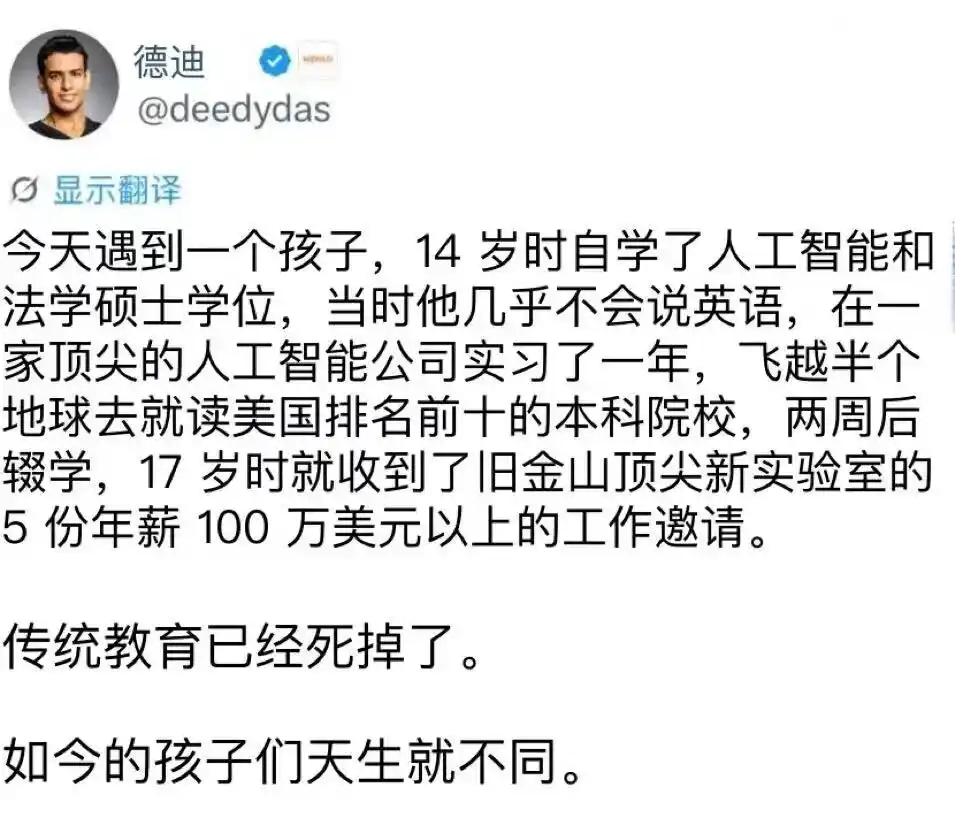
Last week, Menlo Ventures investor Deedy Das shared a story about meeting a teenager who, at 14, still was not fluent in English and then used large models to teach himself AI. Das said the teenager later interned for a year at a top AI company, traveled across half the world to enroll in a top-10 university in the United States, and dropped out after two weeks.
According to Das, the teenager was 17 and already had five job offers from top frontier AI labs in San Francisco, each worth more than about $1 million.
The overlap in details was obvious: 17 years old, a year of internship experience, and seven-figure offers. So people quickly tied the story to Chen Guangyu. Das, though, never gave the teenager’s name.
When asked why the teenager wanted to go to San Francisco, Das relayed the answer like this: the people there are very capable, and they are doing what they want to do. He also quoted the teenager as saying, "I just want to learn. I don’t care about money at all."
A Shenzhen student with wide-ranging interests
Chen was born in 2009 and grew up in Shenzhen. He studied at the former Peking University High School Shenzhen Nanshan School and at BASIS International School Huizhou, and he graduated from high school this year.
The article says he was curious about all kinds of things during his school years. He tried to register a Shopify store using a parent’s identity, organized a youth open-source community, built a crypto bot, and even pictured himself becoming a professional skier.
While getting college applications ready, he stopped doing the activities he had been doing for admissions purposes but did not actually enjoy. Then he picked up an AI safety book he had long wanted to read. After that came physics, the universe, and Steve Jobs. In a later blog post, he wrote that for several weeks he studied simply to satisfy his own curiosity, with nothing to prove to anyone. But he was still uneasy when he saw classmates busy with application materials, and he worried that what he was doing might not matter.
A hackathon became a turning point
The turning point came in February last year, when Chen joined a hackathon for middle and high school students. He brought a project called ThirdArm. The idea was built around a "third mechanical assistive arm" for humans.
That project led him to Dong Kehan, a former member of the founding team of YC China and MiraclePlus. Dong gave him advice that shaped what followed: focus on more frontier technologies.
After that, Chen started using AI to read papers and keep up with open-source projects on GitHub, slowly building his understanding of machine learning. In his view, following step-by-step introductory video courses from a decade ago had become too slow. As he put it, "AI is the best teacher in this era."
An overseas internship at 16
A technical blog post later opened the door to his first job opportunity. Chen had shared his thoughts on DeltaNet, and even though his social account had only 20 followers at the time, the post got a response from researcher Yang Songlin. It was then seen by the CEO of Silicon Valley AI startup Tilde Research, who reached out and invited him to talk.
Two months later, Chen, then 16, got an offer from the company and flew alone to Palo Alto, California, for a seven-week internship.
The experience changed more than his resume. Dong had told him not to think like an intern, but like a CEO: if this were your company, what would you do? Chen later treated that as a working method. From there, his work widened from technical questions to harder issues too, including operations, fundraising rhythm, investor communication, and long-term strategy.
He later joined Kimi and kept working on model architecture. Less than a year later, he chose to leave and look at new possibilities.
The AI talent race is moving earlier
The discussion around Chen has also thrown attention back onto the fight for AI talent.
The article says pay for new graduates at major Chinese internet companies has reportedly climbed as high as 8 million yuan. A professor in Tsinghua University’s Department of Computer Science and Technology said PhD graduates in large-model research in his group could receive annual pay above 6 million yuan, while master’s graduates could receive more than 1 million yuan. In some cases, the scramble has even reached thesis defense venues, where HR staff from large companies have shown up with flowers to congratulate students they had already hired.
Anthropic’s website gives a public reference point. For research roles in pretraining, the listed annual salary range is $350,000 to $850,000, depending on level. Those jobs directly involve model architecture and large-scale training.
For young researchers who have already broken through, the numbers can shoot far higher. The article says Mark Zuckerberg personally called AI researcher Matt Deitke when Deitke was 24. To recruit him, Meta’s final compensation package was about $250 million over four years, with as much as $100 million possibly paid in the first year.
And recruiting is starting earlier too. When Tencent launched hiring for its Qingyun internship program this year, it explicitly encouraged lower-year students to apply, said compensation would have no upper limit, and offered extra incentives for standout contributors. Interns could work in core businesses including Hunyuan, Yuanbao, and WeChat, with top candidates getting chances to lead projects and work directly with technical leaders.
ByteDance Seed also put young researchers’ output front and center on its recruitment page. One person, less than a year after graduation, had already taken part in the pretraining architecture work for Seedance 2.0. Another was still an intern, with results already used in Doubao online services and model post-training. Outstanding interns who met the requirements could also get a chance to receive "Doubao shares."
No one knows how long this pay cycle lasts. But for the current wave of young talent, the opportunity is no longer abstract. It already looks like a written offer. Chen’s next stop, for now, is still undisclosed.