
A Silicon Valley investor who visited China last month and met with many front-line investment firms, along with management teams at leading robotics and biotech companies, came away with a clear view: the narrative circulating in Silicon Valley that China is gaining ground in several technologies tied to the future is not hard to understand.
In the article, written by Bohan of Chemistry and translated by BlockBeats, the author says China is advancing in open-source AI, biotech and robotics. Chinese open-source models, he writes, have become some of the most commonly used models among Silicon Valley startups. After the U.S. government restricted Fable, the piece argues, China ended up taking on a larger role in supporting the global open AI stack.
On biotech, the article says most programs in Chinese clinical trials are innovative therapies, while about half of the drugs in U.S. Food and Drug Administration clinical trials have been in-licensed from China. In robotics, the author points to China’s structural edge in producing training data at scale and, just as important, to the speed of hardware development and feedback iteration.
Even with those advantages, the piece says Chinese founders and investors are not complacent. If anything, they are highly attentive to what Silicon Valley is thinking. The author says Silicon Valley is still seen in China as the global center of innovation.
He recounts that one person at a top venture firm told him every new podcast episode from Benchmark or Sequoia is treated as must-watch content across the company. He also says posts he publishes on X and LinkedIn are often translated by major Chinese AI media outlets within hours, including screenshots of comments from his X reply threads.
That information gap, in his telling, speeds up learning on the Chinese side and may help narrow the distance with Silicon Valley. At least for now, though, China is still looking closely at the Valley for signals.
A tougher capital environment
The article argues that China’s capital markets are less mature overall and much harsher on founders than those in the United States. That environment can produce companies with stronger execution and a harder edge, capable of beating rivals in global markets. It can also, the author says, create pressure so intense that it encourages bubbles and fraud.
From Seoul to Tel Aviv, most tech hubs around the world use Silicon Valley as the template. China, he writes, looks more like a parallel universe in several respects. One of the most revealing ways to understand how China got here, and where it may be heading, is to look at how innovation gets funded.
IPO or bust
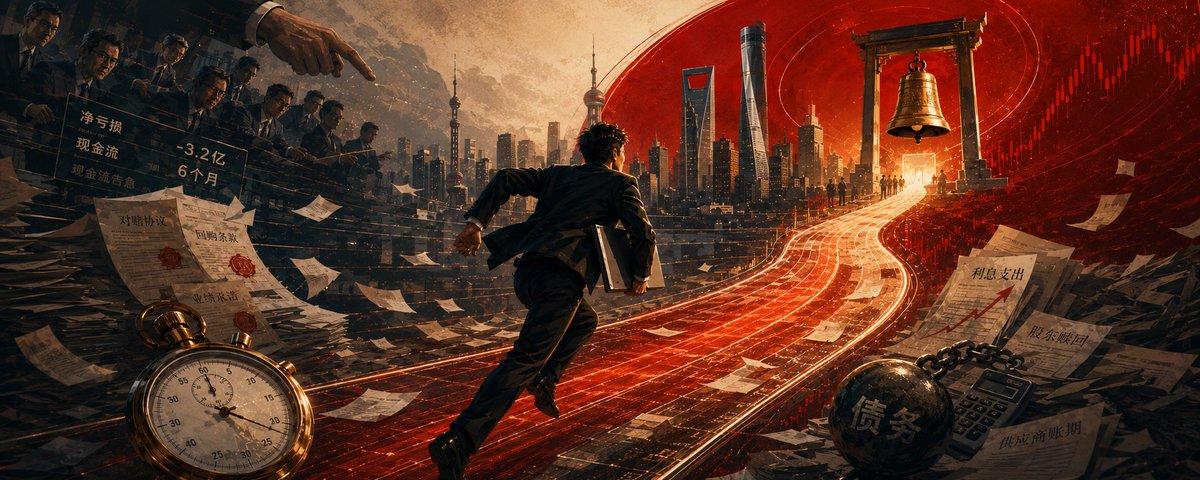
One of the biggest surprises from the trip, according to the author, was that the robotics and AI founders he met were almost all planning to go public next year, and many were already in full sprint mode.
None of those companies, he says, were at the scale of Unitree Robotics or Moonshot AI. Even those two would probably struggle to list on Nasdaq. Yet nearly everyone he spoke with said they were preparing for an IPO.
The reason, in the article’s telling, is not that they are fully ready for public markets or that timing is ideal. Many feel they have no real alternative. In China, some startups pursue IPOs because they are effectively forced to.
The piece says many Chinese founders sign investment agreements that require them to return investor capital within a set period and above a minimum rate of return. That window can run six to eight years. If the company fails to meet the terms, repurchase and repayment obligations may fall on the company, and sometimes on the founder personally.
There is even a Chinese phrase for this setup: ming gu shi zhai, or “equity in name, debt in substance.” The article says Chinese limited partners and general partners tend to have less patience and more direct demands for outcomes.
It is a hard system to square with conventional ideas about startup risk. The author asks how innovation happens at all if founders must take on such heavy personal liability to build a high-risk company. His answer is simple: Chinese founders really do bet everything.
That incentive structure, he argues, has helped create some of the leanest and toughest companies in the world, along with founders who are fully committed to their businesses. When those companies cannot make money inside China’s brutally competitive market, they often expand overseas and move quickly against local rivals.
He contrasts that posture with the lower-stakes startup culture often associated with elite U.S. universities and accelerator programs. For these founders, he writes, it is an all-or-nothing game.
Why M&A is not the answer
The article then asks why IPOs have to carry so much of the exit burden. Why can’t startups simply be acquired so investors can get their money back through M&A?
The answer, the author says, is mostly no. China does not yet have a truly mature M&A market, so startups often have to rely on IPOs and push all the way through.
One reason is economics. Chinese companies trade at lower valuations and labor costs are lower, so large firms often find it cheaper and faster to copy a startup’s idea than to buy the company outright.
Another reason is ambition and breadth. Chinese companies, the article says, are often comfortable expanding sideways into multiple businesses. A smartphone company may also make sports cars and build enterprise software. In that kind of environment, there is less incentive to acquire another company to fill a product gap.
The piece adds that “acqui-hire” style soft landings for startup teams are rare as well.
There is, however, one relative advantage for founders in China: the hurdle for going public is generally lower than on Nasdaq or the New York Stock Exchange. The point is not necessarily that regulation is looser. It is that public-market investors are more willing to buy shares in these companies.
The author says a number of Chinese tech companies have listed in recent years despite having very limited revenue or customer traction. By current U.S. market standards, those businesses would be far too small. In China or Hong Kong, they still made it to market.
He notes that Hong Kong is currently in a bull market, and says Zhipu, as one of the few publicly listed pure large language model companies, saw its stock rise sharply. Those same companies, he argues, would probably not make it public in the United States.
One possible explanation offered in the article is that retail investors account for a larger share of Asian stock markets. Even so, Hong Kong, the preferred listing venue for tech firms, is still more institutional than the mainland A-share market.
The piece does not claim that this backdrop will last. Many local institutional investors, the author says, are already preparing for possible declines in some of the hottest sectors, hoping to buy after a sharp selloff.
Three pools of capital
The article then turns to a basic question: if terms are this tough, why do founders still take the money? In a competitive venture market, one might expect investor competition to make terms more founder-friendly over time, as happened in the United States with firms such as Founders Fund and Andreessen Horowitz.
The author says that shift is happening, but only to a point. China’s venture ecosystem is younger than America’s, and, more importantly, the different capital sources available to founders operate with very different incentives.
Local RMB funds
The first category is local RMB funds, often backed by provincial or municipal government money. These typically come with the toughest terms. Companies may be asked to set up offices or factories locally in order to create jobs and draw in talent.
According to the article, these RMB funds are not focused solely on investment returns. They are also expected to support local economic development, which makes their incentives very different from those of Western funds that care only about financial performance. In practice, that often means pressure tied to job creation and population inflows, which in turn help stabilize local property markets.
Why accept that money at all? The author says that in sectors such as AI, semiconductors and robotics, which are also strategic priorities for the state, RMB funds may at times be the only capital allowed to invest. He cites DeepSeek as an example.
Domestic USD funds
The second category is domestic USD funds run by established Chinese venture firms, including Sequoia China, Hillhouse, ZhenFund, Qiming Venture Partners and IDG. The article notes that Qiming now has little practical connection with the U.S. firm Matrix Partners, and that many of these organizations manage both USD and RMB vehicles.
Compared with local RMB funds, these investors are usually more founder-friendly. Over the past 20 years, many of China’s best-known companies have been backed by them.
The author says this is the money Chinese founders most want, especially if they plan to compete globally. He also adds that from its founding until its later split from Sequoia, Sequoia China was the best-performing part of the broader Sequoia network.
Foreign funds
The third category is foreign capital, which the author describes as pure Western funds like his own.
Historically, many Western investors made substantial profits in China, including Coatue and Tiger Global. But direct investment by foreign capital into Chinese companies has fallen sharply, the article says.
Benchmark’s Series B investment in Manus is described as an outlier and possibly the last deal of its kind. The author says the consequences that followed only cooled foreign investor interest further.
Even so, he notes that investors like to think in contrarian terms. He says he once asked a member of Founders Fund what still counts as contrarian today. The reply, according to the piece, was that crypto and defense tech are already crowded trades, and China may be one of the few contrarian bets left.
The FA middle layer
Another distinctive feature of China’s venture market, the article says, is the presence of FAs. The term stands for financial advisor, though everyone simply calls them FAs.
They are not wealth managers. In this context, they function more like early-stage investment bankers, packaging startups, marketing them and brokering introductions and deals between founders and venture firms.
The author says he found it striking that such a large intermediary layer exists inside the funding ecosystem. Venture firms, in effect, outsource part of sourcing and the first round of diligence to FAs. For many founders, an FA is the first stop on the way to capital. Founders also sometimes prefer working through FAs to negotiate with hard-nosed venture investors.
There are obvious conflicts built into that setup. An FA cannot keep feeding low-quality, negatively selected companies to the same firm forever without losing trust and access. Fees are typically 2% to 5% of the amount raised, which the author describes as almost a fixed tax inside the system.
He says he asked a top investor why venture firms tolerate this. If you rely on FAs, do you not lose the excess returns that come from proprietary deal flow and from seeing the best opportunities before anyone else? The answer he got was blunt: that is just how the industry works.
The article adds that firms do invest in deals without FA involvement, but many of the best companies in the earliest rounds are still coordinated by FAs. In some cases, an FA may even sketch out a full financing relay in advance: Sequoia China for the seed round, Hillhouse for Series A, then both joining Series B. The goal is to create fundraising momentum and get the company moving quickly.
Invisible relationship networks
The author argues that China’s social networks are opaque and difficult for outsiders to read. That is both a product of relationship-driven culture and a force that keeps reinforcing it, shaping everyday business activity along the way.
His conclusion is direct: China is a society that runs on relationships.
LinkedIn never truly entered China, he writes, and local imitations did not succeed either. In most cases, people meet through introductions from mutual contacts, or at least through large group chats. WeChat groups can have as many as 500 members, the article notes, versus a limit of 32 for iMessage groups.
Picture a business world with no cold email, no LinkedIn direct messages and very little outbound outreach of any kind. The author says that may partly explain why China never developed a truly mature B2B SaaS sector. The same culture shapes how founders and investors interact. As a rule, investors do not cold-message founders.
That is another reason FAs persist, he says: they provide “relationship liquidity” in a closed network.
The article also says many people in China maintain some level of anonymity online and on WeChat. A new contact may use an anime, cartoon or landscape image as a profile photo and go by a screen name, alias or impersonal English name. The author says he even met people who declined to share their real names and used only nicknames.
The hand of the state
The final factor in the article is the role of state direction and industrial policy. Western views on this model, the author writes, depend heavily on whether the observer is in Washington or Silicon Valley, and on which camp they belong to.
Government plays a much larger role in China’s innovation system than it does in the West. The article says the state is a major limited partner in many funds, and it also attracts startups with favorable rules, tax incentives and land incentives.
It influences venture investment more directly as well by making clear which industries it wants to see develop. The author points to China’s domestic semiconductor sector over the past decade as a leading example.
He then gives a more personal and specific case: brain-computer interface startups in China. Because one local government is a strong supporter of the technology, he spoke with members of an investment institution under its umbrella. They told him they had already backed many companies in the field, and that their first priority was to build a strategic industry rather than maximize venture returns. The article compares that approach to In-Q-Tel in the United States.
The central argument running through the piece is that China has built serious competitive strength in several frontier technologies, but the capital structures, exit paths and social mechanisms behind those companies do not resemble Silicon Valley. IPO pressure, local government-backed capital, FA intermediaries and closed relationship networks are all part of the machinery that keeps the system moving.