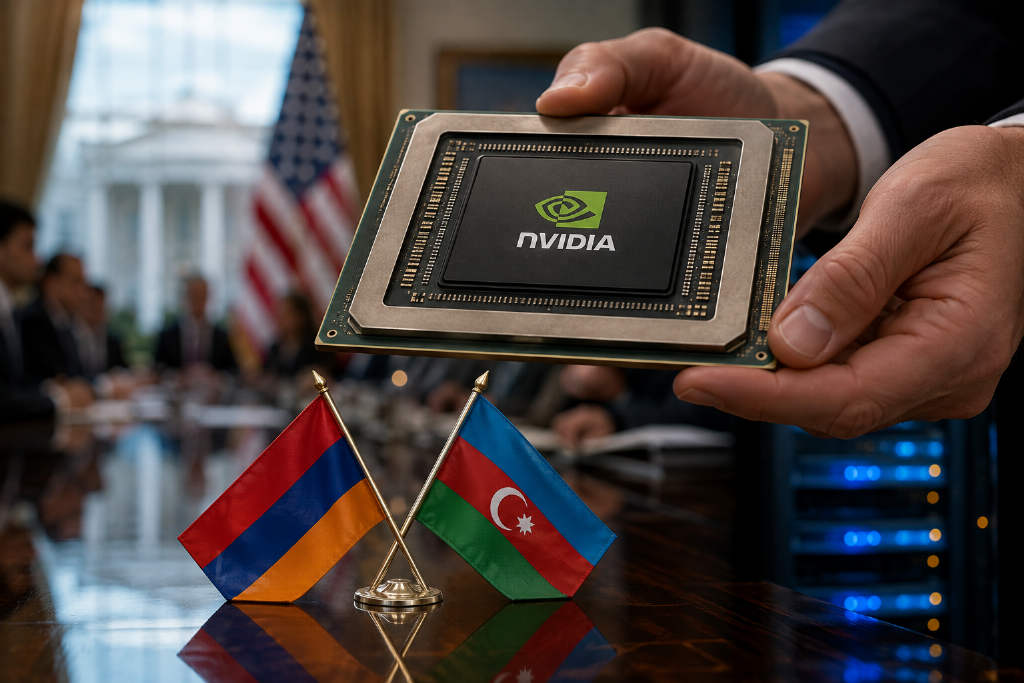
The Wall Street Journal reported that U.S. negotiators used promises of access to Nvidia's AI chips to help broker a preliminary peace deal between Armenia and Azerbaijan last year. The previously unreported detail involved expanding chip purchase approvals for Armenia's data center projects to encourage its participation in talks. This marks the most prominent case of what U.S. officials call 'chip diplomacy,' though the Trump administration had previously used AI hardware in negotiations with the UAE and Saudi Arabia. The deal deepens the White House's ties with Nvidia, the world's largest chipmaker.
U.S. negotiators leveraged promises of access to Nvidia (NVDA.O) artificial intelligence chips to help broker a preliminary peace agreement between Armenia and Azerbaijan last year, according to people familiar with the talks, as reported by The Wall Street Journal on Thursday.
In a previously unreported move, American officials expanded chip purchase approvals for Armenia's data center projects to encourage the country's participation in the negotiations. The step represents one of the most striking examples of what U.S. officials have termed "chip diplomacy," the Journal said.
While the Trump administration had previously used AI hardware as a bargaining chip in talks with the United Arab Emirates and Saudi Arabia, the Armenia agreement marks the first instance where the government publicly deployed such tactics to secure a peace deal. The deal further deepens the White House's relationship with the world's largest chipmaker, Nvidia.
This article was originally published by Bit.Fan. For more cryptocurrency news and market insights, visit www.bit.fan. Disclaimer:
The market information, project data, and third-party content displayed on this platform are for industry information sharing only and do not constitute any form of investment advice or return commitment.
Cryptocurrency trading carries high risks. Users should fully assess their risk tolerance and make independent decisions. All profits, losses, and legal responsibilities are borne by the users themselves.