
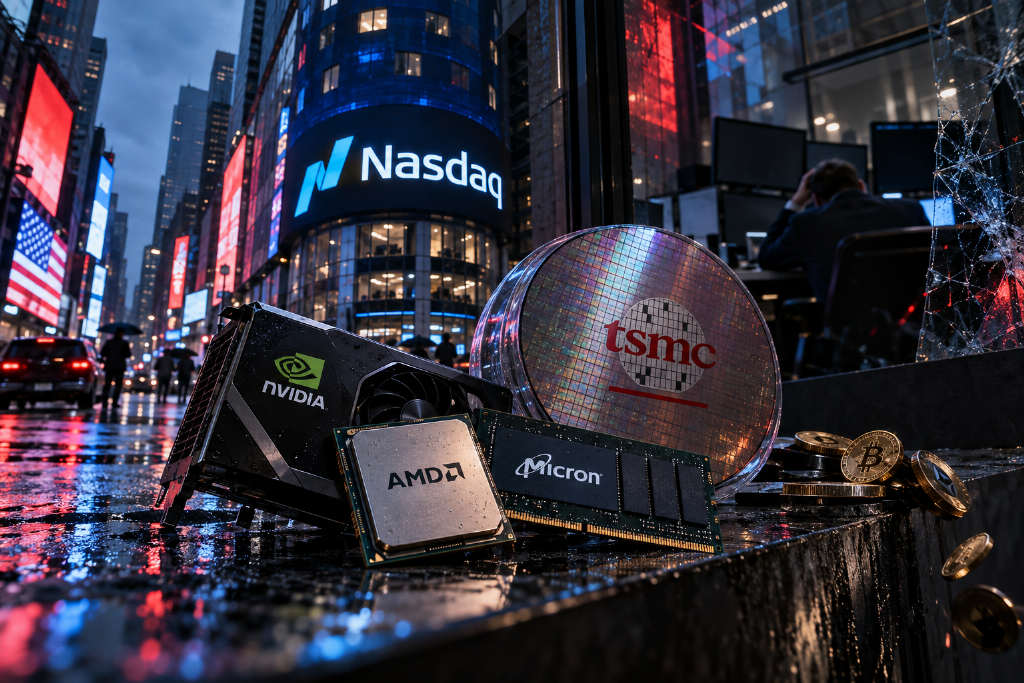
"The chance of a memory glut before 2029 is low."
That was Jensen Huang’s message on Oct. 21, local time, when the Nvidia CEO spoke to the media during GTC in Berlin and argued that demand for the memory industry remained solid. He has made similar calls before. At Computex 26, Huang said Marvell was "the next trillion-dollar company," and Marvell later rose 32.25% on June 2, its biggest one-day gain on record.
This time, the market reaction went the other way.
On Oct. 22, U.S. technology shares were hit by a broad sell-off. The Nasdaq Composite dropped 2.6%, its largest one-day decline since June. The Philadelphia Semiconductor Index fell about 6.72%. Nvidia, AMD, Intel, Micron and Taiwan Semiconductor Manufacturing Co. all moved lower, and Meta lost nearly 7%.
The weakness ran through the chain: equipment makers, memory producers, foundries, fabless chip designers, compute customers and model developers all came under pressure.
The retreat had not come out of nowhere. Goldman Sachs prime brokerage data showed semiconductor shares had already been falling over the past week, while hedge funds accelerated sales of technology stocks. Retail investors, by contrast, were still buying chip, storage and AI cloud-computing names.
At the same time, Michael Burry, whose trades inspired "The Big Short," had shifted most of his bearish options exposure toward put options on the Nasdaq 100 and semiconductor ETFs. Another well-known short seller, Jim Chanos, focused on newer cloud-computing companies that borrow to build data centers and lease AI compute.
What the market is testing now is not one single risk. It is checking several at once: chip valuations, the balance between compute supply and demand, and the financing costs behind AI infrastructure.
AI trade hits the brakes
The sharp sell-off in U.S. tech shares on Oct. 22 brought concerns about returns on AI spending back into full view. The immediate trigger was Meta’s quarterly report. After a large increase in capital expenditures, the company’s free cash flow turned negative $2.12 billion.
At the same time, tensions in the Middle East pushed oil prices higher, adding uncertainty to the inflation and interest-rate outlook. As financing and operating costs face upward pressure, investors are showing less tolerance for large-scale capital spending by technology companies. The question is straightforward: when will aggressive investment turn into enough revenue and profit?
This adjustment had been building earlier. By Oct. 16, the Philadelphia Semiconductor Index had already fallen for eight straight trading sessions, down more than 15% in total. In other words, semiconductor stocks had started weakening before the concentrated sell-off on Oct. 22, and the previously crowded AI trade was already loosening.
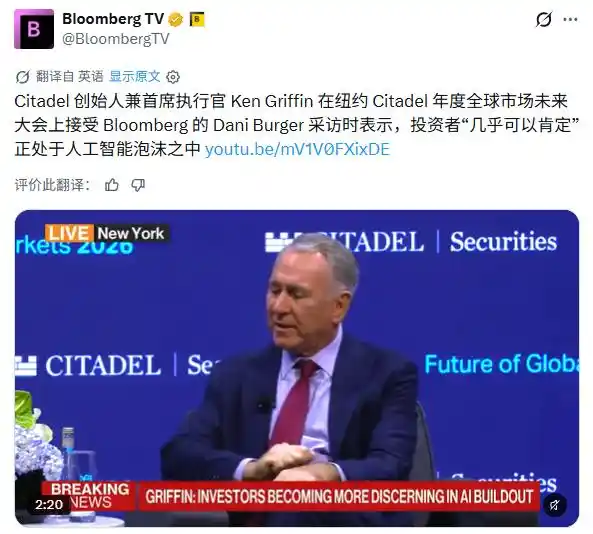
Citadel founder Ken Griffin said in an interview with foreign media on Oct. 20 that investors could be "almost certain" there was an artificial intelligence bubble.
He compared GPUs with airlines and questioned how long compute pricing could hold once GPU supply increased. "GPU and airlines are the same in that the marginal cost of operation is very low. If we get to a point where GPU supply exceeds demand, marginal pricing will effectively free-fall," he said.
On corporate spending, Griffin added: "Corporate America is looking at the bills from Anthropic and OpenAI and saying, 'Okay, we need to think about how to make sure we get productivity from this.'" He did not dismiss the long-term value, though, saying that "the companies on the other side of the bubble are the market leaders for the next several decades."
That view lined up with the drop in chip shares on Oct. 22. The market is not only asking whether AI demand will keep growing. It is also asking whether that growth can support current chip prices, compute rental prices and company valuations. Put simply, when will the money being spent start coming back, and can it come back faster?
Burry has kept stressing bubble risk. He believes the market could form an important top within the next nine months and has warned that the final stage of a bull market can become even more intense.
During the latest pullback, institutions were among the fastest to reduce risk.
Goldman Sachs prime brokerage data showed that in the five trading days through Oct. 15, hedge funds cut technology exposure at the fastest pace in at least a decade, with semiconductors among the largest areas by dollar amount sold. The report also noted that the data reflected only clients covered by Goldman’s prime brokerage business, not the entire hedge fund industry.
JPMorgan strategist Nikolaos Panigirtzoglou said in a flow analysis that semiconductor stock performance was linked to the risk exposure of equity long-short funds. Once those shares start falling, funds constrained by risk limits may cut positions further, amplifying selling pressure.
Liquidations during the market holiday
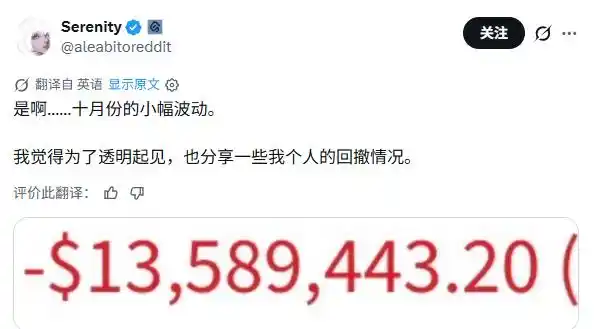
"Yeah, just a small October fluctuation."
Investment blogger @aleabitoreddit, known online as the "white-haired stock god," recently shared his positions and said the market was going through heavy forced liquidations and panic selling. He added that he was still up for the year, though some holdings had pulled back recently.
@aleabitoreddit did not disclose a specific loss figure and did not say he had been liquidated. The post instead captured how some individual investors were experiencing the correction: gains for the year could still coexist with painful short-term drawdowns.
Outside the spot market, leveraged trading tied to chip stocks also started to unwind.
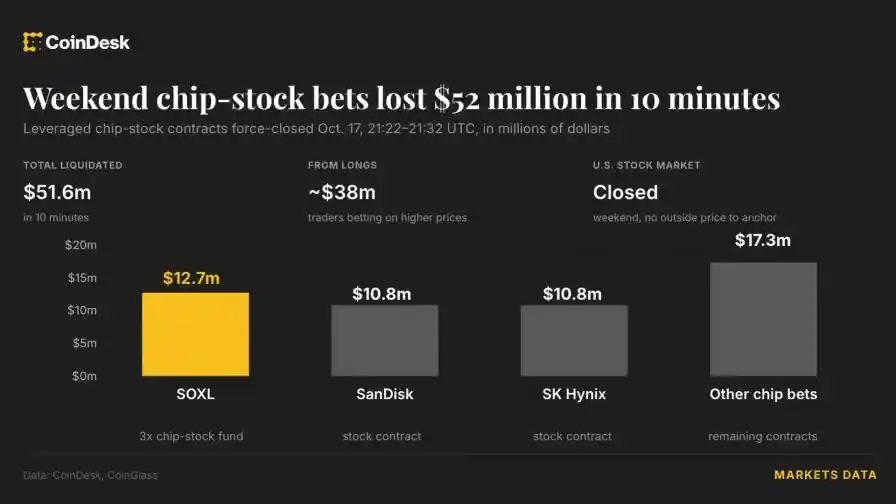
CoinDesk, citing CoinGlass data, reported that on Oct. 17, while U.S. equity markets were closed, crypto perpetual futures linked to chip stocks and semiconductor ETFs saw about $51.6 million in forced liquidations in 10 minutes. Roughly $38 million of that came from long positions betting on higher prices.
Breaking it down, contracts tied to SOXL, the triple-leveraged bullish semiconductor equity product, saw about $12.7 million in liquidations. Contracts linked to SanDisk and SK hynix each saw about $10.8 million in positions wiped out.
On Oct. 17, with U.S. stocks closed, chip-linked crypto perpetuals saw about $51.6 million in liquidations in 10 minutes, including $38 million from longs.
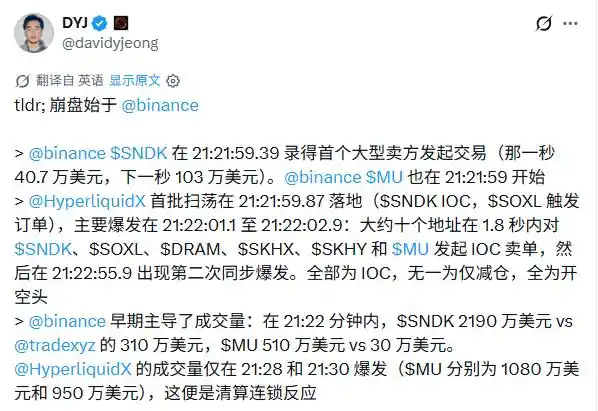
Tread.fi CEO @davidyjeong analyzed the order flow on X. He said large sell orders in contracts tied to SanDisk and Micron first appeared on Binance, and less than a second later, related trading spread to the stock-linked contract market on Hyperliquid.
Leverage was the key factor. When prices move against a position and account equity falls below the platform’s margin requirement, the platform can close the trade automatically. For highly leveraged longs, even if the underlying stock later rebounds, the position may already be gone.
The $51.6 million liquidated in 10 minutes does not represent the amount of liquidations in the U.S. stock market itself. It does show that trading around the AI supply chain now extends into round-the-clock leveraged venues, where price moves can trigger liquidations before Wall Street opens and then feed volatility back into spot markets.
Short sellers profit while retail keeps buying
As institutions reduced technology exposure, some retail investors were still buying into the AI supply chain.
JPMorgan strategist Arun Jain said in a flow analysis that from Oct. 15 to Oct. 21, individual investors increased purchases of chipmakers, storage hardware companies and newer cloud service providers. Buying in single technology names rose to the highest level since the market momentum reversal in July, though purchases of the "Magnificent Seven" eased.
On the other side of the trade, investors shorting AI infrastructure-related companies had already built sizable paper gains.
On Oct. 22, foreign media cited data from analytics firm ORTEX showing that investors betting against U.S. new cloud-computing companies and data-center operators had made about $6 billion in paper profits for the month. Around 20% to 26% of the free float in companies including CoreWeave, IREN, Nebius, Applied Digital and Core Scientific had been sold short.
Among them, shorts in CoreWeave were sitting on nearly $1.7 billion in paper gains for the month as the stock fell nearly 30% over the same period. Shorts in Nebius had about $2.94 billion in paper gains for the month, though they were still showing about $3.33 billion in paper losses year to date.
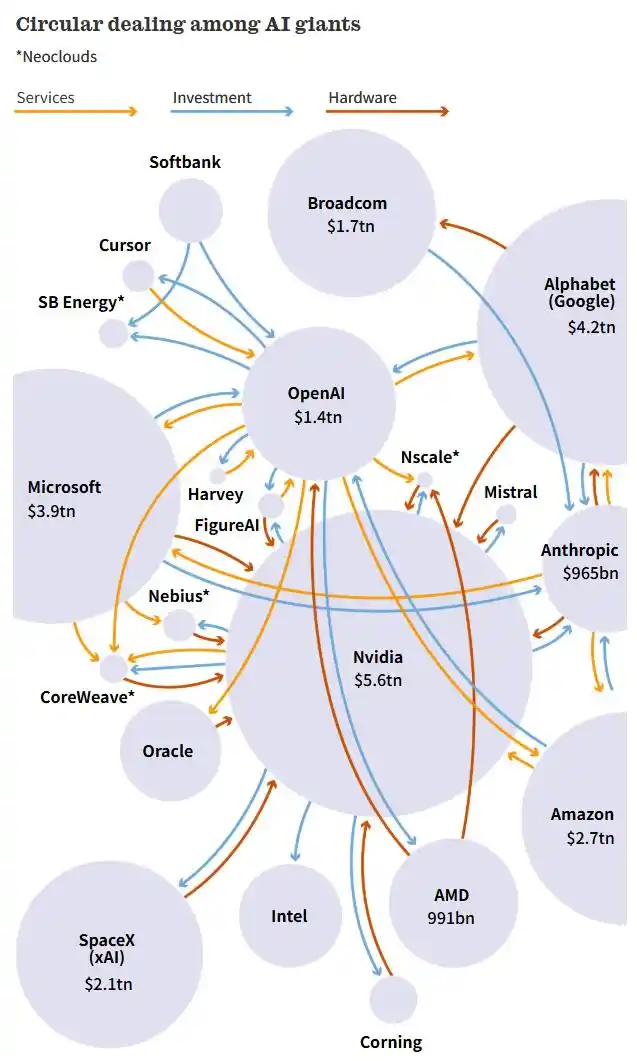
The report also noted that these gains were concentrated in some AI compute and data-center names. The Nebius example showed that one month of paper profits does not mean a short position has been profitable from start to finish.
Chanos’ criticism of these companies helps explain part of the short thesis. The investor, known for shorting Enron, said in early October that he was short most newer cloud-computing companies. In his view, the market values them like growth technology stocks, but their business model looks more like a highly leveraged asset-rental business: borrow money to buy AI chips and build data centers, then rent out compute capacity to customers.
The risk in that model is clear. Companies must spend heavily upfront on chips and data centers, then rely on future compute-rental income to cover financing costs. If demand, rental pricing or equipment utilization falls short of expectations, debt pressure can rise quickly.
Not every U.S. stock fell together. On Oct. 22, nearly two-thirds of S&P 500 components actually closed higher. The index still lost 1.21% because it is weighted by market capitalization, so declines in a small number of very large technology stocks were enough to drag it down.
Bespoke Investment Group said that since at least 1990, there had been only one day with a larger divergence between positive market breadth and a negative S&P 500 return than the one seen that day. In other words, the index fell even as most of its components rose.
The more extreme case came in January 2025, when DeepSeek released a new AI model and triggered questions about the competitive edge of large U.S. technology companies and the logic behind their huge capital spending.
From here, the next signals to watch are whether semiconductor shares can stabilize, whether institutional selling continues, and whether earnings from Microsoft and Amazon offer clearer evidence on returns from AI spending.
This article was sourced from Tencent Technology. Author: Su Yang. Editor: Xu Qingyang. Jin Lu also contributed to the translation.


