


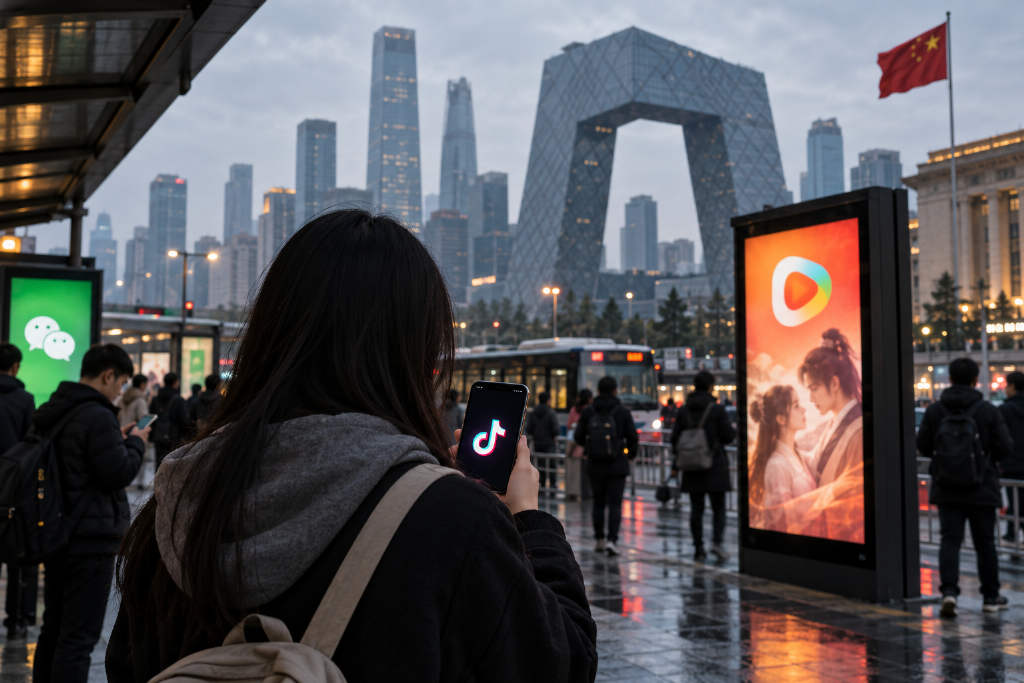
Time on China’s mobile internet is being reshuffled. And the latest data cited in a MarsBit commentary says ByteDance is grabbing a bigger piece of that shift.

Nomura Securities’ September report, China Internet and New Media Monthly APP Tracking Report, citing QuestMobile data, said Douyin passed WeChat for the first time in July 2026 by total time spent among China’s top 50 mobile internet apps. Douyin took 19.4%, while WeChat was at 18.8%. At the company level, ByteDance apps made up 40.9% of total time spent, and Tencent slipped to 29.1%. A year earlier, in July 2025, ByteDance was at 33.6% and Tencent at 30.9%.
The same reporting window also put a spotlight on Hongguo Free Short Drama, a ByteDance app centered on short serialized video. In July 2026, Hongguo hit 168 million daily active users, up 107% year over year. That was higher than the combined total of Tencent Video, iQIYI, Youku and Mango TV, which the article pegged at about 155 million without deduplication.
By total user time, the article said Hongguo had climbed to become China’s fourth-largest app, behind only Douyin, WeChat and Douyin Express. It also flagged strikingly high engagement per user. By February 2026, Hongguo’s average daily usage time had already reached 125 minutes, higher than both Douyin and WeChat.
WeChat still has the edge in daily active users, with more than 900 million, against more than 700 million for Douyin. But the article’s point is blunt: user count no longer explains everything. If time becomes the main way to look at it, the question changes. Is China’s internet moving from “Tencent time” to “ByteDance time,” and from “WeChat time” to “Douyin plus Hongguo time”?
The commentary builds its answer on one simple idea. Content is eating into time that used to belong to social interaction. As content starts replacing social networking as the first stop for user attention, short dramas — shorter, more intense, stuffed with twists — are taking over the moments when users are most relaxed and least defended.
Why Hongguo scaled so quickly
The article says Hongguo’s growth is drawing attention for more than just traffic. It has also become part of a broader argument over short-drama addiction and attention extraction. Some users, it said, posted screenshots showing more than 10 hours of average daily use. And the phrase “Hongguo short dramas make people dumber” trended on Weibo.
It quoted two user reactions: “I only meant to watch one episode, and before I knew it, it was almost dawn,” and “I really need to delete Hongguo. I feel like I’m getting dumber.”
Then the article brought in the view of a clinical psychology doctor. The issue, it said, is not that users are literally becoming less intelligent. It is that dense cliffhangers and repeated emotional jolts keep hitting the brain’s dopamine system, pushing it into a passively excited, overloaded state. Once that reserve gets drained, concentration and comprehension can weaken for a while, creating the feeling of becoming “less sharp.”
The author wrote that he first heard about Hongguo in November 2025 at a premium micro-short-drama base in Linfen, Shanxi. A general manager at a cultural company asked him how long the micro-drama boom might last, and whether Hongguo still had room to run. That conversation pushed him to take a closer look at the app.
As the piece tells it, Hongguo launched in August 2023. Its model mixed free viewing, ad revenue sharing and coin incentives. Users could watch dramas without paying, and they could also earn coins through daily check-ins and viewing. That was a clean break from the membership and pay-per-view approach used by traditional long-form video platforms.
Episodes on Hongguo usually run one to three minutes, but a series can go on for dozens or even more than 100 episodes. Familiar themes include comeback stories, domineering CEOs, revenge, humiliation and payback, wealthy families, romance, fantasy, political intrigue, workplace pain points and patriotic narratives. The article called the storytelling conflict-heavy, twist-heavy and intensely stimulating. Once one formula breaks out, the recommendation system serves users more of it. Fast. Then similar titles flood in.

The author also added a personal aside. He said Hongguo often showed up in his Toutiao feed. He had downloaded it before, then deleted it after two or three days, partly because the plots felt too over-the-top and partly because the time spent did not seem worth it. For this article, he downloaded the app again and watched parts of Chi Xie Ru Song and Jizhen Moyu Wang. His takeaway: the content is more varied than it used to be, and some titles even show substance and professional detail. So no, he wrote, the app does not automatically “lower intelligence.” But it absolutely eats time, and it is easy to get trapped in it.
The broader point in the piece is simple. Hongguo’s breakout again shows how entertainment lines up with human instinct. The lower the barrier, the stronger the payoff, the sharper the conflict and the less thought required, the easier it is for a product to turn into mass entertainment.
Algorithm, supply, ecosystem and free access
The article insists this is not just a China story. Across the global mobile internet, short-drama apps built on short duration, high frequency and strong emotion are spreading fast. In the U.S. market, ReelShort’s average daily viewing time in the fourth quarter of 2025 was higher than Netflix, Amazon Prime Video and Disney+ on mobile, according to the piece. ByteDance’s overseas short-drama app PineDrama launched in December 2025 and had passed 100 million cumulative downloads by September 2026, with about 7 million daily active users.
Still, the article argues that Hongguo has moved faster in China than similar products have abroad. It credits stronger recommendation systems, fuller AI-driven content supply, a stronger platform ecosystem and a free model. As a reference point, it cited ReelShort’s average daily usage time in the fourth quarter of 2025 at 35.7 minutes, far below Hongguo’s 125 minutes.
The commentary splits Hongguo’s rise into four drivers.
First, the algorithm. The article says Hongguo takes recommendation one step past short video. Short video gives users fragmented stimulation; short drama adds ongoing narrative stimulation. Nearly every episode ends on a hook. And the user barely has to do anything: just watch one more episode.
Second, supply. The article said that from January to August 2026, 430,000 micro-short dramas were launched nationwide, 13 times the total for all of 2025. More than 90% were AI dramas. That, it argued, slashed production costs and created a massive content pool.
Third, ecosystem support. Users can watch clipped scenes on Douyin and jump straight to Hongguo for the full series. Tomato Novel provides a huge pool of web-fiction intellectual property. The article said more than 60% of the breakout short dramas across the internet in 2025 were adapted from Tomato Novel IP, while the dramas also sent new readers back to the original works.
Fourth, the free model. Users do not pay directly. They watch ads instead. Hongguo sells user attention to advertisers, makes money from ads, and then shares revenue with creators, creating what the article called a closed commercial loop.
For that reason, the piece argues, Hongguo is not just another video app. It is a machine for distributing emotion and absorbing time, powered by free content, recommendation algorithms, ad monetization and platform integration.
Inside that system, users do not need to search for content. They do not even need to know what they want. The platform decides, based on dwell time, swipes, completion rates and follow-up viewing. Over time, it trains users into a tighter attention structure with almost no slack. By that yardstick, long-form content starts to feel slow and struggles even to win the first minute of attention.
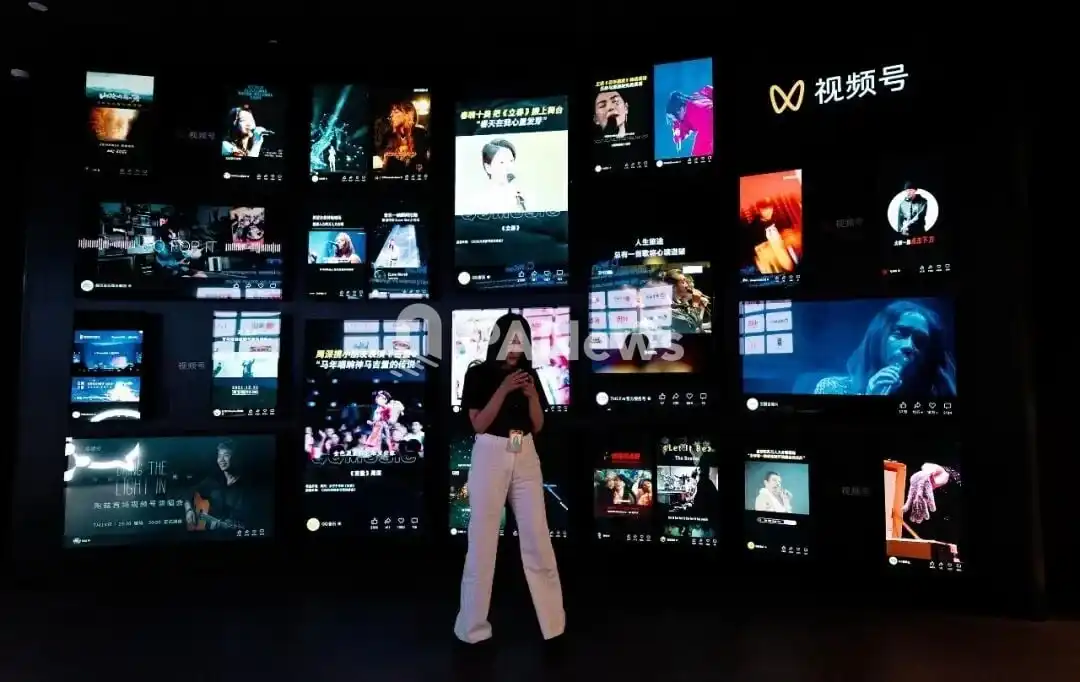
The article also says Hongguo does not ask users to commit to a long session upfront. That is the trick. It works by making the next episode feel impossible to resist. Autoplay, serial cliffhangers, free access, precise targeting and coin rewards all cut the friction of leaving and increase the odds of retention and immersion.
ByteDance’s content machine versus Tencent’s social moat
The article says all four major long-video platforms have lost time spent under pressure from Hongguo. Tencent’s answer, it says, has been to launch Green Bubble Short Drama inside WeChat mini programs, using the WeChat system to keep short-drama viewing under its own roof.
Tencent’s biggest moat is still its social graph, the piece argues, but it also has a broad content portfolio: WeChat Official Accounts, Channels, Tencent Video, Tencent Music and Yuewen. For years, ByteDance products such as Toutiao, Douyin, Xigua Video, Tomato Novel, Soda Music and Hongguo have been trying to pull user time away from social relationships and into algorithmic content feeds. If Tencent cannot hold its ground in content, the article says, its social stickiness could weaken too.
That is why Tencent has to keep building out its content side. The article points to Channels. One reason it worked, the piece says, is that it sits directly on top of WeChat’s social graph. Users can open it the moment they open WeChat, and social recommendation tools like “friends are watching” help cut acquisition costs, improve conversion and keep traffic inside Tencent’s own system.
If Channels can pull users in with drama clips, Green Bubble can handle full-episode viewing, and WeChat can take care of social sharing and ad monetization, then Tencent may be able to keep users inside its own system who would otherwise watch short dramas elsewhere. Even so, the author said he is not optimistic that Green Bubble can go head-to-head with Hongguo.
The reason, in his view, is straightforward. Hongguo, like several other ByteDance products, is a distribution machine driven heavily by algorithms. The article says ByteDance’s native strength is using algorithms to understand and shape human behavior.
Starting with Toutiao, ByteDance used recommendation systems and A/B testing to replace much of the human judgment that once sat at the center of content production. Some improvements still need manual analysis and confirmation. But the base is an algorithmic architecture refined over time and supported by heavy spending on computing power. That base can power multiple front-end apps with the same distribution ability. The article quotes a ByteDance engineer who compared the architecture to a “wine bottle” and local user behavior data to the “wine” inside it: Douyin contains Chinese user data, TikTok contains U.S. user data, but the bottle is mostly the same.
In that frame, ByteDance captures users through algorithmic recommendation. The article describes it as a machine-like creature fed by data, growing stronger as it consumes more.
Tencent, by contrast, is rooted in social networking. It also works in content, both as a platform and as a producer of some content itself. The article notes that Tencent Net and Tencent News were born in the PC internet era, when editorial departments still had strong influence over content decisions and paid attention to taste, direction and impact. Tencent also picked up content assets over time, including Shanda Literature.
Tencent uses algorithms too, the article says. But algorithms are not its original core, not its base layer, and not a single operating system stretching across every product. The author uses the metaphor of “multiple bottles” to describe Tencent’s content structure. Different products sit in different containers, instead of being poured from one unified algorithmic bottle.
From the creator angle, the article draws another line, this time on traffic allocation. In Tencent’s content system, top creators often take a larger share of traffic, leaving some marks of centralization. Douyin’s recommendation system is more decentralized. Distribution does not depend entirely on an existing follower base, and even a new account can get reach if one post performs well with users.

There is one more difference. WeChat’s social graph helps content spread, yes, but it also brings social pressure. Users posting to Moments may think about who will see the post and how it will be judged. On Douyin and Hongguo, what a user watches is far less visible to other people, aside from the platform itself and its attention-tracking machinery.
From content industrialization to “ByteDance time”
The article places this shift inside a longer historical arc. Over the past two or three decades, digital content has exploded on a scale we have not seen before. On the production side, creative power moved from relative control by professional institutions to mass participation. On the demand side, audiences moved from one-way passive reception to around-the-clock online consumption by billions of people. Content forms multiplied in every direction.
Within that shift, ByteDance, born in the mobile internet era, was built around algorithms and automated systems from day one. The article says it turned recommendation, advertising systems, creator ecosystems and paid traffic distribution into an industrial assembly line.
That, in the author’s view, is the deeper reason ByteDance time can overtake Tencent time, Douyin time can overtake WeChat time, and Hongguo’s daily active users can exceed the combined scale of major long-video platforms. The heart of it is a more efficient match between algorithm-driven distribution and content supply. He calls it a form of “new quality productive force,” while adding that whether this “quality” also means high-quality content is a separate matter.
The piece also argues that mass-market content has often been looked down on by elite creators, from sensational tabloids in earlier eras to short video today. But “vulgar” content naturally has a larger market, and humanity as a whole does not simply become stupid. Different balances tend to emerge. Different audiences, different forms.
So the author does not think short video or short drama will kill long-form content, just as instant noodles did not replace full meals. But the shock is still real. Douyin and Hongguo have built the path of least resistance for human impulse: no searching, no choosing, no paying. In that setting, long, deep, specialized and reflective content — and content that depends more heavily on real human creation and performance — will come under systemic pressure.
The article adds one more observation here: Tencent, backed by massive user data and the scale of the WeChat system, is trying to build a new edge in proprietary intelligent agents.
Regulation, restraint and the question of where time goes
The final section shifts from platform rivalry to the use of time itself. Life is time, the author writes, and whatever fills that time shapes the condition of life. As users hand more of their hours to “ByteDance time” and let algorithms arrange more of their idle moments, they also give up some initiative, along with time that might otherwise go to outdoor activity, companionship, study, social interaction or rest.
The article asks what happens if the cognitive bandwidth of hundreds of millions of people is occupied for long stretches by endless homogeneous short dramas, and if users grow more and more used to “instant emotional settlement.” In that setting, where machine-plus-algorithm systems can dominate emotional-content competition through industrial scale and personalization, the author wonders whether independent thinking and deep thinking will be worn down.
He admits that, as a creator with a traditional media background, this may sound old-fashioned. Even so, he argues that when users get used to low-threshold, easy and immediate gratification, and spend huge amounts of time inside highly stimulating, low-choice and hard-to-exit content, reality itself can begin to feel flatter and patience can quietly leak away.
At the same time, the article says audiences do have the right to choose. There is nothing illegitimate about wanting light entertainment, emotional release and fragmented leisure. The concern starts when machine recommendation pushes attention into an unrestrained, unconscious state of content use, and users feel lost once they step away. In that case, short dramas are not just taking time. They are reshaping how users produce emotion, allocate attention and understand the world. The less active choice a person makes, the less sensitive that person may become to information quality.
The article says some restraint-focused governance measures have already appeared. Starting on Sept. 1, 2026, the Measures for the Development and Administration of Micro-Short Dramas took effect. The rules require classified filing for micro-short dramas, mandatory labeling for AI-generated content, and a ban on algorithmic models that induce addiction or excessive consumption.
On Oct. 21, Hongguo Short Drama announced that it would phase out the platform’s coin feature. Starting Nov. 1, 2026, new users would no longer get access to the coin function. By the end of December 2026, the feature would be fully removed from the platform. The article notes that users’ existing coin and cash balances would not be affected.
To the author, those signals mean Hongguo can no longer sprint the way it used to. But, he argues, history also shows that constraints do not fundamentally stop audience choice, and Hongguo will most likely keep expanding.
Looking ahead, the article expects short drama to stay in a boom phase and says the market may develop into a K-shaped structure. At the bottom: a vast volume of AI-produced “feel-good” dramas soaking up user time. At the top: a small number of premium live-action titles and strong-IP works that build reputation for the sector. The middle tier of live-action short dramas, neither premium enough nor cheap enough, may face the toughest conditions.
As for Hongguo itself, the author believes that once restrictive factors start to bite, it will gradually shift from a one-of-a-kind traffic frenzy into a standard content category. Even then, its leading position in the short-drama market will be hard to dislodge.
The article also expects the content war between Tencent and ByteDance to drag on for a long time. Tencent will keep trying to balance social networking and algorithms, and parts of its content business are already becoming more algorithmic. Even though ByteDance has passed Tencent in total user time and Douyin has moved ahead of WeChat on that measure, time is not the only way to judge content, and not always the most important one. More time does not automatically mean more value. In premium content, brand trust and social distribution, Tencent’s system is still strong. Its weakness, the article says, is in fragmented, high-frequency, low-threshold consumption, where its efficiency lags ByteDance’s more uniform algorithmic distribution.
The author is especially blunt about Hongguo’s 125-minute daily usage figure. It may be a good number for ByteDance, he writes, but it is not an encouraging one for users or for society. The opportunity cost is obvious: less time in nature, less time reading, less time thinking and less time with family. The price of that kind of pleasure is high. And the effects may last.
He ends with two hopes. One: that ByteDance will use its powerful content flows to shoulder more social responsibility and offset some of the social cost created by taking up so much attention. He adds that Toutiao and Douyin have already made some efforts in that direction and achieved some results. Two: that Tencent, in a content world increasingly ruled by algorithmic efficiency, will keep holding on to some human-centered judgment and responsibility.
The article then recalls a line from Pony Ma more than a decade ago: “Sometimes you did nothing wrong; your only mistake was being too old.” At the time, the point was that the arrival of the mobile internet was changing user habits so quickly that old methods could become obsolete. The author says the same rule exists in the content world, and that Zhang Yiming, a generation younger than Pony Ma, chose a new path built by machines.
Still, he adds, being “old” may not be a flaw today and could even be an advantage. China is aging fast, and its middle-aged and elderly population is large, giving Tencent’s content system a strong base. More importantly, content that can endure over time — classic content — cannot be produced through the simple logic of instant-gratification fiction and short dramas. The immersion created by classic works is not the same as the compulsion created by AI short dramas.
The piece ends by saying the AI era has already arrived, bringing a new set of opportunities and challenges. Where user content time goes next, and whose world it becomes, is still an open story.