
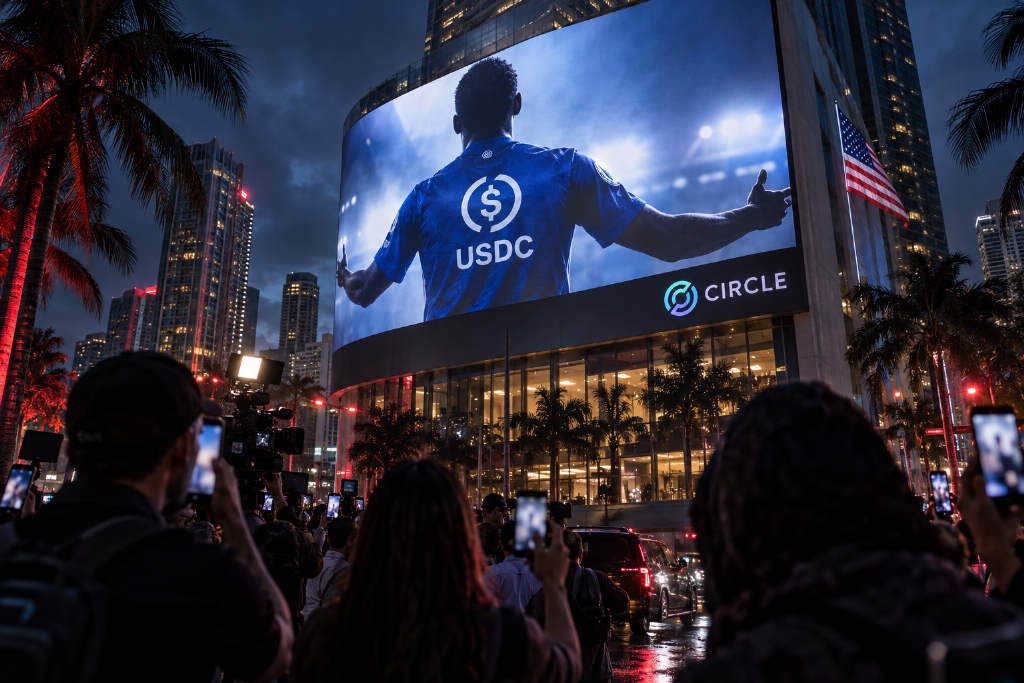
Circle, the issuer of the USDC stablecoin, set off a fierce reaction on X after welcoming rapper DJ Khaled to “team USDC” on Monday. The blowback was immediate. The facts, though, suggest something less formal than many users first assumed.
Two posts triggered the dispute
The episode began when USDC’s official X account posted a photo of DJ Khaled wearing a Chelsea jersey with “USDC by Circle” across the front. The caption read “Another one,” a reference to Khaled’s well-known catchphrase. Roughly four hours later, Circle CEO Jeremy Allaire reposted it and wrote: “DJ Khaled welcome to team USDC.”
Neither post announced a sponsorship, a brand ambassador role, or any payment. On the face of it, the exchange looked more like a cheeky acknowledgment than a formal business arrangement.
There are two pieces of context behind that reading. Circle is Chelsea’s official front-of-shirt sponsor. Khaled’s appearance around the club also comes through a separate channel: Chelsea’s May announcement with Roc Nation included DJ Khaled as part of a promotional stunt.
Crypto X focused on Khaled’s history in crypto
That distinction did little to calm critics. Across Crypto Twitter, the response centered on Khaled’s past involvement in one of the better-known ICO scandals.
“Please don't work with scammers like this,” Joseph Schiarizzi wrote on X. He then asked whether Circle really wanted someone who had paid hundreds of thousands of dollars in SEC fines for illegally failing to disclose payments received for promoting ICOs to represent its brand.
Schiarizzi was referring to the fraudulent Centra ICO. The founders behind Centra were sent to prison in 2020. Khaled, along with other celebrities, promoted the token. He later paid more than $150,000 in fines to the U.S. Securities and Exchange Commission for failing to disclose that the promotion was paid.
Given that history, some users read Circle’s post as if Khaled were once again being paid to promote a crypto product without disclosure. Others publicly criticized Circle, a billion-dollar publicly listed company, for associating itself with him at all. The available information does not show that this is what happened, but the backlash kept building anyway.
Sarcasm and criticism spread quickly
Pseudonymous crypto sleuth Wazz Crypto responded with sarcasm, suggesting that Circle should sponsor Kim Kardashian next because she had been such an “outspoken advocate” for stablecoins and cross-border payments, and because that supposedly matched the brand message perfectly.
The joke pointed to Kardashian’s own SEC case. In 2022, the regulator ordered her to pay $1.26 million in penalties, disgorgement, and interest after she promoted the EthereumMax token on Instagram without disclosing a $250,000 payment.
Taylor Monahan, formerly of MetaMask, also weighed in sharply. On X, she wrote: “Circle really hired the guy who was charged with promoting one of the only ICO scams that was so stupid, so blatantly fraudulent, so criminal that it was written up in NYTimes and then promptly prosecuted by DOJ and SEC?”
The record is narrower than that post may imply. To avoid confusion, neither the SEC nor the U.S. Department of Justice charged Khaled with fraud. His case was about an undisclosed payment tied to a promotion.
The Centra case resurfaced in detail
According to the SEC’s order, Khaled had 12.4 million Instagram followers in September 2017 when he posted a photo of himself with a Centra Tech debit card. He called it “the ultimate winner in Cryptocurrency debit cards” and told followers: “Get your CTR tokens now!”
CTR was the token sold in Centra’s initial coin offering, or ICO, a fundraising model in which a startup sells digital tokens to the public. The SEC said Centra paid Khaled $50,000 for that post and that he did not disclose the payment to his followers. Under securities law, someone who is paid to promote an investment must say so. Without that disclosure, an advertisement can appear to be an independent recommendation.
Prosecutors later said the product itself was fiction. The supposed Visa and Mastercard partnerships behind Centra’s crypto card were fake. So was the company’s CEO, “Michael Edwards,” who was presented as holding an MBA from Harvard even though he did not exist.
Centra raised more than $25 million. Co-founder Robert Farkas pleaded guilty and received a sentence of one year and one day. Sohrab Sharma was sentenced to eight years and ordered to forfeit $36 million. Netflix later released the documentary Bitconned about the Centra scam.
Khaled’s restriction period has already expired
Khaled settled with the SEC and paid the fine. His two-year agreement barring him from accepting compensation to promote securities expired on November 29, 2020. From a legal standpoint, that means he is free to strike deals with crypto companies if he chooses.
That did not stop the internet from revisiting the old case the moment Circle put his name next to USDC.