
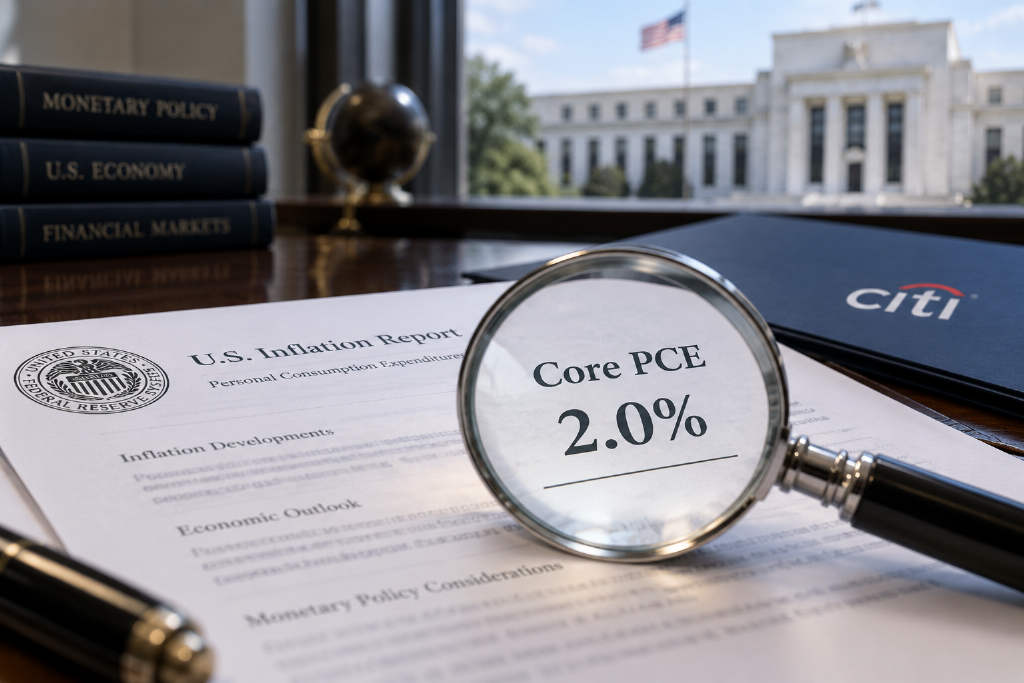
Citi said the Federal Reserve could be headed for a "dovish surprise" if core PCE continues to run near a 2% annualized pace in the short term, according to a report cited by BlockBeats on Oct. 9.
The bank said the main question is not whether the Fed will quickly pivot to rate cuts, but whether the additional hikes officials had projected will still take place after the September rate increase.
Citi says the case for preventive tightening could fade
In the report, Citi economist Andrew Hollenhorst said the U.S. economy is not overheating and that there has "never really been a strong reason to hike rates." He said the September meeting minutes showed that at least some Fed officials also did not see the economy as clearly overheated. Instead, they agreed to raise rates on risk-management grounds because inflation still carried upside risks.
That, Citi argued, means the preventive logic behind the September hike could weaken quickly if underlying inflation keeps cooling. The bank added that most officials still expect one more rate increase before year-end, but the minutes did not show urgency for back-to-back tightening in October.
Monthly core PCE is the focus
Citi said it is watching core PCE on a month-over-month basis rather than the still-high year-over-year figure. August core PCE rose 0.2% from the previous month, July was revised to 0.1%, and August increased 3.0% from a year earlier.
If several months of data continue to imply an annualized pace of about 2%, Citi said that should count as inflation falling at a "sufficient speed" by the Fed's standard.
Energy pass-through remains limited, Citi says
The bank also took a cautious view on the idea that higher energy prices will feed into core inflation. Citi said companies have not broadly passed energy costs through into core prices.
Under its baseline scenario, Citi expects core inflation to remain low over the next four months and said there is downside risk to September core inflation.
What Citi means by a "dovish surprise"
Citi said a "dovish surprise" would more likely mean the hiking cycle ends earlier than the dot plot and market expectations suggest, rather than a rapid move into rate cuts.
The report also said Fed Chair Waller has not clearly defined what counts as "sufficient speed," and that several months of core PCE running at roughly a 2% annualized rate could serve as a reasonable reference point.