
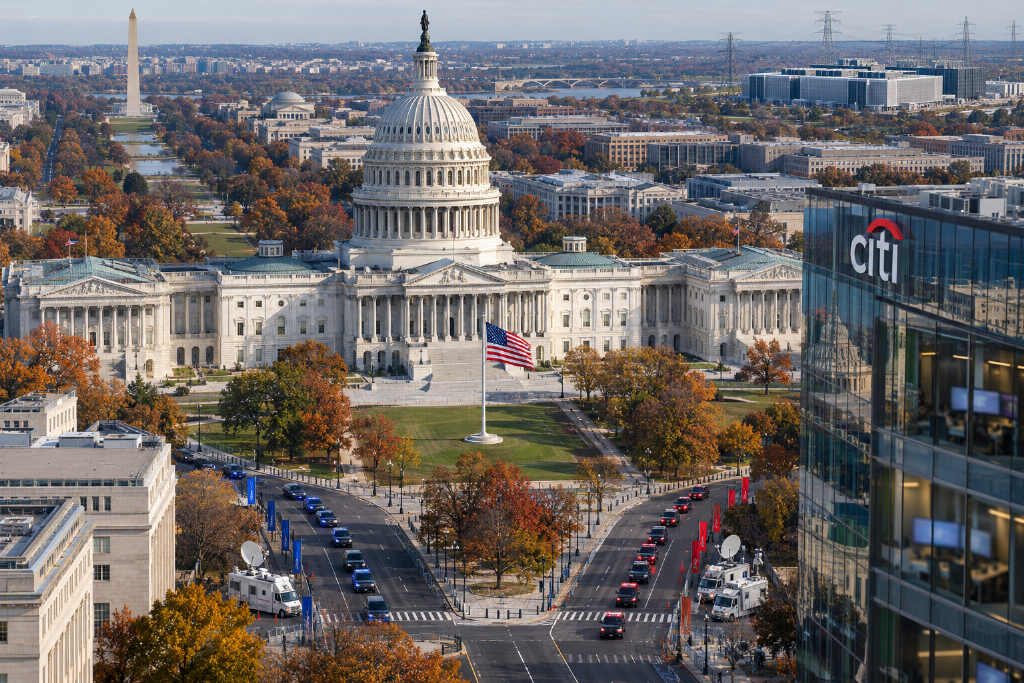
Citigroup said the U.S. midterm election may have only a limited direct effect on corporate fundamentals, but changes in policy expectations could still move sectors and valuations across the stock market. In its U.S. equity strategy report dated Oct. 30, the bank said current sentiment already reflects much of the expectation that Democrats could retake both chambers of Congress, making the gap between expectations and the final result the key driver of any market reaction.
That leaves two broad paths for year-end equities. A Republican hold of the Senate, if it comes as a surprise, could lift sentiment and provide a fresh catalyst for U.S. stocks. A stronger-than-expected Democratic result, by contrast, could lead investors to bring forward pricing for the risk of higher corporate taxes in 2028, putting pressure on valuations.
Healthcare and financials: earlier positioning has largely played out
Citigroup said it had previously favored healthcare over financials and banks. As expectations for a Democratic sweep of Congress increased, that relative-value trade has largely run its course.
For healthcare, the bank said potential support would mainly come through budget negotiations. If Democrats retake the House, they may try to restore some healthcare spending that was cut, including reversing part of the reductions in the One Big Beautiful Bill Act, or OBBBA. Even if the two chambers remain split between the parties, those demands could still surface in budget talks.
Citigroup also noted that a change in House control does not automatically mean spending will rise. The outcome would still depend on negotiations between the two parties.
Financial stocks, in the bank’s view, are more sensitive to the Senate result. Senate committee leadership can shape the regulatory agenda and the broader policy tone, and the Senate also holds confirmation power over Federal Reserve-related appointments. On that basis, Citigroup said a Republican Senate hold could offer tactical support to financials.
The call depends on one central point: markets have already priced in a fair amount of Democratic victory expectations. If Republicans do better than expected, financial stocks could rise as policy assumptions are revised, helping broader market sentiment into year-end.
Fiscal issues could matter more in 2027
Looking ahead to 2027, Citigroup said fiscal policy could become a larger market variable. Democrats may push to restore healthcare spending, while Republicans may seek higher defense spending. Budget negotiations, the debt ceiling, and deficit financing could all return to the center of investor attention.
For equities, the effect of larger spending is not one-directional. Fiscal support could help the economy and corporate revenue, but bigger deficits and heavier financing needs could also raise concern. Citigroup said the market impact would depend on the size of spending, how it is funded, and the outcome of negotiations.
AI buildout: local elections could slow approvals for data centers
Citigroup said the election’s effect on AI-related trades may also come through gubernatorial and local races.
If Democrats expand their advantage at the state and local level, the bank expects more resistance to data center construction. Zoning, site selection, and permitting could all affect project timelines and slow the rollout of new computing capacity.
Texas was singled out as a state to watch. Citigroup said the outcome of races at different levels there, along with any policy changes that follow, could shape market views on local data center development. For investors, the policy setting where projects are located may become an important factor in evaluating AI infrastructure spending.
Even so, the bank said its long-term concern about fundamentals remains limited. Its view is that policy friction is more likely to extend the timeline for capacity coming online than to cancel planned capacity altogether.
A slower construction pace could also have another effect. If funding needs are spread over a longer period, pressure from concentrated short-term financing could ease. In other words, delayed approvals may push back revenue recognition for some projects, but they may also reduce concern that AI infrastructure capital spending is arriving too quickly in one burst.
That means the effect on companies across the AI supply chain may vary. Project location, commissioning schedules, and financing arrangements could determine which firms face more visible pressure.
Valuations: watch for earlier pricing of 2028 corporate tax risk
At the broader market level, Citigroup said its longer-term focus is corporate tax.
If Democrats post a strong result in this election, the bank said, that could improve their political outlook for 2028 and prompt investors to reassess future after-tax earnings sooner. Citigroup added that higher corporate taxes were aligned with Democrats’ policy priorities during the 2024 campaign, so markets may begin pricing that risk before any policy change actually happens.
The durability of Senate seats is one reason the bank sees a longer tail to this election. Senators serve six-year terms, and the seats won in this cycle will extend beyond 2028. Citigroup said most of the Democratic seats up for reelection in 2028 are in relatively safe Democratic states, so a larger majority now could strengthen the party’s footing to keep control of the Senate later.
The bank’s markers are more than 235 House seats and more than 53 Senate seats for Democrats. In Citigroup’s scenario analysis, that outcome could raise the probability that Democrats control the White House and both chambers of Congress in 2028, increasing concern over higher corporate taxes.
Citigroup stressed that this remains a longer-dated policy expectation, not a signal that corporate tax rates would change immediately after the midterms. Still, equity valuations can adjust ahead of time as investors revise expectations for future after-tax profits.
Two main scenarios for U.S. equities
The report also said a Republican Senate hold remains a realistic possibility. Polling margins in several key Senate races are still within the margin of error, and a small polling miss in the same direction could change outcomes across multiple states.
On that basis, Citigroup outlined two main scenarios for U.S. stocks:
- A Republican hold of the Senate could deliver a better-than-expected result and support the year-end rally.
- An unexpectedly large Democratic majority could bring 2028 tax risk into market pricing earlier and weigh on valuations.
After the election, Citigroup said, the path of financial regulation, healthcare budget talks, data center approvals, and fiscal arrangements in 2027 will determine whether those expectations turn into actual earnings changes.



