MetaMask2026-10-01 14:01:38MetaMask says it is exiting affected validator nodes after infrastructure incident, with no sign of wallet or fund impactMetaMask said it is taking affected validator nodes out of its non-custodial staking service after a previously disclosed infrastructure security incident, adding that its investigation has so far found no sign that user wallets or customer funds were affected. The company said it is working with partners on containment steps and urged users to ignore unsolicited messages and never share a seed phrase or private key, noting that MetaMask will not ask for a recovery phrase. The same WuBlockchain digest also covered several policy and market developments. In the U.S., initial jobless claims for the week ending Sept. 26 came in at 197,000, below the 200,000 consensus, while the prior reading was revised to 198,000 from 197,000. In Europe, the European Securities and Markets Authority proposed changes under the Markets in Crypto-Assets framework that would create a new regulated category for firms providing user access to DeFi protocols, while tightening disclosure and compliance standards for staking and crypto lending and borrowing. Separately, Citigroup raised its 12-month targets for Bitcoin and Ether to $113,000 and $3,028. A federal judge in New York also rejected claims by nine alleged fraud victims seeking rights over about 127,271 seized BTC tied by the U.S. Department of Justice to allegations involving Cambodia’s Prince Holding Group and its chairman Chen Zhi.40
Citigroup2026-10-01 09:50:00Citigroup Raises 12-Month Price Targets for Bitcoin and Ethereum to $113,000 and $3,028Citigroup has lifted its 12-month price targets for the two largest cryptocurrencies, according to Reuters. The bank raised its Bitcoin target from $82,000 to $113,000 and increased its Ethereum target from $2,240 to $3,028. Citi said the revision reflects stronger activity across the crypto market, a supportive macroeconomic backdrop, and a renewed recovery in exchange-traded fund inflows. The bank also expects roughly $5 billion in capital inflows into the crypto market over the next 12 months. The update points to a more constructive view from Citi on near-term market conditions for digital assets, based on the factors it cited in the report. The original item was published by PANews on Oct. 1 and cited Reuters as the source. The content was presented as market information and not as investment advice.30
Citigroup2026-09-29 03:02:41Citi expands tokenized deposit service to Japan and the UAECitigroup said it has expanded Citi Token Services, its tokenized deposit and blockchain-based corporate funds transfer offering, to Japan and the United Arab Emirates. In Japan, the service supports U.S. dollar transactions, while in the UAE it supports both U.S. dollar and euro transactions. The product is aimed at corporate clients and financial institutions. Before this move, Citi Token Services was already operating in five markets: the United States, Ireland, Hong Kong, Singapore, and the United Kingdom. With the addition of Japan and the UAE, the network now spans seven markets. Citi also said the service is currently processing transactions worth billions of dollars. The update was carried by CoinPost and summarized by Techub.270
Citigroup2026-09-20 16:49:26Citigroup CEO Jane Fraser warns AI is raising cybersecurity risks in bankingCitigroup Chief Executive Officer Jane Fraser warned that artificial intelligence is acting as both a tool and a threat in the banking sector, increasing cybersecurity risks for financial institutions. Fraser said the rise of AI is also speeding up regulatory scrutiny, putting more pressure on banks to reassess how they handle risk. According to the brief item cited by Techub and sourced to Crypto Briefing, Fraser’s remarks frame AI as a force reshaping two core areas at once: risk management and investment strategy. Her comments point to a banking environment in which firms are not only adopting AI-driven tools, but also facing a broader set of security and compliance challenges tied to that adoption. The report did not provide additional details on where Fraser made the remarks or which specific regulatory measures or investment changes she was referring to.380
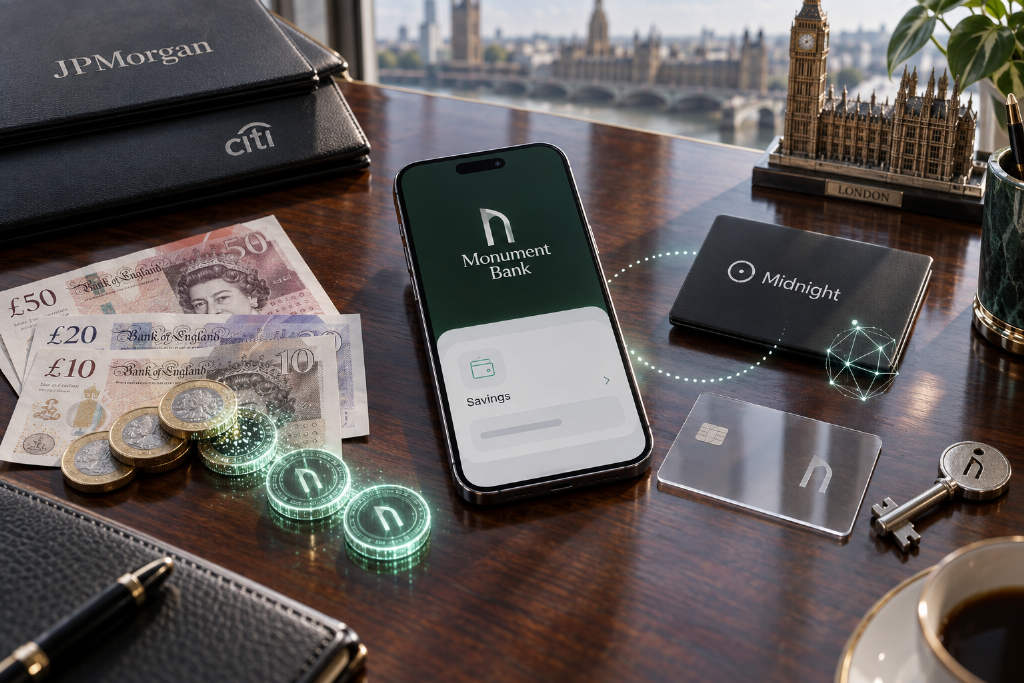
Tokenized Dep2026-09-19 12:01:01Wall Street banks tokenize money for institutions, while Monument targets retail depositsJPMorgan and Citigroup already move vast sums through blockchain-based payment rails, yet those systems remain largely confined to institutional clients and permissioned networks. JPMorgan’s Kinexys platform has processed more than $3 trillion, while Citi Token Services handles billions of dollars in cross-border payments each day. The common thread is clear: major banks are modernizing internal infrastructure, but ordinary depositors are still mostly outside the picture. That is where U.K. challenger bank Monument Bank says it wants to try something different. The bank plans to tokenize as much as 250 million pounds, or about $335 million, of interest-bearing retail deposits on Midnight, a privacy-focused blockchain. According to the company, the deposits would remain fully backed by Monument, redeemable one-for-one in pounds sterling, and covered by the Financial Services Compensation Scheme within the scheme’s limits. Monument and Midnight argue that zero-knowledge proofs could let banks verify compliance conditions without exposing customer data onchain. Their broader goal is to let retail users access tokenized investments and lending through a standard banking app, without asking them to directly handle crypto. The bigger question, as framed in the report, is no longer whether banks can tokenize money, but whether they can make tokenized bank money useful to consumers without giving up privacy, regulatory safeguards, and trust.340
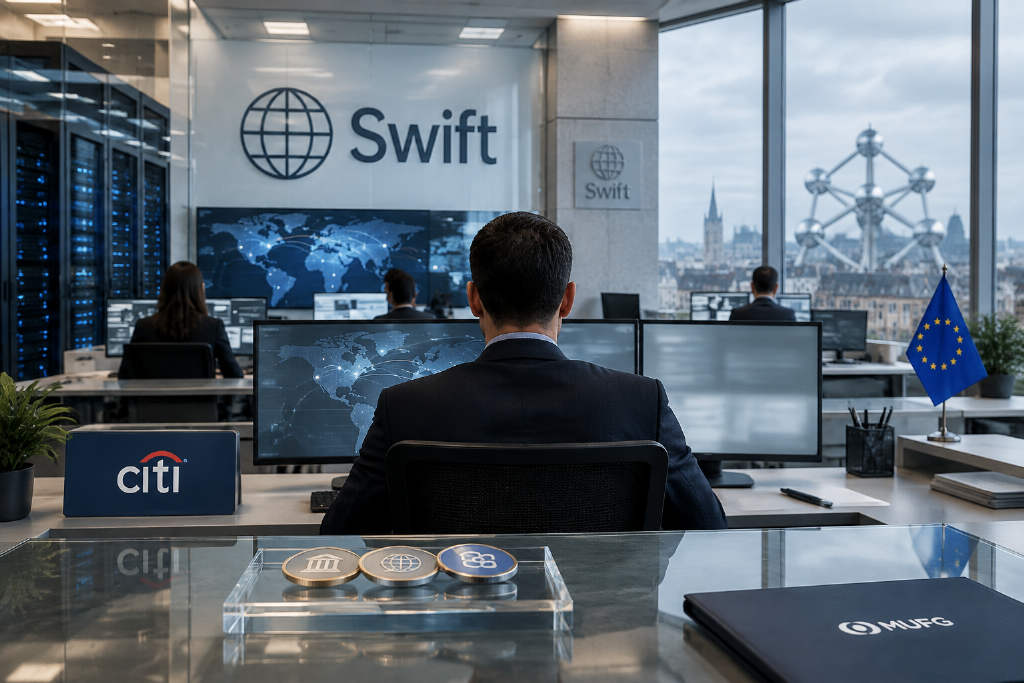
Swift2026-09-14 01:22:04Swift starts blockchain cross-border remittance pilot with 17 banksSwift is testing blockchain-based cross-border payments with 17 banks worldwide, including Citigroup and Mitsubishi UFJ Bank, as it pushes tokenized deposits into interbank remittance flows. The pilot is focused on round-the-clock, instant international transfers rather than traditional time-bound settlement windows. According to the Odaily news brief, the project is designed to test whether tokenized deposits can reduce transfer times and lower fees in cross-border banking transactions. Swift is also using the trial to advance broader adoption of tokenized deposits among participating institutions. The report does not disclose a timeline for the pilot or technical details on the underlying blockchain setup, but it identifies the initiative as part of Swift’s effort to bring blockchain applications into international bank-to-bank remittance services.800
Swift2026-09-14 01:21:14Swift pilots blockchain-based cross-border transfers with 17 banks for round-the-clock paymentsSwift, the Society for Worldwide Interbank Financial Telecommunication, is moving ahead with broader use of blockchain, or distributed ledger technology, in international interbank transfers, according to Nikkei. The group has started pilot programs with 17 banks worldwide, including Citigroup in the United States and Mitsubishi UFJ Bank, to test whether digitalized tokenized deposits can support instant cross-border remittances at any hour of the day and throughout the year. The trial is focused on using tokenized bank deposits to keep payment rails running continuously rather than within traditional banking hours. Nikkei said that if the initiative proves effective in cutting transfer times and lowering fees, it could help accelerate wider adoption of tokenized deposits across the banking sector.860
Zankore2026-09-09 09:49:42Zankore secures $3.1 billion GPU loan as Asia’s compute demand climbsIndonesian AI infrastructure platform Zankore has signed a $3.1 billion loan agreement, backed by Nvidia, to buy advanced chips, according to a media report cited by BlockBeats on Sept. 9. Zankore said the financing was underwritten by Citigroup, ING, Natixis, Qatar National Bank and United Overseas Bank, making it one of the largest AI infrastructure financings in Asia. Citigroup also served as the sole debt adviser on the deal. The report said GPU financing is emerging as a new focus for AI lenders, with banks and private credit firms expanding beyond data centers to the hardware that powers them. In Asia, however, bank-led transactions in this segment have remained limited. The report attributed that scarcity to uncertainty over chip residual values and geopolitical risks tied to U.S.-China technology competition. The deal highlights a sharp rise in demand for computing capacity across Asia.820