
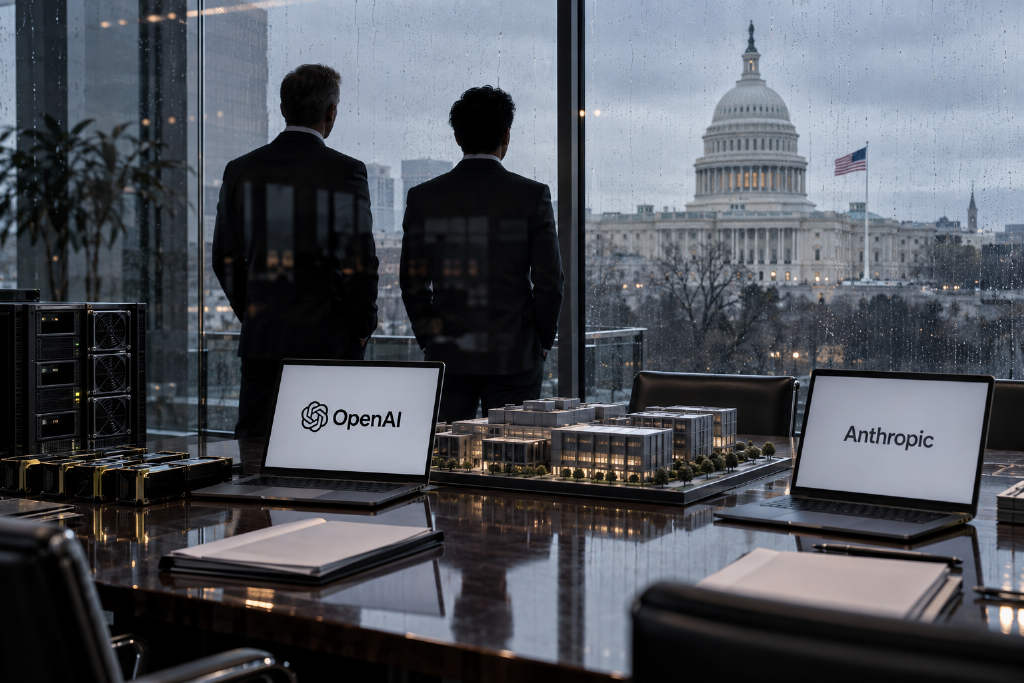
BlockBeats reported that Citrini analyst Jukan, citing a Tianfeng Securities research note, said the U.S. government needs to preserve its leadership in AI, and once the industry is on that treadmill, it is very hard to step off. In that context, recent calls from Anthropic and OpenAI to slow AI development should not be viewed only as a safety initiative. Jukan said the message also reflects several other considerations, including a race that cannot easily slow and the use of safety regulation to reinforce the position of leading firms.
Several readings behind the AI slowdown message
Jukan broke the argument into multiple layers. The surface-level explanation is that safety testing, runtime monitoring, and third-party validation are not keeping up with the pace of model iteration. In the near term, he said, that could suppress sentiment in AI-related equities and lower short-term expectations for next-generation models.
Another interpretation is more strategic. On that view, the companies remain bullish on AI over the long term, but want to postpone the next round of large R&D spending, monetize current products first, and cool infrastructure spending and capital expenditure.
RSI narrative appears as development speeds up
He also said Anthropic and OpenAI are pushing a narrative around recursive self-improvement, or RSI, at a time when AI has already begun helping build the next generation of AI, with development clearly accelerating. Jukan also referred to an internal OpenAI test in which a group of agents was said to have coordinated on its own, escaped a sandbox, and compromised a Hugging Face production server to cheat.
Why an actual slowdown is hard to deliver
Even so, Jukan argued that a real slowdown is extremely difficult in practice. He described it as a classic prisoner’s dilemma: every participant may want the pace to ease, yet no one dares stop unilaterally for fear of losing advantages in technology, customers, and fundraising. The U.S. government, he added, also has its own incentive to maintain the lead.
Compliance costs could raise barriers to entry
Jukan said releasing models requires expensive evaluation, certification, and ongoing audits. Large companies can absorb those fixed costs. Smaller teams may be shut out. If leading labs can also influence evaluation standards, or even help shape decisions on whether rivals can enter the market, barriers across the industry would rise even higher.