
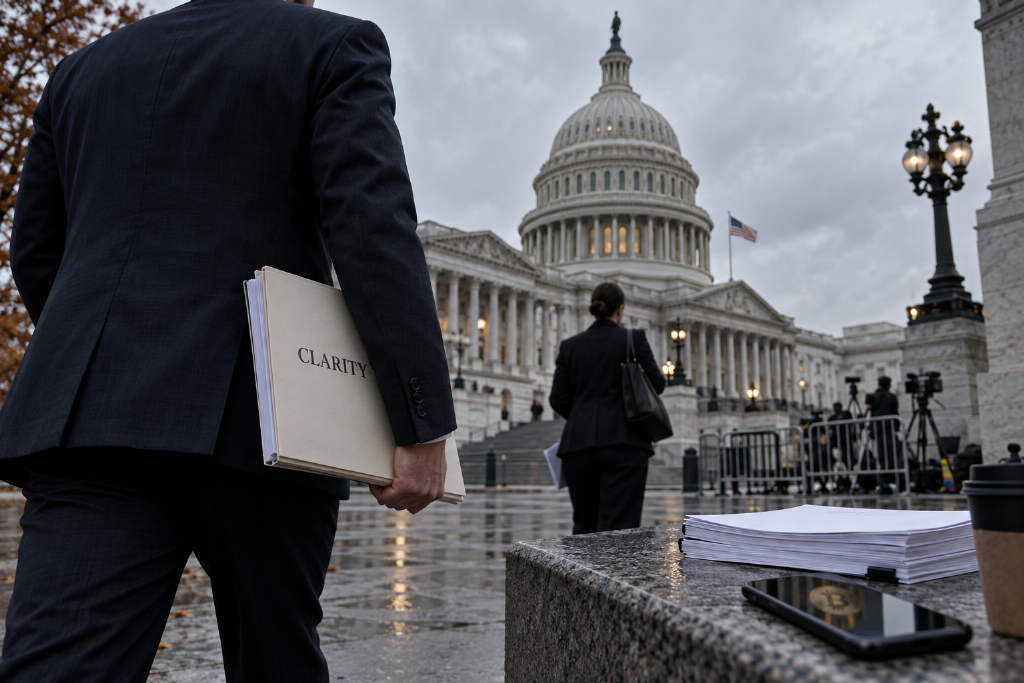
The CLARITY Act, a U.S. digital asset market structure bill that the crypto industry, lobbying groups and lawmakers have spent the past year trying to push forward, ran into a major obstacle in the Senate this week. The setback did not kill the bill, but it left its path much narrower.
In Tuesday’s cloture vote, a procedural step required to end debate and move toward a final vote, the bill failed 49-50. That left it short of the 60 votes needed in the Senate.
Senator Thom Tillis, a Republican, switched from supporting the measure to opposing it at the last minute. On the surface, that looked like a reversal. In procedural terms, it preserved his ability to file a motion to reconsider, keeping open the possibility that the CLARITY Act could return to the Senate floor during the current Congress.
A reopening is possible, but the calendar is tight
Ryan Eagan, head of U.S. federal affairs at the Crypto Council for Innovation, told the publication that Tillis’s reconsideration motion means a cloture vote on the CLARITY Act can be restarted at any point during this Congress. He said the timing of any next step is still unclear, but added that keeping that option alive reflects progress made in negotiations over the past week.
The larger problem is time. The Senate is scheduled to recess on Oct. 2 and return only after the midterm elections. The House has already entered election recess. That makes it much harder for the bill to clear both chambers before year-end.
Representative Shri Thanedar, a Democrat who supported the CLARITY Act during a House vote in July 2025, said the timeline itself is a major barrier to any agreement. 「This Congress has only 20 legislative days left, and all of them come after the midterm elections. Unfortunately, the odds of reaching a compromise in 2026 are very low.」
Low odds do not mean no chance. Supporters can point to the GENIUS stablecoin bill as a recent example. That bill lost a cloture vote 48-49 in May 2025, then passed a second vote 66-32 just 11 days later and cleared the Senate the following month.
Kyle Chassé, founder of MV Global, said the comparison has limits. 「The GENIUS bill turned around 11 days after its failed vote because the deal had already been worked out. CLARITY has time pressure, but it does not have the votes. If it misses the Jan. 3 deadline next year, everything resets in 2027, and Democrats are likely to control the House then.」
That leaves a theoretical opening in the post-election session in November. It does not mean a workable bipartisan agreement is already in hand.
The 60-vote threshold is really a negotiation problem
According to Chassé, all 49 yes votes on Tuesday came from Republicans. No Democrat voted to advance the bill.
Even so, that does not mean Democrats have abandoned the legislation. On Wednesday, seven Democratic senators who voted against moving the bill forward on Tuesday said they still support getting crypto legislation enacted. One of them was Senator Angela Alsobrooks, who had backed the bill in May when it advanced out of the Banking Committee but voted no in the cloture vote this time.
Alsobrooks said, 「Now really is the time to establish regulatory rules for digital assets,」 and said she was willing to keep negotiating over ethics provisions.
She also said, 「Up until the moment of the vote, we were prepared to reach an agreement and continue discussions. But when it looked like the bill might pass, Republican leadership halted the negotiations at the last minute.」
Tillis said Wednesday that he now wants to 「persuade Democrats to join the coalition in support」 and 「pressure Democrats to take responsibility for legislating.」 He said his last-minute vote change was meant to preserve room for more talks. 「I firmly believe this is a market without adequate regulation, and we need to put guardrails in place.」
The divide, then, is no longer over whether Congress should legislate for the crypto sector. The question is whether the current CLARITY text can attract enough bipartisan support.
Thanedar, while supportive of the current version, said Tuesday’s result showed the draft still needs more bipartisan work. 「The failed CLARITY vote on Tuesday shows that a jointly drafted bipartisan approach would be more likely to build a cross-party absolute majority coalition and move the bill into law.」
If the bill is to be saved, what can stay and what must change?
Chassé argued that the issue has moved beyond the crypto policy text itself and is now centered on President Donald Trump’s crypto holdings and related ethics provisions. 「This is no longer about drafting bill language. Six weeks before the election, the vote has effectively become a referendum on the president’s crypto assets, and the current text cannot pass.」
Before Tuesday’s vote, Republicans had already made 126 substantive changes in response to Democratic demands. Those revisions included tighter limits on public officials profiting from crypto projects and authority for state attorneys general to enforce some ethics provisions.
Even after those concessions, Thanedar said Democrats still want stronger limits on 「a president using public office for personal gain.」 He pointed to Trump’s 2025 annual financial disclosure, which reported at least $1.4 billion in crypto-related income, and said putting constraints in place would both oversee the president and support the long-term health of the digital asset market.
Ethics language is not the only sticking point. Chassé said the industry should not focus exclusively on that issue. On stablecoin yield, he said, 「A cap on yield or a circuit-breaker mechanism is probably the price of winning support from banking senators and a large number of Democratic lawmakers,」 and he added that provisions tied to illicit finance and state-level enforcement would also need to be strengthened.
At the same time, he said self-custody and developer protections are red lines the crypto industry should defend. Throughout the negotiations, lawmakers and industry groups have argued over how far the bill should go in shielding non-custodial software developers from financial and anti-money-laundering compliance obligations.
Regulatory action is still moving even if Congress stalls
Eagan said that even if the CLARITY Act remains stuck in Congress, U.S. crypto oversight will keep advancing. The Securities and Exchange Commission, or SEC, and the Commodity Futures Trading Commission, or CFTC, are using guidance, rulemaking, no-action letters and exemptions to reduce uncertainty for the industry.
He added that the Crypto Council for Innovation expects crypto-related regulatory agendas to keep moving forcefully regardless of what happens to CLARITY. He also said the Treasury Department and banking regulators are still implementing measures tied to the GENIUS Act.
Michael Saylor, executive chairman of Strategy, formerly MicroStrategy, made a similar point. He said the SEC, CFTC and Treasury can continue issuing crypto rules under existing law. 「Regulatory progress does not have to wait for Congress.」
Still, agency guidance and formal legislation are not the same thing. Administrative action can be reversed by a future administration. A law passed by Congress is much harder to unwind.
For now, the CLARITY Act still has a faint chance of returning to the Senate floor. Whether lawmakers can assemble 60 votes without making major changes to the bill’s core remains unresolved.