
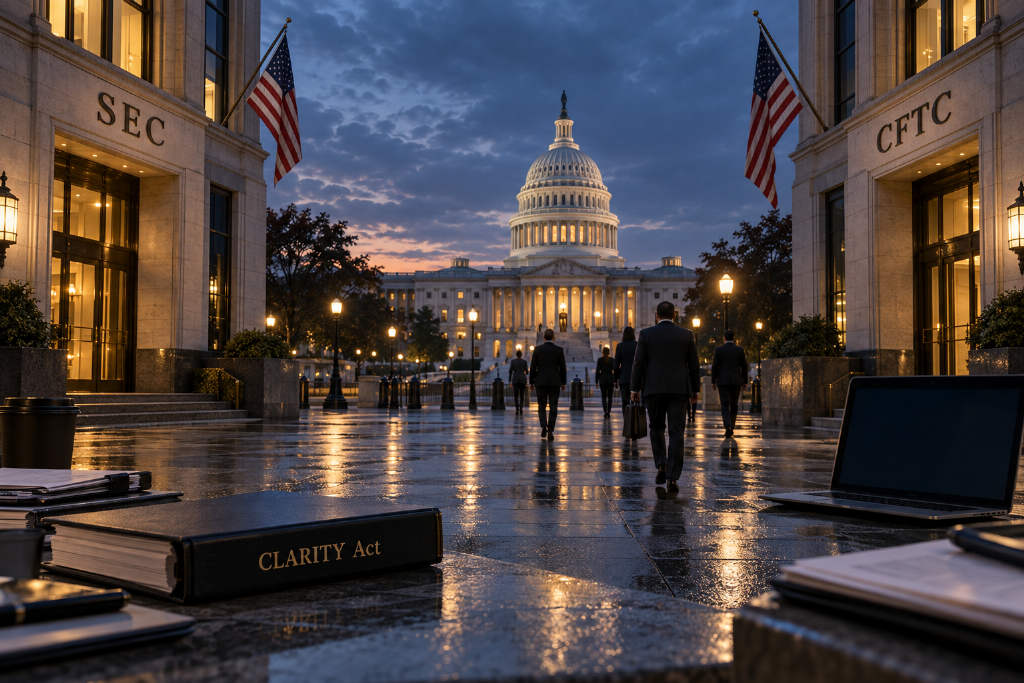
The CLARITY bill stalled in the U.S. Senate on Sept. 15. Two days later, the Securities and Exchange Commission and the Commodity Futures Trading Commission each rolled out actions that covered parts of the same regulatory ground.

The Senate vote ended 49 in favor and 50 against in a procedural motion that would have allowed CLARITY to move forward. That came 425 days after the bill had passed the House with bipartisan backing. The measure had been seen as a central piece of crypto market-structure legislation in the U.S., aimed at replacing years of legal uncertainty with a clearer rule set for companies trying to build in the sector.
Its failure was widely viewed as a negative development for the industry. Still, the reaction did not stop there. Almost immediately, attention shifted to what the federal regulators did next.
Why CLARITY mattered to the industry
The U.S. financial system splits oversight between two agencies. The SEC regulates securities. The CFTC oversees commodities and derivatives. That framework existed long before blockchain, but crypto assets have sat awkwardly inside it from the start, with no stable answer to which assets belong under which regulator.
That uncertainty has carried real costs. Instead of a settled framework, the industry spent years dealing with enforcement actions, court fights, and costly settlements. Companies including Coinbase and Kraken were left to argue case by case over what products and services they could legally offer.
According to the source text, much of that period unfolded under former SEC Chair Gary Gensler. The combination of unclear rules and constant enforcement risk kept many mainstream players at arm's length. Banks, brokerages, payment companies, and public companies were generally unwilling to launch crypto products without knowing whether those products might later become the subject of litigation.
That is why the industry pushed for early legislative structure in the form of the GENIUS bill and the CLARITY bill. Both passed the House in July 2025. GENIUS was signed into law the next day and created a framework for stablecoins and their issuers, including a requirement that issuers hold 100% reserves in U.S. dollars or U.S. Treasuries.
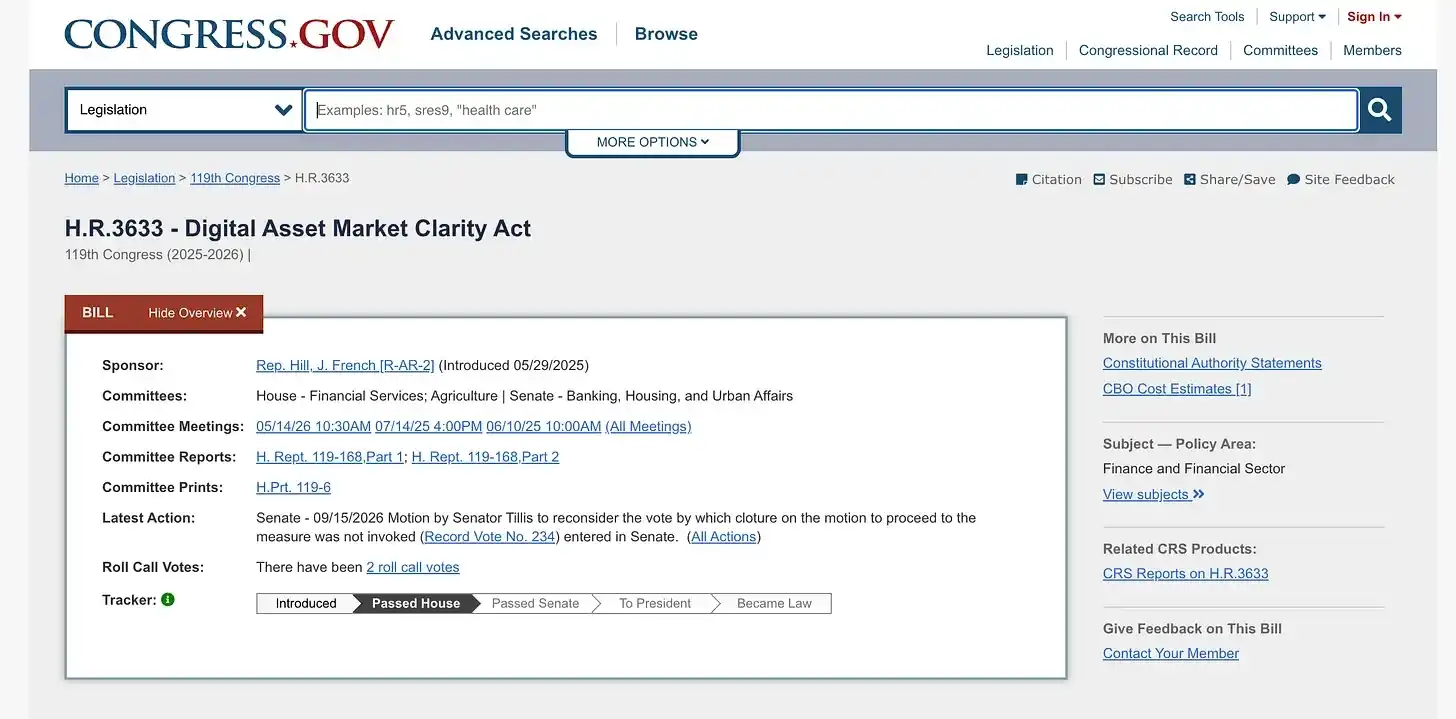
CLARITY was meant to supply the other half of the puzzle: a market-structure framework clear enough for compliance teams to sign off on and for crypto businesses to operate more like a normal part of the financial system.
What the bill was designed to do
The source text lays out several core goals for CLARITY.
- Define different categories of digital assets and assign regulatory responsibility for each.
- Give the CFTC full oversight of crypto spot markets, meaning markets for direct trading in the underlying assets rather than only derivatives.
- Provide limited legal protections for DeFi developers so they would not be sued over how other people used their code.
- Include measures targeting illicit financial activity.
The article also notes that the bill contained far more detail than those headline points, and that even some supporters did not necessarily like the full package. Even so, a common industry view was that imperfect regulation was still better than having none at all. A rulebook that firms could plan around was preferable to another five years of guesswork or ongoing concern about enforcement.
Why the Senate vote failed
On Sept. 15, the Senate held a procedural vote on whether CLARITY could continue moving ahead. The bill needed 60 votes. It got 49 yes votes and 50 no votes, falling short of that threshold and failing to reach even a simple majority.
The source says the collapse was not only about one bill. It also interrupted more than 600 pages of bipartisan negotiation and compromise, 425 days of legislative movement since House passage, and the product of years of industry lobbying, advocacy, and hundreds of millions of dollars in political donations.
What blocked the bill was not primarily crypto market structure itself. The key dispute centered on ethics provisions designed to prevent senior government officials from holding crypto-related business interests.
Democrats wanted tighter language, especially with respect to President Donald Trump and crypto projects tied to his family. The source says Trump's TRUMP meme coin and his involvement in World Liberty Financial had increased his net worth by several billion dollars.
Republicans introduced a revised draft on the Sunday before the vote, adding new restrictions, but that was not enough to satisfy the other side. With the November midterm elections approaching, neither party had much incentive to keep giving ground.
Banks were fighting on a separate front. They lobbied hard against a provision that would have allowed stablecoin issuers to pay interest to users. Banks argued that such a rule would let crypto firms compete for retail deposits without being subject to bank-level supervision.
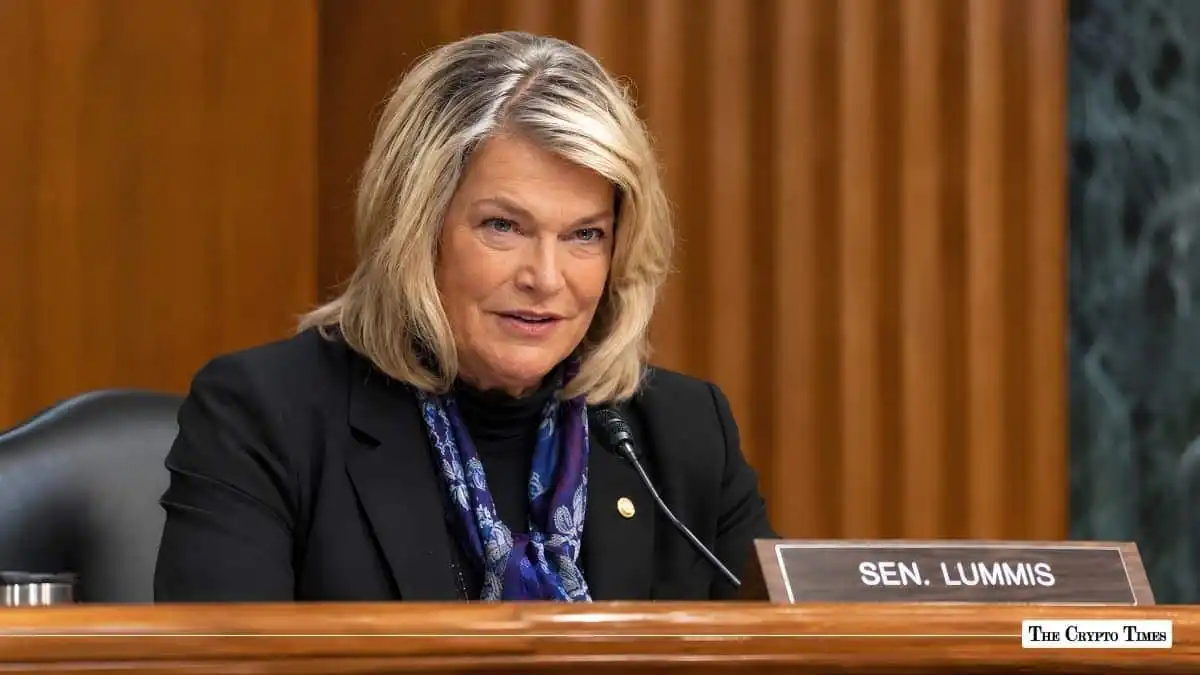
Senator Cynthia Lummis led the negotiations and delivered a final floor statement in the Senate. She said, 「Do not let today become the day we gave the future to others because we were too afraid to finish what we started.」 The appeal did not change the outcome.
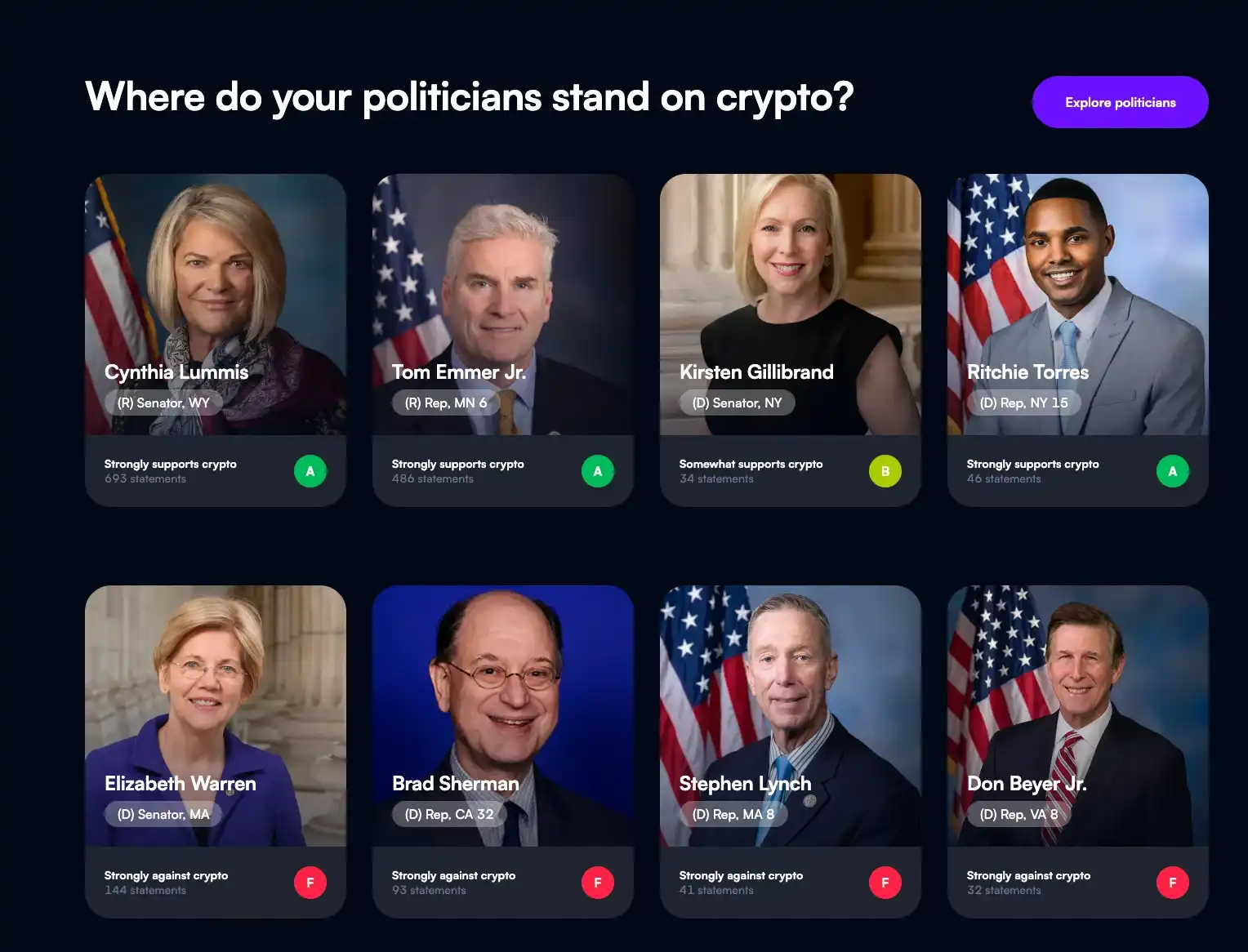
Before the vote, the Coinbase-backed advocacy group Stand With Crypto had already said it would "score" the vote, meaning senators' choices would appear on its public scorecard ahead of Nov. 3. The source says those votes are now viewable on its website.
For the crypto industry, the fact that CLARITY could not even clear the cloture stage amounted to a clear setback. What happened next, though, suggested that federal agencies were prepared to carry some of the process themselves.
The SEC's response: an innovation exemption
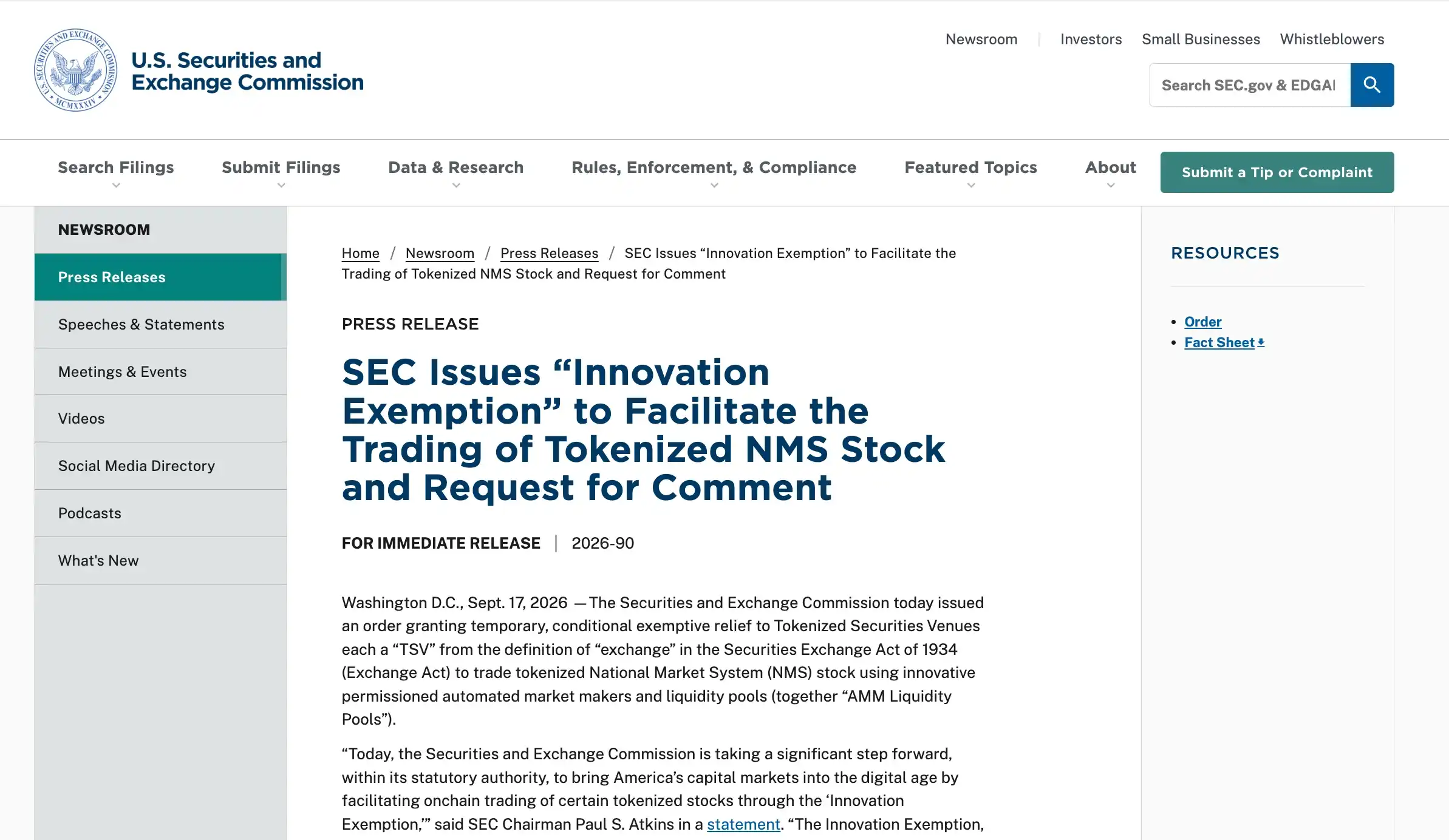
CLARITY failed on Tuesday. By Thursday, the SEC had announced what the source calls its own "innovation exemption."
The exemption allows venues that trade tokenized securities to operate for as long as five years without registering as securities exchanges. It took effect immediately. The coverage includes tokenized versions of stocks already listed on U.S. exchanges and stocks tokenized by third parties.
In practical terms, the move opens a regulatory path for 24-hour trading in tokenized equities. The source frames that as one of the mainstream integration outcomes CLARITY was supposed to unlock, only this time through direct agency action rather than legislation.
The exemption is not a one-off measure. SEC Chair Paul Atkins has launched a broader effort called Project Crypto, and several items are moving at the same time.
An additional rule proposed in August would let crypto projects raise capital without immediately triggering the full weight of securities requirements. Another proposal, dated Sept. 10, would allow blockchain records to serve formally as proof of ownership. Custody rules for investment advisers are also said to be on the way.
Earlier this year, the SEC and CFTC also jointly released what the source describes as a taxonomy, giving a formal definition for which crypto assets count as securities for the first time.
The speed of those moves has stood out. The article cites one policy analyst as saying the agencies can now "switch into overdrive and put out aggressive, industry-friendly proposals."
The CFTC's move on the same Thursday
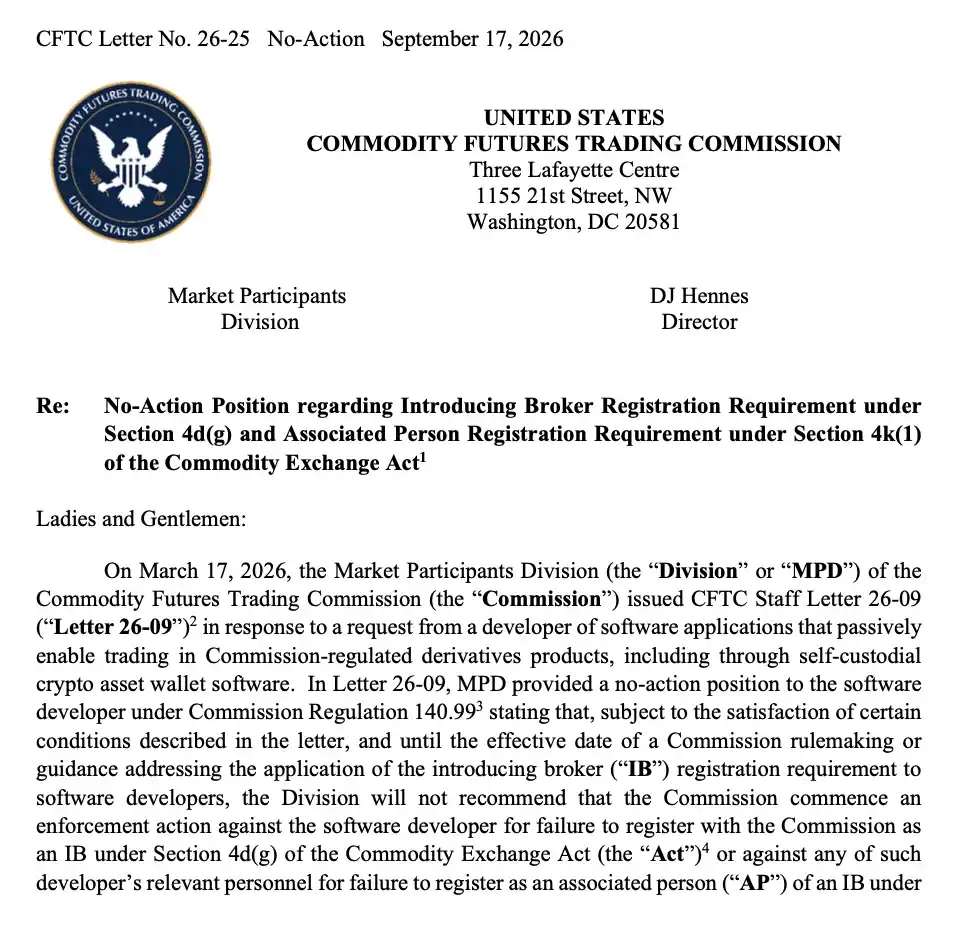
The CFTC also acted on that same Thursday, issuing Staff Letter 26-25.
One longstanding question in the U.S. has been whether a developer that builds a wallet or front end enabling users to trade crypto derivatives could be treated as an unregistered broker. For years, that risk hung over teams building user interfaces in the sector.
Staff Letter 26-25 addresses that issue. Under the terms described in the source, any "passive software provider" is now exempt from enforcement risk as an unregistered broker. That applies to wallets, apps, and front ends that display markets and route orders for CFTC-regulated crypto derivatives, including perpetual contracts and event contracts.
This was not created from scratch. The source says a March letter had already granted similar treatment to one self-custody wallet developer, while the September version expanded the approach to all eligible parties.
The article also notes that CFTC Chair Mike Selig is currently the only sitting member of what would normally be a five-person commission, allowing him to move these matters forward on his own.

He also submitted a more significant document to the White House that same Thursday. According to a filing in the government's regulatory tracking system, the CFTC submitted a proposal titled "Crypto Asset Trading Regulation and Crypto Asset Market Regulation," covering both crypto trade execution and market structure.
The source characterizes that proposal as essentially the CFTC half of CLARITY, implemented through regulation instead of statute.
The measure still has procedural steps ahead of it. Before it can take effect, it must go through public comment and White House review. At this stage, it has been logged as a pre-rule, the phase before a formal proposal is issued, but work is already underway behind the scenes.
Agency rules help, but they are not the same as law
The SEC and CFTC have clearly stepped in to cover some of the space CLARITY was meant to fill. That does not make agency action equivalent to legislation.
Paul Atkins himself has repeatedly argued that agency work still needs statutory backing. In August, he said, 「Legislation remains indispensable for setting 'future-proof' rules of the road that are durable enough to protect the work we are doing today from being undone by some future rogue regulator.」
There are practical reasons for that. Guidance can be rewritten by the next chair. Formal rules can be repealed through the same process that created them. Rules that lack statutory support are also more vulnerable in court. A law like CLARITY would provide a firmer base, while the current agency measures are easier to reverse.
There is also a political clock. The Nov. 3 midterm elections will determine the makeup of the next Congress. The source says the House is widely expected to flip from Republican to Democratic control. If that happens, crypto market structure could drop off the legislative agenda for a period.
How the market has responded
Despite the legislative defeat, the market appears to have welcomed the regulatory momentum already underway. The source says Bitcoin has moved back above $80,000 and remains in an uptrend, while Zcash, UNI, and VVV have each gained more than 100% over the past month.
The article also points to the earlier path of stablecoin legislation. An initial stablecoin bill cleared committee in 2023 and then went nowhere. A second attempt in spring 2024 also failed. GENIUS was introduced in February 2025 and then signed into law after passing by an overwhelming vote.
Placed against that backdrop, the 49-50 CLARITY defeat is still a setback. But parts of what the industry was asking for are arriving by another route. That route may be less stable than law and not necessarily faster in all respects, yet regulators have started assembling, piece by piece, the kind of certainty that can make mainstream firms take crypto more seriously.
For now, that is the framework the market is responding to.