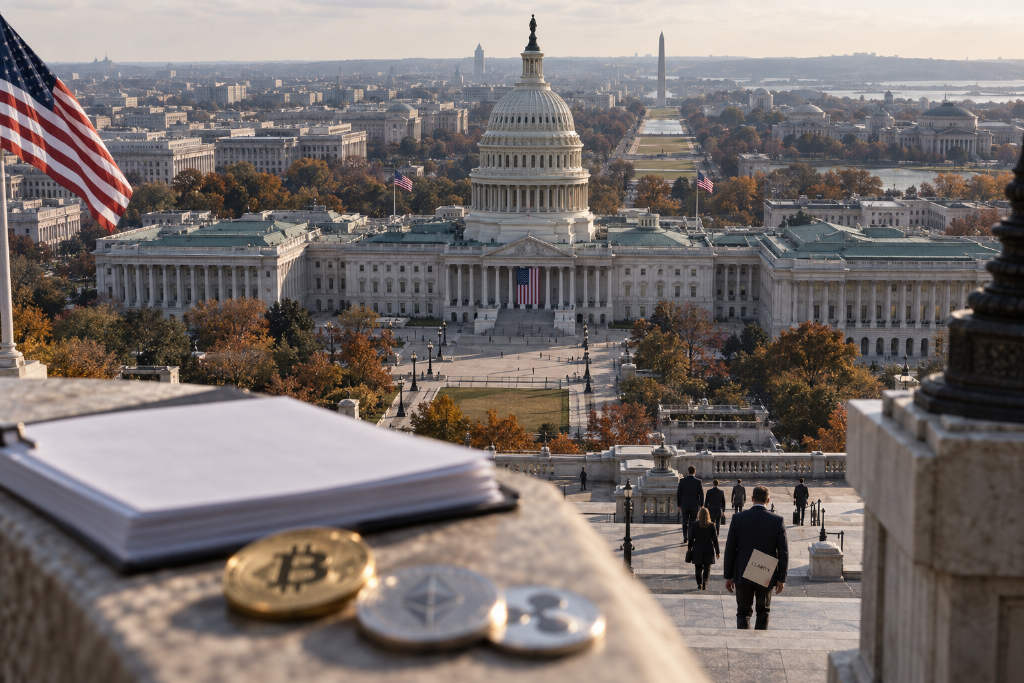
The U.S. Senate is set to hold a cloture vote Tuesday on the Digital Asset Market Clarity Act, known as the CLARITY bill, with 60 votes required to overcome a filibuster and move the measure forward. If supporters fail to secure that three-fifths majority, the legislative calendar before 2027 leaves fewer than 36 working days for further action. Senator Cynthia Lummis, a backer of the bill, said on Sept. 6 that if lawmakers cannot reach an agreement and send the legislation to the president for signature, the next real chance for passage may not come until 2030. The timing is tied to the 2026 midterm elections, when all 435 seats in the House of Representatives and 33 Senate seats will be contested. Even if Democrats retake one or both chambers, the White House would remain under Republican control until January 2029, leaving open the possibility of a presidential veto. Paul Atkins, nominated to chair the U.S. Securities and Exchange Commission, and Michael Selig, chair of the Commodity Futures Trading Commission, have both said digital asset regulation would continue to move ahead even if the CLARITY bill does not advance this year.
The U.S. Senate is scheduled to hold a cloture vote Tuesday on the Digital Asset Market Clarity Act, or the CLARITY bill. The measure needs 60 votes to end a filibuster and move ahead.
If the bill fails to win the required three-fifths majority, fewer than 36 legislative days would remain before 2027 for lawmakers to take further action.
Window for passage may narrow quickly
Senator Cynthia Lummis, who supports the CLARITY bill, said on Sept. 6 that if lawmakers cannot reach an agreement and send the measure to the president for signature, the next real opportunity to pass it may not come until 2030.
Midterm elections add uncertainty
The 2026 midterm elections will put all 435 seats in the House of Representatives and 33 seats in the Senate on the ballot. According to the report, regardless of whether Democrats regain control of one or both chambers after the midterms, the White House would remain under Republican control until January 2029, and the president could veto related legislation.
Regulatory officials say oversight efforts would continue
Paul Atkins, who has been nominated to serve as chair of the U.S. Securities and Exchange Commission, and Michael Selig, chair of the U.S. Commodity Futures Trading Commission, have both said that if the CLARITY bill does not advance this year, efforts to push forward digital asset regulation will continue.
The report was cited by Cointelegraph and republished in Chinese by Odaily.
This article was originally published by Bit.Fan. For more cryptocurrency news and market insights, visit www.bit.fan. Disclaimer:
The market information, project data, and third-party content displayed on this platform are for industry information sharing only and do not constitute any form of investment advice or return commitment.
Cryptocurrency trading carries high risks. Users should fully assess their risk tolerance and make independent decisions. All profits, losses, and legal responsibilities are borne by the users themselves.