
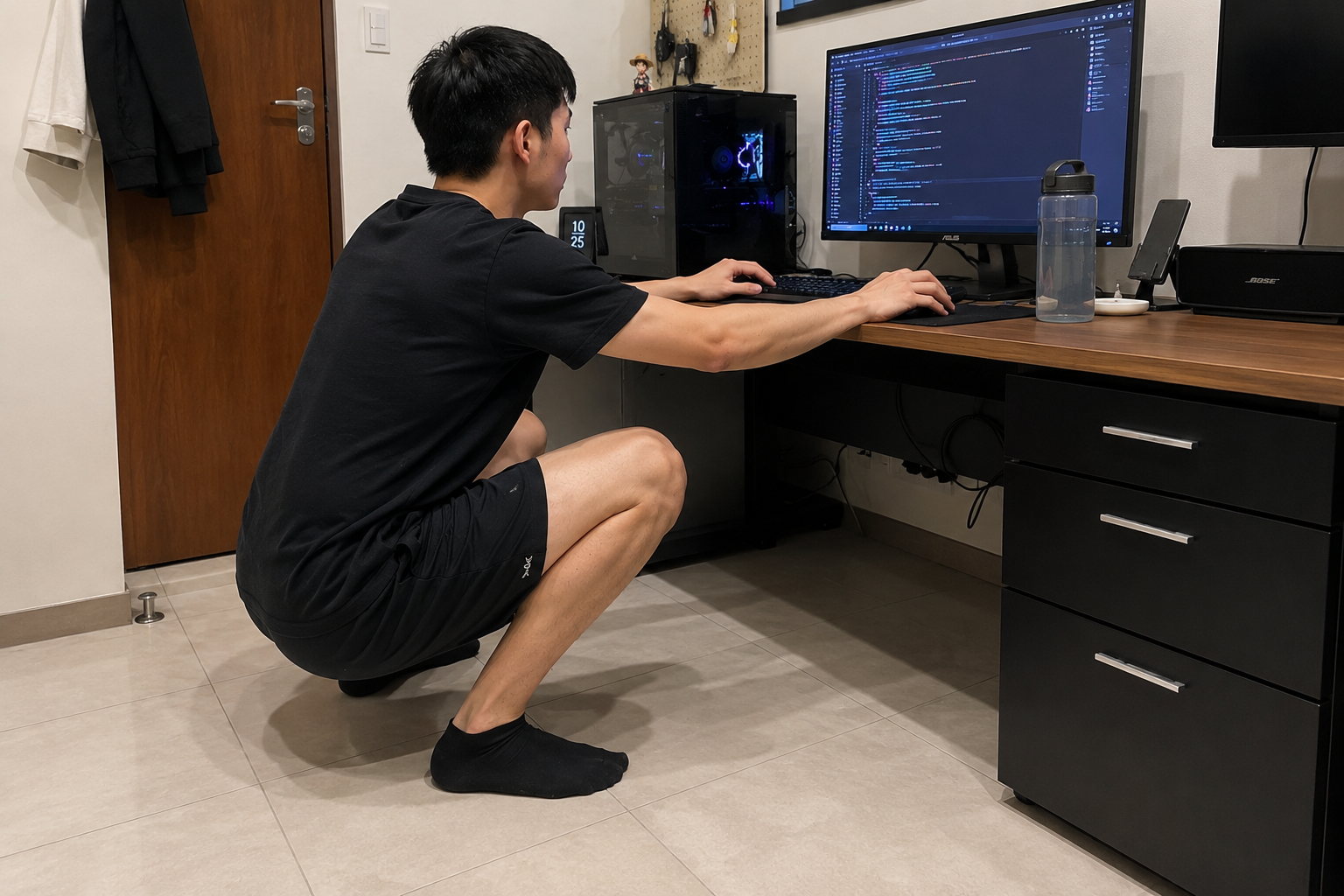
A Claude Code hook circulating in developer communities has gone viral for an unusual reason: it requires users to complete 6 squats or 9 push-ups before the AI responds. The camera confirms the motion; if you skip, Claude does nothing. Called Workout Gate, the open-source project uploaded to GitHub has sparked widespread discussion.
Exercise Tax: A Hard Gate Between Prompt and AI
The tool is essentially a Claude Code hook that allows custom scripts to run before or after a prompt is sent. The developer inserted a motion check in the gap between user input and AI execution. The flow: user types a command, hits send, the system activates the camera, verifies the exercise is completed, and only then does Claude start working. Difficulty levels let users choose between push-ups or squats with varying rep counts, but once set, the gate is non-negotiable. No workout, no AI.
Unlike sit-stand reminder apps that can be dismissed, Workout Gate imposes a hard requirement. The developer's subtext is blunt: even if you outsource your brainpower to AI, at least keep your physical labor. It's a half-joke that resonates because it touches a real anxiety.
Why This Joke Hit a Nerve
When AI can finish a 20-minute human task in seconds, many realize what's lost isn't just time but the physical micro-actions that came with it—getting up, walking to a colleague, flipping through papers. Knowledge workers spend no less time in front of screens, but the reasons to move are shrinking fast. Workout Gate responds with a tongue-in-cheek mechanism: it's not a serious productivity tool, but a working piece of code that turns a mockery into a tangible constraint.
From Joke to Mechanism: The Line of Self-Monitoring
The design also reopens a classic question: how much are you willing to let a camera see in exchange for self-discipline? Handing over webcam access to a script that checks your squat form crosses into self-surveillance territory. The project remains an experiment rather than a deployable product, but it has kicked off broader discussions about human physical engagement in the AI age and the privacy cost of enforced habits.