
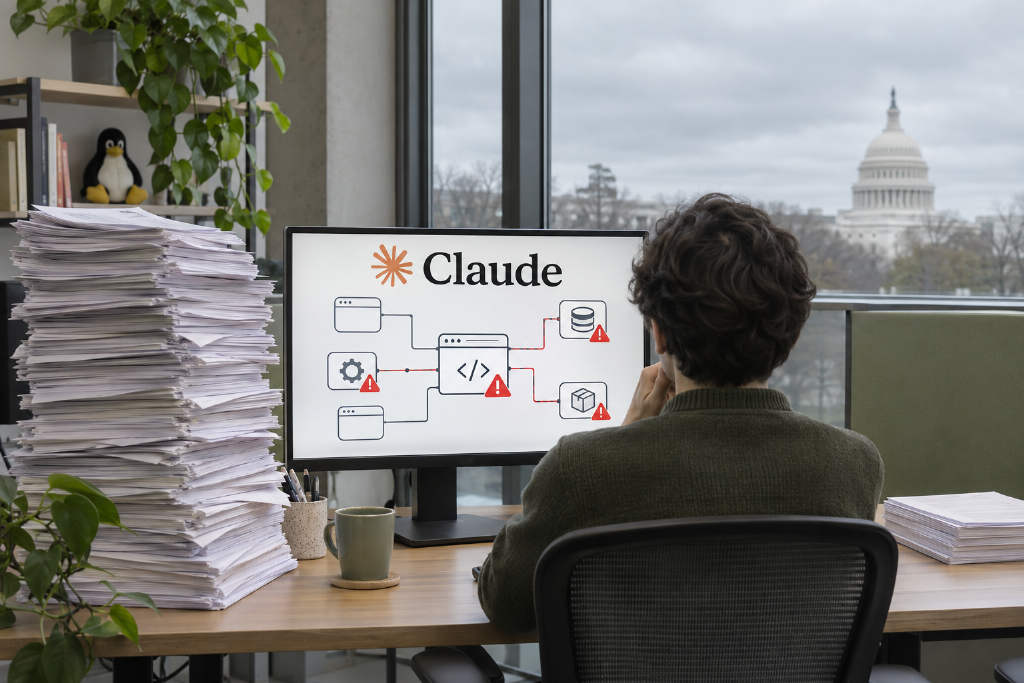
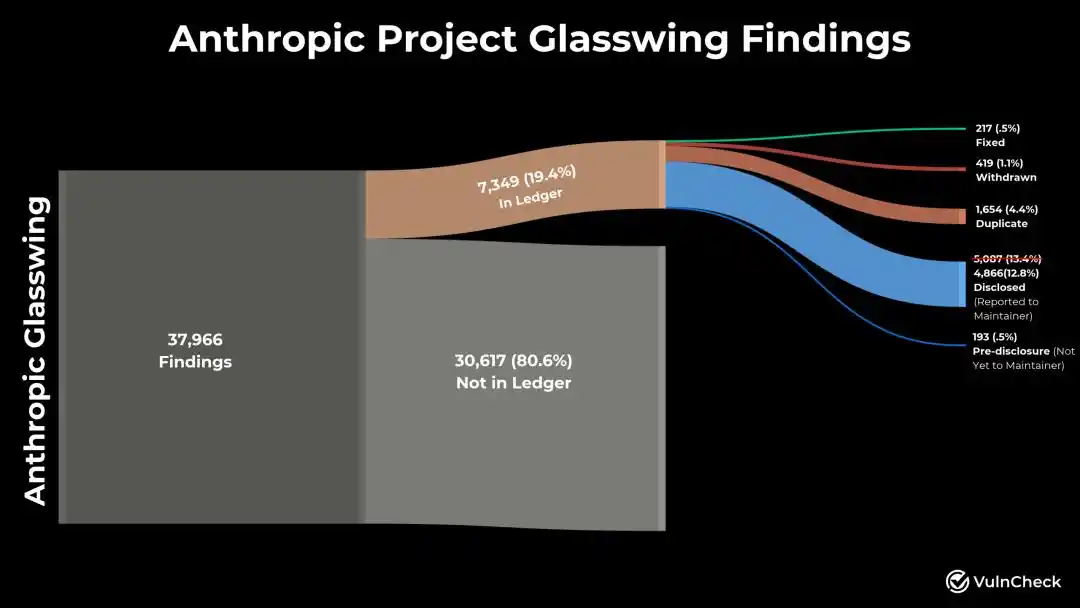
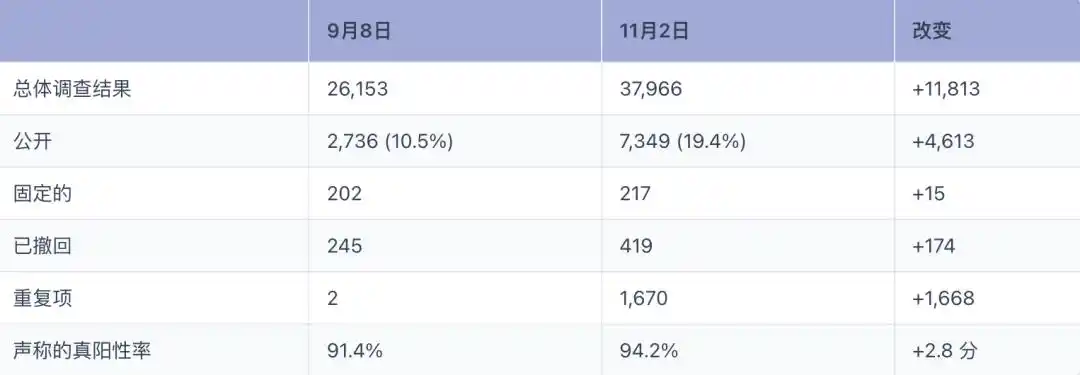
Claude has generated 37,966 candidate vulnerability findings in the seven months since Anthropic launched Project Glasswing, but only 217 are marked fixed in the public disclosure ledger tracked by cybersecurity firm VulnCheck. Anthropic reports 629 upstream patches, a different measure. The two counts use different tracking criteria, but both point to the same constraint: human review is struggling to keep pace with AI-generated findings.
A widening gap between findings and fixes
VulnCheck recently published an update on Project Glasswing. Its ongoing tracking shows 37,966 candidate findings attributed to Anthropic as of early November. The ledger also lists 419 withdrawn items and 1,654 duplicates, while 217 entries are marked as fixed.
The gap widened over the preceding two months. Candidate findings grew by nearly 12,000 during that period, while the number of fixed records rose by only 15. VulnCheck tracked 442 CVEs attributed to Anthropic, equal to 0.5% of all publicly disclosed CVEs worldwide in 2026. The firm questioned whether the much-discussed cybersecurity “Mythos era” had really arrived.
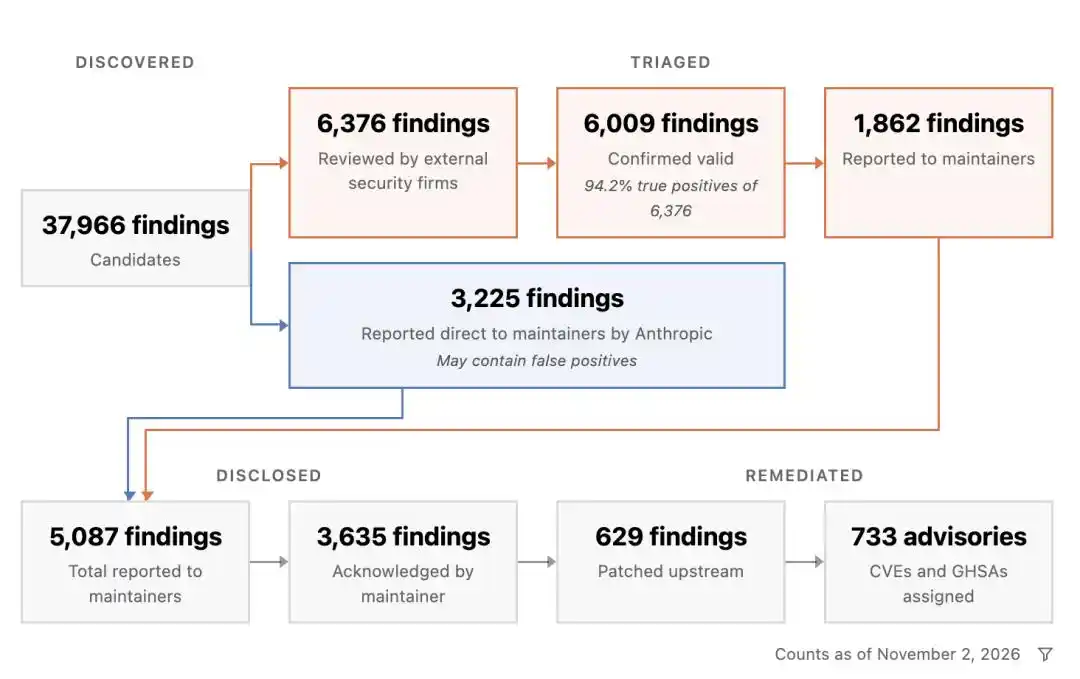
Anthropic’s own figures describe a different stage of the process. As of November 2, external security experts had reviewed 6,376 of the 37,966 candidate findings. They deemed 6,009 valid; Anthropic had reported 5,087 to software maintainers, and 629 had received upstream patches. Those numbers do not match VulnCheck’s 217 fixed entries, and the report attributes the difference to the organizations’ distinct tracking criteria.
There is, however, common ground on the workload. Anthropic has acknowledged that a severe shortage of human verification capacity is limiting the pace of vulnerability review and disclosure. On October 8, it introduced OSS Scanner. Open-source maintainers can sign up to have Claude scan their code for free, with reports sent directly to them rather than waiting for Anthropic to organize a human review.

What Anthropic set out to do with Glasswing
Anthropic announced Project Glasswing in April this year. The plan uses Claude to search critical software and open-source projects at scale, then works with technology companies and open-source maintainers to drive fixes before vulnerabilities can be exploited.
The name refers to the glasswing butterfly. Vulnerabilities, like the insect, can remain in plain sight for decades without being noticed. Transparency is also part of the idea: Anthropic said it wanted more transparent security research and disclosure practices to help protect software systems. The butterfly’s scientific name is Greta oto.
At launch, Anthropic pledged $100 million in model usage credits and $4 million in donations for open-source security. It also said its cybersecurity model, Claude Mythos Preview, had found thousands of high-severity and critical vulnerabilities. Apple, Google, Microsoft, AWS, and Nvidia joined the initiative.
Open-source maintainers face a flood of reports
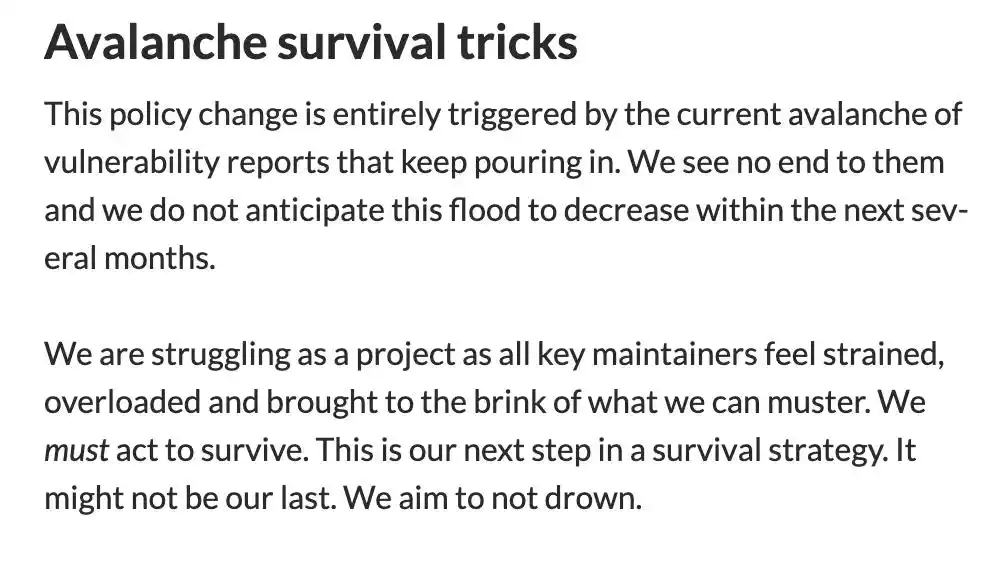
VulnCheck cited curl, the network data transfer tool, as an example of the pressure facing maintainers. In early November, curl maintainer Daniel Stenberg received another 45 vulnerability reports from Anthropic. He had already written on his blog that the project’s core maintainers were struggling under the steady stream of submissions. “We aim to not drown,” he wrote.
To handle the volume, Stenberg announced changes to curl’s security reporting rules. Low- and medium-severity issues would be discussed publicly on GitHub so more community developers could help review them. Of the 34 reports curl had made public at the time, 19 were judged not to be security vulnerabilities and six were confirmed as low severity.
VulnCheck questioned how a program presented as finding serious vulnerabilities could also leave maintainers with such a large review burden. The report’s criticism does not erase a successful discovery: Anthropic has found a serious curl flaw with Claude.
In September, Claude identified a use-after-free memory error in curl. Under specific conditions, a malicious server could use the flaw to achieve remote code execution. Stenberg called it one of the most serious vulnerabilities in curl in years. The article also notes that VulnCheck sells vulnerability intelligence and prioritization services, which align closely with the problems it identifies in Glasswing.
Generating a patch does not guarantee adoption
Anthropic has also had AI generate candidate patches. But producing a proposed fix is only part of the process: open-source projects still have to decide whether to accept it. The article describes developers’ concern that while getting a large language model to generate a fix is not especially difficult, persuading a project to adopt it is. Reviewing an AI-generated patch can take nearly as much work as writing the fix again from scratch.
A fix can also add complexity. As the article puts it, an AI may address one flaw by adding more logic, only to create further problems in the process. One quoted observation says: “AI is very good at adding things, but it doesn’t realize that things can also be removed.” For now, people still have to review Claude’s findings, make repairs, and decide whether to accept proposed patches.
The original article was published by the WeChat account Qbit and written by Cheng Qian. VulnCheck’s report: https://www.vulncheck.com/blog/anthropic-glasswing-november-update.



