
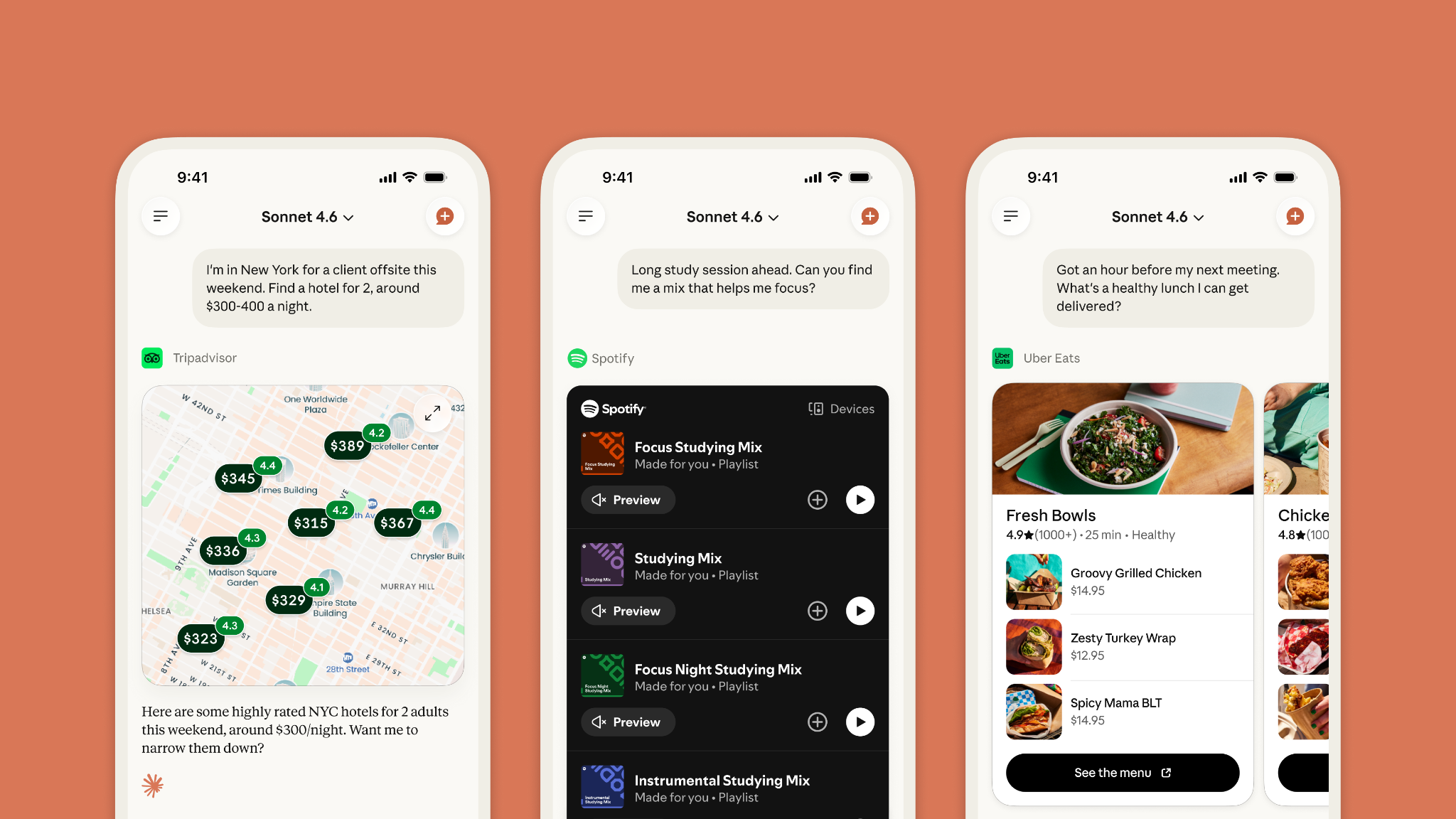
The AI assistant that used to only edit your spreadsheets just got a new set of keys. Anthropic has flipped the switch on eight everyday consumer apps for Claude—Uber for rides, Spotify for music, Instacart for groceries, TurboTax for taxes. This isn't just a feature drop; it's a deliberate repositioning. The next battlefield isn't the conference room—it's deciding what to order for dinner tonight.
From Microsoft 365 to Uber: A Different Connector Playbook
Anthropic's first batch of Connectors—the mechanism that lets Claude directly call third-party services—were all about productivity: Microsoft 365, Google Workspace. The new lineup looks nothing like that: Audible, Spotify, Uber, AllTrails, TripAdvisor, Instacart, TurboTax. What unites them? They live in after-office hours, not on the desk.
The connectors are available to all Claude plans now, with the mobile version still in beta. Users find them under the 'Customize' tab in the sidebar, labeled 'Connectors.' Once linked, Claude will proactively suggest using a service during conversation. But every time an actual purchase—ordering, booking—is involved, the user must manually confirm before the action goes through.
Three Privacy Promises, One Business Statement
Anthropic made three specific points in the announcement: connected app data won't be used for training; the app itself can't see other conversations with Claude; users can disconnect anytime. This triple-lock isn't just boilerplate privacy talk. It's a clear commercial stance: Claude doesn't make money off user data.
The company put it even more bluntly: "There are no paid rankings or sponsored answers in conversations." When multiple apps are relevant, Claude shows them all, ranking by "usefulness" not ad dollars. That jab targets two things: Google's search ad model (where paid links dominate the top of results) and the emerging gray zone of AI search—Perplexity faced criticism for allegedly sneaking sponsored content into answers. Anthropic's timing on this declaration is no accident.
If Claude becomes the interface through which users decide "which delivery service tonight" or "which hotel to book," that entry point's traffic value far exceeds any ad slot. Anthropic is choosing not to monetize that entry point, but to use it as justification for paid subscriptions.
Taking on ChatGPT: The Consumer Decision Chain
ChatGPT actually launched a Spotify connector earlier, so Claude isn't the first into this space. But Claude's expanded list zeroes in on the full consumer decision chain: from trip planning (TripAdvisor), transportation (Uber), grocery shopping (Instacart), to annual tax filing (TurboTax). It forms a closed loop from planning to execution, from daily errands to yearly financial chores.
ChatGPT enjoys higher brand penetration on the consumer side; Claude has long been rooted among enterprise users and the tech community. This consumer-app expansion is a clear attempt to compete head-on with ChatGPT in everyday spending scenarios. The strategic divergence is visible at the business model level: OpenAI runs both subscriptions and enterprise API, and doesn't rule out ads; Anthropic is currently sticking to subscription-first, privacy-first. As AI assistants truly become spending gateways, the market will test which model wins.
From "helping you look things up" to "helping you spend money," AI assistants are fighting an entry-point war. Search engines spent two decades building an ad model; Anthropic now claims it can redo that with subscriptions. The difference: ads make information free but monetize attention; subscriptions make users pay but keep attention private. How much users are willing to pay for a "daily assistant free from ad tracking" will determine the next decade of AI commerce.