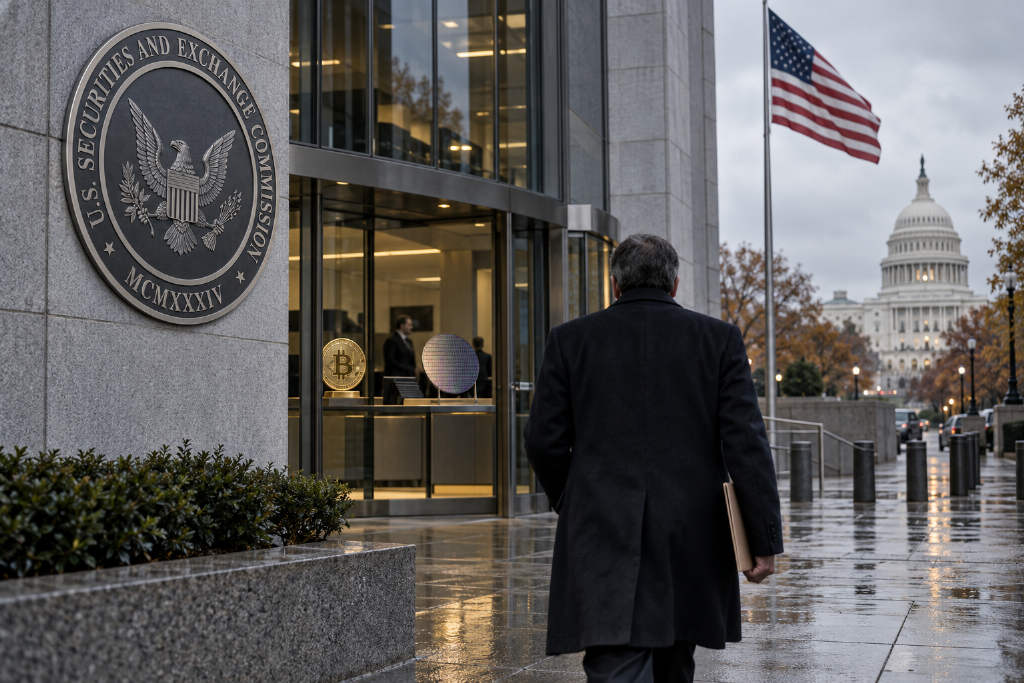
A CoinDesk news analysis says former U.S. Securities and Exchange Commission Chairman Jay Clayton may be in line for another influential role touching crypto policy. The report says Clayton, who may be tapped to oversee artificial intelligence work in the Trump administration, carries a contentious record from his time at the SEC. According to CoinDesk, Clayton began the agency’s regulation-by-enforcement approach toward the crypto sector, a stance that remains divisive across the technology and digital-asset industries. The analysis frames that history as central to how the market may view any return to a senior policy role. The piece was written by Jesse Hamilton and edited by Nikhilesh De, and was published on Oct. 2, 2026.
A CoinDesk news analysis says former U.S. Securities and Exchange Commission Chairman Jay Clayton could become the next key figure in crypto oversight. The report also says he may be tapped to oversee artificial intelligence work in the Trump administration.
CoinDesk points to his SEC record
The analysis says Clayton began the SEC’s regulation-by-enforcement approach to crypto during his time as chairman. It adds that his history as a watchdog over technology innovation could make him a divisive figure.
The article was written by Jesse Hamilton, edited by Nikhilesh De, and published by CoinDesk on Oct. 2, 2026.
This article was originally published by Bit.Fan. For more cryptocurrency news and market insights, visit www.bit.fan. Disclaimer:
The market information, project data, and third-party content displayed on this platform are for industry information sharing only and do not constitute any form of investment advice or return commitment.
Cryptocurrency trading carries high risks. Users should fully assess their risk tolerance and make independent decisions. All profits, losses, and legal responsibilities are borne by the users themselves.