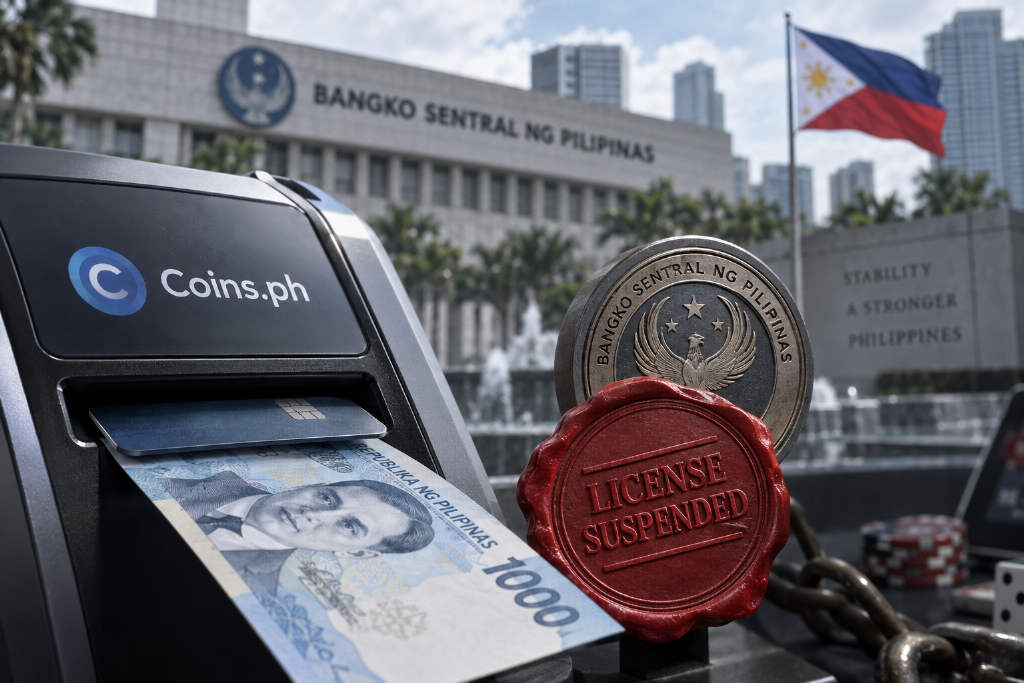
Coins.ph, the largest cryptocurrency exchange in the Philippines, is facing regulatory penalties from the country’s central bank, according to BlockBeats, which cited two people familiar with the matter. The reported issue involves services allegedly provided to restricted offshore gaming and gambling companies. One of the sources said the violations were serious enough that the exchange could, in the most severe scenario, lose its operating license. The report said Coins.ph has more than 18 million users, handles about $50 million in daily spot trading volume, and accounts for roughly 75% to 80% of peso-to-stablecoin liquidity in the Philippines. Earlier this month, the Philippine central bank was also said to have restricted deposits into Coins.ph through its main wallet operator, DCPay Philippines. The report added that after regulators told supervised institutions to block e-wallet access to gambling websites, some gaming operators shifted to Coins.ph and used crypto and stablecoins to pay overseas partners. It also said several compliance executives at Coins.ph have recently left, including the chief compliance officer and the head of anti-money laundering monitoring.
Coins.ph, the largest cryptocurrency exchange in the Philippines, is facing regulatory penalties from the country’s central bank, according to a BlockBeats report published on Oct. 14 that cited two people familiar with the matter.
The reported reason involves services allegedly provided to restricted offshore gaming and gambling companies. One of the sources said the violations were serious enough that the exchange could face revocation of its operating license in the most severe case.
Market position in the Philippines
The report said Coins.ph has more than 18 million users, about $50 million in daily spot trading volume, and controls roughly 75% to 80% of peso-to-stablecoin liquidity in the country.
Reported central bank restrictions
Earlier this month, the Philippine central bank was said to have restricted deposits into Coins.ph through its main wallet operator, DCPay Philippines.
Before that, the central bank had required supervised institutions to cut off e-wallet app access to gambling websites. Some gaming operators then shifted to Coins.ph and used cryptocurrencies and stablecoins to make payments to overseas partners, the report said.
Compliance staff departures
The report also said several compliance executives at Coins.ph have recently left the company, including its chief compliance officer and the head of anti-money laundering monitoring.
This article was originally published by Bit.Fan. For more cryptocurrency news and market insights, visit www.bit.fan. Disclaimer:
The market information, project data, and third-party content displayed on this platform are for industry information sharing only and do not constitute any form of investment advice or return commitment.
Cryptocurrency trading carries high risks. Users should fully assess their risk tolerance and make independent decisions. All profits, losses, and legal responsibilities are borne by the users themselves.