
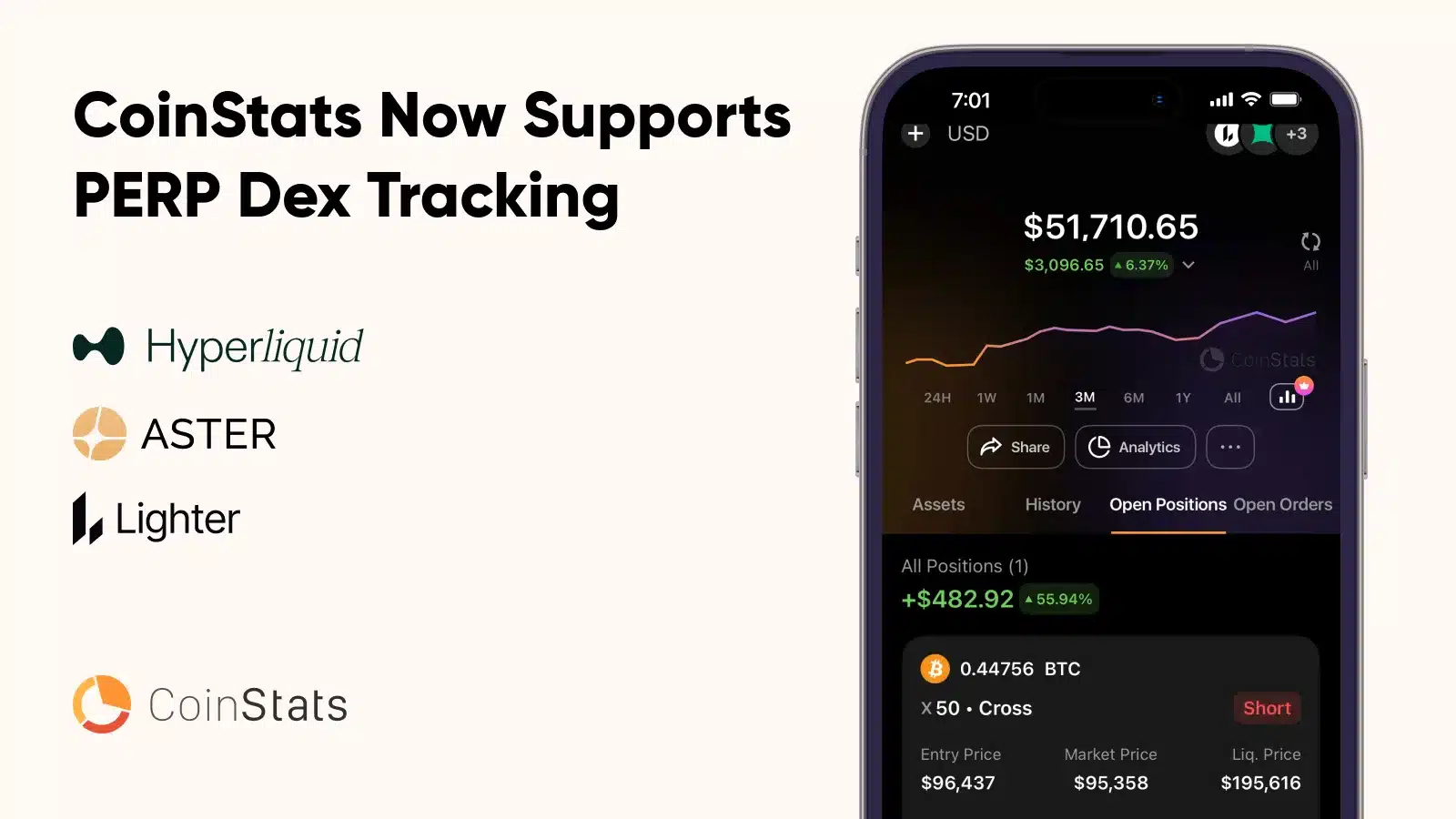
CoinStats has added support for Aster, Hyperliquid, and Lighter, bringing three perpetual decentralized exchanges into its portfolio tracking platform. Users can now monitor derivative positions in the same place as spot holdings and centralized exchange balances. The feature is already live on iOS, Android, and the web.
Positions, orders, trade history, and P&L in one view
According to CoinStats, the integration includes several core data points used by perpetual traders: real-time balance updates, open positions, open orders, full trade history, and profit-and-loss analysis. For traders active across multiple protocols, that means account activity that was previously split across separate venues can now be reviewed from one dashboard. The workflow is simpler. So is checking exposure across different platforms.
Mobile access targets a long-standing pain point
CoinStats framed the launch around mobile usability. The company said many perpetual traders had been relying on desktop platforms to keep track of positions and orders. With the new setup, users can monitor perpetual DEX activity directly from their phones instead of staying in front of a computer. CoinStats summed up the use case in a short line: “Perp traders live and die by timing.”
Its interface is built to place spot assets, DEX positions, and CEX balances inside a single dashboard. That gives users a consolidated view of holdings without moving between multiple apps or browser tabs each time they want to check their portfolio.
Rising perpetual DEX activity is driving demand for broader tracking
CoinStats said perpetual DEX volumes have climbed in recent months as more traders choose self-custody over centralized platforms. At the same time, fragmented positions across several protocols have made portfolio monitoring harder. When balances, trades, and open exposure are scattered, assessing total risk and returns becomes slower and less straightforward.
The addition of Aster, Hyperliquid, and Lighter also points to the growing presence of perpetual DEX protocols in mainstream portfolio tools. These venues have drawn experienced traders looking for decentralized trading alternatives, and their inclusion in a large tracker expands visibility for that segment of the market.
Setup is designed to take less than a minute
CoinStats said users can connect accounts in under one minute. The process works through both the mobile app and the web dashboard: open Portfolios, tap “Add New,” search for the platform, and link the account. Once connected, positions appear immediately.
Coverage now spans hundreds of wallets, exchanges, blockchains, and DeFi protocols
Beyond the three new perpetual DEX integrations, CoinStats said it currently supports more than 300 wallets and exchanges, 120 blockchains, and over 1,000 DeFi protocols. The latest update expands that existing network and reflects growing demand for portfolio tools that can track assets and derivatives spread across more chains and trading venues.
The source article also states that the piece was published as a press release for informational purposes and does not constitute financial advice.