
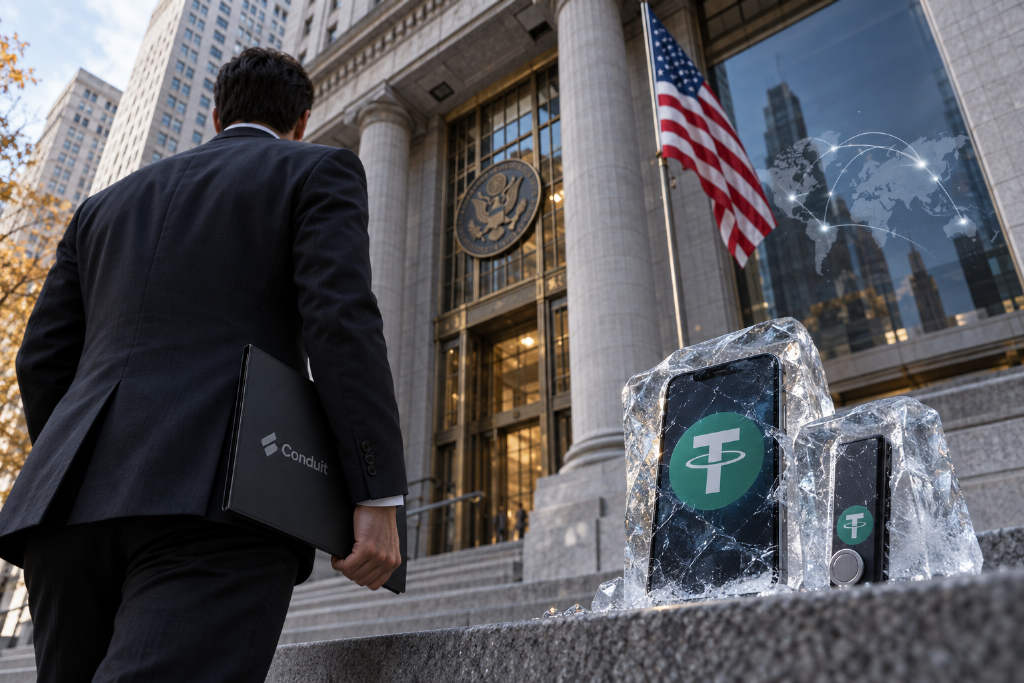
Conduit Technology filed a lawsuit on Oct. 5, U.S. time, in the U.S. District Court for the Southern District of New York against four Tether entities, alleging that the USDT issuer froze about $2.76 million held in one of its wallets in September 2025 and has neither explained the move nor lifted the restriction.
Conduit says the wallet was not on the Brazilian police freeze list
According to the complaint, Conduit is a U.S. company founded in 2021 that operates a cross-border payments platform serving Latin America, Africa, and Asia. It uses stablecoins for cross-border transfers and also holds part of its own operating funds in stablecoins.
Conduit said it deposited $2.76 million in operating funds, in USDT, into a treasury wallet in May 2025. Tether then froze that wallet on Sept. 24, 2025.
The complaint says Brazil's federal police had previously asked Tether to freeze certain wallets while investigating a third party, Onix. Onix had at one point been a customer of Conduit's platform, but its last transaction took place on April 22, 2025. The treasury wallet at the center of the lawsuit was created nearly a month later, on May 20, and over four months processed 4,427 transactions worth more than $1.1 billion, with none of those transactions linked to Onix.
Conduit says Brazil's federal police confirmed that the wallet was not among the addresses originally requested for freezing, and that a Brazilian criminal court also acknowledged Conduit was not a target of the investigation. The complaint cites a July 1, 2026 court submission from Brazilian police stating that after suspicious addresses were passed to Tether's financial crime unit, T3 FCU, that unit decided which wallets to freeze based on its own standards.
Company seeks at least $2.76 million in damages
Conduit said it contacted Tether multiple times in June 2026. According to the filing, Tether only replied that the matter was still being reviewed, or told Conduit to contact Brazilian police. On Aug. 19, Conduit's lawyers sent a letter demanding that the wallet be unfrozen within five business days, but the company says Tether did not respond.
Conduit also says the freeze forced it to lay off staff and close offices.
The lawsuit argues that after freezing the USDT, Tether continued to retain the corresponding reserves and kept investing those reserves in U.S. Treasuries to earn interest. Conduit brought six claims, including conversion, unjust enrichment, breach of fiduciary duty, and computer fraud. It is asking the court to declare the freeze unlawful, order the wallet to be unfrozen, award compensatory damages of no less than $2.76 million, and require the return of interest and profits earned on the related reserves, along with punitive damages.
Decrypt said its report did not include a response from Tether.