
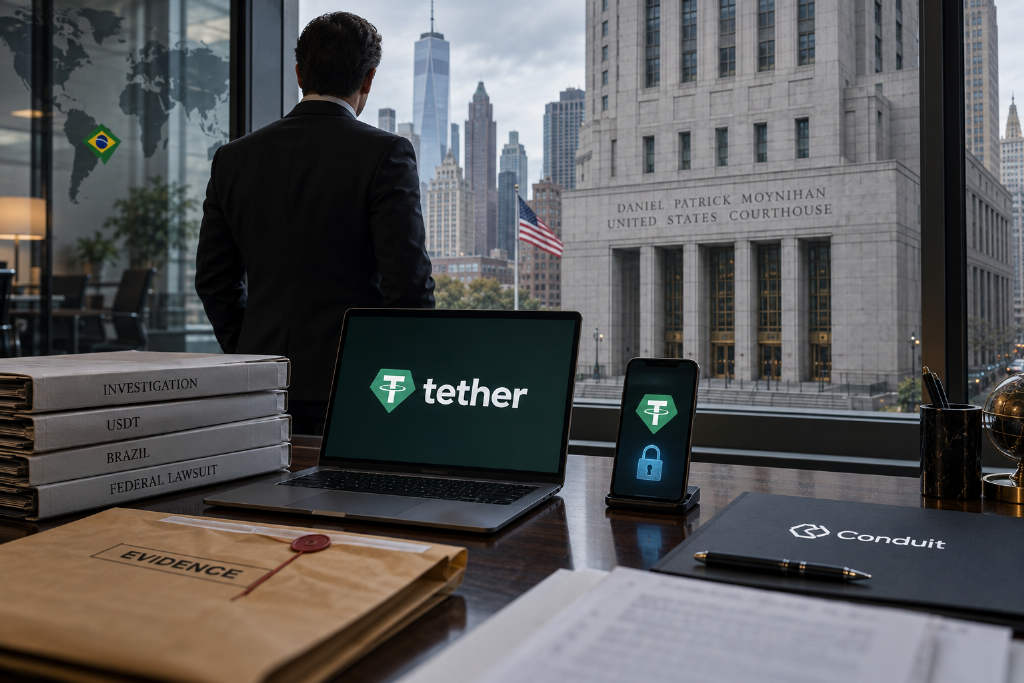
Conduit, a cross-border payments startup, has sued Tether in the U.S. District Court for the Southern District of New York, alleging that the stablecoin issuer froze $2.76 million in USDT without prior notice.
Complaint centers on a Sept. 24 wallet freeze
According to the complaint, Conduit began adding USDT to its digital treasury wallet in May 2025. By September, the company held a total of $2.76 million in USDT, and all of it was frozen by Tether on Sept. 24.
The filing says Tether froze funds over which it had "no lawful claim of right," and that the action caused material harm to Conduit’s business.
Conduit said in the lawsuit: "The funds clearly belong to Conduit, but Tether not only took them, it also refused to let Conduit use them."
Brazil federal police investigation appears in the filing
The court documents say the freeze is tied to a 2024 investigation launched by Brazil’s federal police. That investigation involved financial intermediaries Bull Intermediação de Negócios and Onix.
Conduit alleges that Tether determined on its own that the company’s treasury wallet was linked to those two entities, then froze the entire balance under its own standards.
The complaint also says Conduit repeatedly asked Tether to unfreeze the funds, but had not received a response as of Monday.
Case follows other disputes over USDT freezes
The report says this is not the first time Tether has faced allegations over freezing USDT without sufficient justification. About one month later, two Thai nationals sued Tether over the freezing of $4.24 million in USDT, claiming the action followed an "informal request" from Homeland Security Investigations in the United States.
Earlier this year, Tether also said it had helped freeze $550 million in USDT linked to Iran. Those examples show how stablecoin freezing tools have been used in cross-border payment and compliance settings.
Dispute raises questions for corporate treasury use of stablecoins
Tether is the world’s largest stablecoin issuer, and USDT accounts for about 75% of stablecoin market capitalization, according to the report. While freezing itself does not carry a fee, repeated freezes can affect liquidity for companies holding stablecoins in treasury operations.
If Conduit wins the case, the lawsuit could become a reference point for what counts as a reasonable freezing standard for stablecoins. The outcome could also affect how companies use stablecoins as treasury assets.
The report also notes that more businesses in Taiwan are using stablecoins for cross-border settlement. If Tether’s freezing standards are not transparent enough, small and mid-sized exporters there could face similar risks of having funds frozen.