
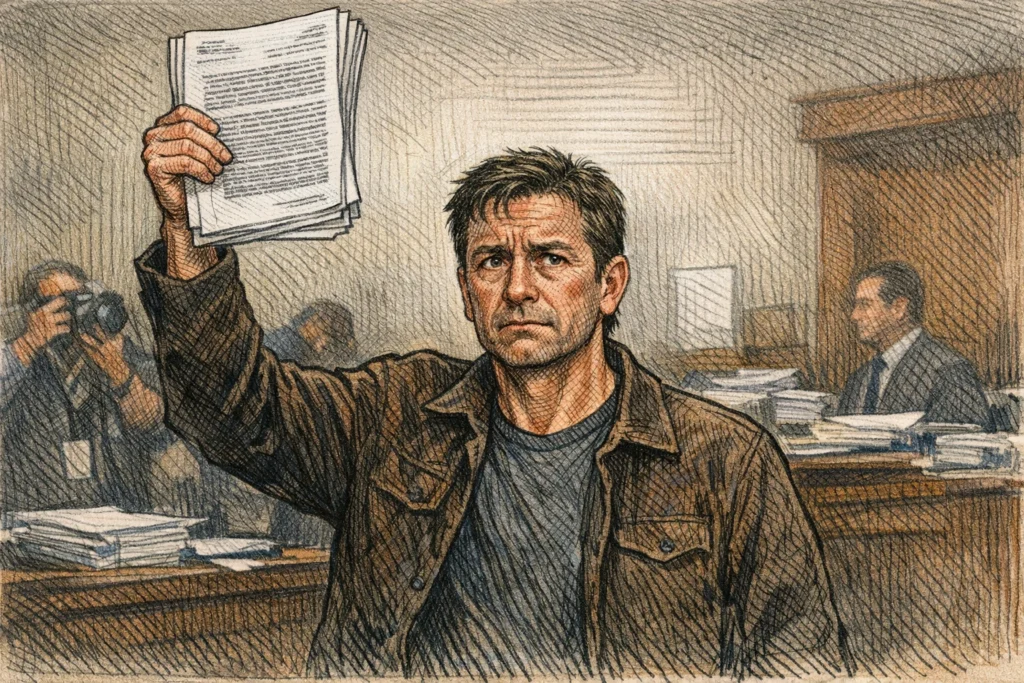
From illustrators to independent musicians, creators around the world are taking Google, Meta and Anthropic to court over AI training. The claims are not identical. Some focus on copyright infringement, others on alleged breaches of platform terms, and the early results have been mixed.
$1.5 billion now stands as the largest copyright class-action settlement in U.S. history. On July 20, 2026, San Francisco federal judge Araceli Martínez-Olguín approved Anthropic’s settlement with a group of authors, covering about 500,000 works and working out to roughly $3,000 per work.
That result did not settle the broader fight between creators and AI companies. Over the past three years, illustrators, novelists and independent musicians have continued to sue Google, Meta and Anthropic, with cases centered on pirated training data, the use of lawfully acquired books for model training, and whether platform agreements can be stretched to cover AI systems built years after those terms were written.
Creators searched the datasets and found their own work
After The Atlantic launched a search tool for AI training datasets, many creators did the same thing first: they looked up their own names.
Nonfiction writer Kirk Wallace Johnson was one of them. His books The Feather Thief and The Fishermen and the Dragon, which he said took five or six years to write, were pirated and then fed into chatbot training datasets. He described his reaction as "anger, concern, and a bit of a desire for revenge," then contacted Susman Godfrey, the law firm representing authors in the Anthropic case.
Illustrator Sarah Andersen moved earlier. In a 2022 New York Times guest essay, she described her webcomic Sarah’s Scribbles as "a complex culmination of childhood reading and life choices." She said she felt violated, calling it "reducing my life’s work into an algorithm."
In January 2023, Andersen, along with Karla Ortiz, Kelly McKernan and other visual artists, sued Stability, Midjourney, DeviantArt and Runway AI. That litigation has now stretched on for more than three years.
Anthropic settled, but the fair-use fight remains open
Andrea Bartz, author of We Were Never Here, was a lead plaintiff in the Anthropic litigation. She told The Verge that when she learned her work had been pirated and used for training, "I felt violated, shocked, alarmed." Her case produced the $1.5 billion settlement approved this month, and Anthropic also agreed to destroy its pirated ebook library.
Still, the case left a major opening. Anthropic did not train Claude only on pirated ebooks. It also used a large batch of second-hand physical books that had been legally purchased and scanned under what was described as the "Panama Project." Judge William Alsup found that training on those lawfully obtained books qualified as fair use.
In the court’s view, turning books into internal model weights was "transformative in nature" and no longer counted as reproduction. Bartz rejected that part of the ruling. "Even a library can’t buy a physical book, scan it into an ebook, and lend it out," she said. "I strongly disagree with this part of the decision."
YouTube terms and AI music training are now part of the same legal battle
A similar gray area appears in musician Sam Kogon’s lawsuit over Google’s Lyria music engine. Kogon is not arguing copyright infringement. His claim is that Google violated its own terms by using YouTube Content ID data to train Lyria and ProducerAI.
He argued that Google "is devaluing our work, and then giving it away for free, which will strip a whole lot of musicians of their leverage." He also called AI-made fake music "the most anti-human thing human beings can do."
Google, in its motion to dismiss, argued that YouTube’s terms grant the company the right to "reproduce, distribute, prepare derivative works."
Entertainment and intellectual property lawyer Krystle Delgado disputed that reading, though after reviewing the terms she also acknowledged that uploaders do grant YouTube an "irrevocable perpetual license." Kogon put it more bluntly: "This is an absolute bait-and-switch." His point was that a non-negotiable contract was being used to sweep in technologies that did not even exist at the time.
Google spokesperson Jack Malon told The Verge: "As we have said for years, we use content uploaded to YouTube to improve product experiences for creators and audiences across YouTube and Google, including through machine learning and AI applications." Creators interviewed in the report argued that this reflects an abuse of market power, because leaving a platform the size of YouTube is not a realistic option.
In the Meta case, most claims were cut back
Novelist Richard Kadrey, comedian Sarah Silverman and others argued in their lawsuit over Meta’s training of Llama that AI may not undercut bestselling authors directly, but it could keep the next breakout writer from ever being discovered.
A judge later dismissed most of those claims for "lack of evidence of market harm," while allowing the part tied to pirated source material to continue.
More cases are coming, and the anxiety has not gone away
Johnson said people focusing only on world-famous authors are missing the point. "AI will never write The Godfather, but AI can write a mediocre movie, a mediocre book," he said. "And a whole lot of writers and screenwriters live in that range."
Delgado, who is also leading lawsuits against Suno and Udio, said the momentum is shifting toward creators. "These companies are really nervous now. Judges and public opinion both seem to be moving in our direction," she said. Polling cited in the report also shows that Americans at least want more transparent labeling of AI-generated content.
The legal front is still expanding. In January, Universal Music Publishing, Concord and ABKCO sued Anthropic for $3.1 billion. In mid-July, Hachette, Elsevier and other publishers, along with author Scott Turow, also sued Google, alleging that copyrighted works were used to train Gemini. Several of the industry-shaping cases could receive fair-use rulings as early as this summer.
Even then, Bartz said litigation may recover some of what was taken in the past, but it may not stop prices from collapsing in the future. "These companies are spending huge amounts of money convincing everyone that AI is inevitable," she said. "But think about the damage they are doing to art, to the ability to think, and to the world economy in order to accumulate power and money."