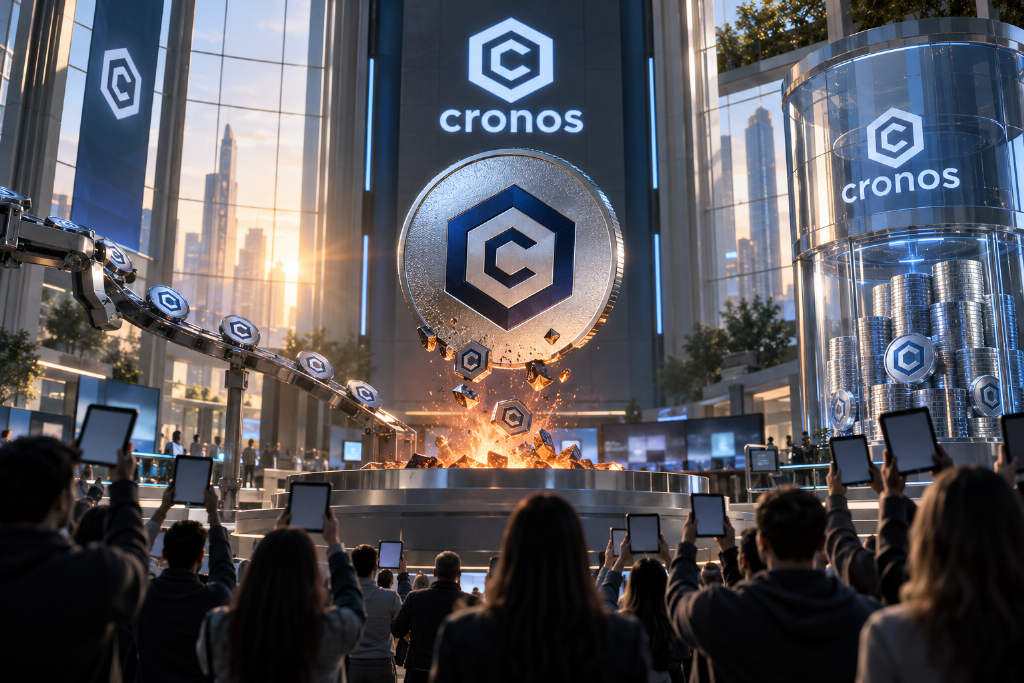
Cronos Network said in a post on X that both of its tokenomics proposals have passed community voting. Following the vote, 228 million CRO from the Cronos community pool has been burned, bringing the network’s cumulative burn total to 428 million CRO. The project also said that 100% of revenue generated by Cronos Ult and Cronos Launch will be used to buy back CRO on the open market, with tokens to be burned on a monthly basis. Cronos added that the transaction hash for each buyback and burn will be made public. At the same time, the network said its staking rewards mechanism will remain unchanged, and that those rewards will continue to be funded by the Strategic Reserve.
According to ChainCatcher, Cronos Network said in a post on X that two tokenomics proposals have passed community voting.
Based on the proposal results, 228 million CRO from the Cronos community pool has been burned, bringing the cumulative amount burned to 428 million CRO.
Cronos also said that 100% of revenue generated by Cronos Ult and Cronos Launch will be used to buy back CRO on the open market, with the repurchased tokens set to be burned every month. The transaction hash for each transaction will be disclosed publicly.
The network added that its staking rewards mechanism will remain unchanged, and the related rewards will continue to be funded by the Strategic Reserve.
This article was originally published by Bit.Fan. For more cryptocurrency news and market insights, visit www.bit.fan. Disclaimer:
The market information, project data, and third-party content displayed on this platform are for industry information sharing only and do not constitute any form of investment advice or return commitment.
Cryptocurrency trading carries high risks. Users should fully assess their risk tolerance and make independent decisions. All profits, losses, and legal responsibilities are borne by the users themselves.