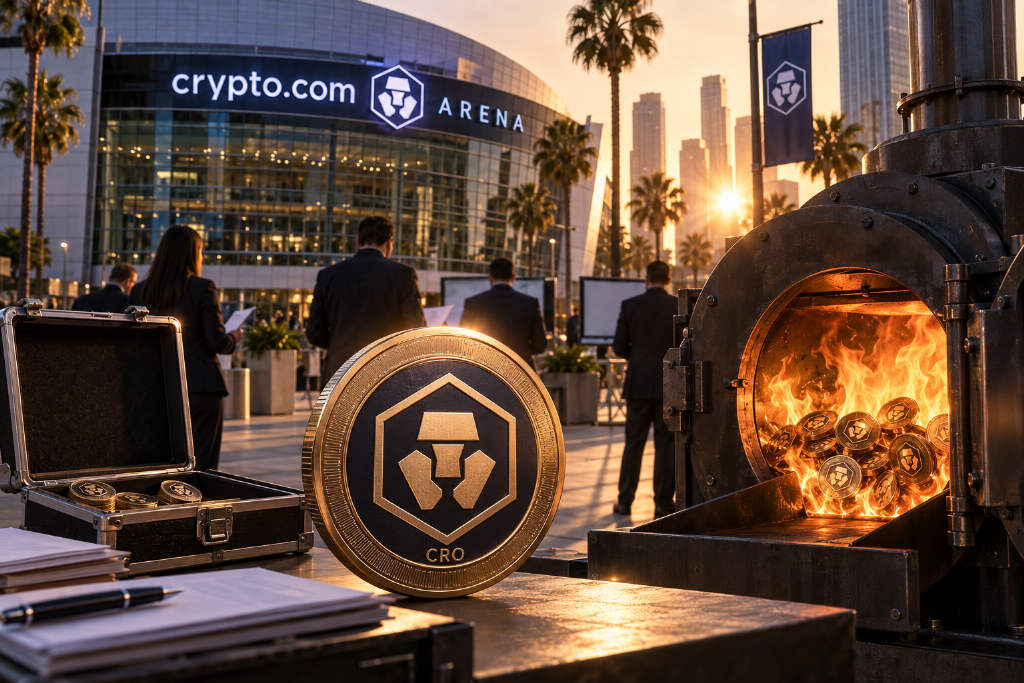
Cronos2026-10-04 03:13:33Cronos approves tokenomics proposals, bringing total CRO burned to 428 millionCronos Network said two tokenomics proposals have passed community voting, clearing the way for additional CRO burn measures and a new revenue allocation plan. The network said 228 million CRO from the Cronos community pool has already been burned, taking the cumulative amount destroyed to 428 million CRO. Under the approved framework, 100% of revenue generated by Cronos Ult and Cronos Launch will be used to buy back CRO on the open market. Those tokens will then be burned on a monthly basis, and the related transaction hashes will be made public. Cronos also said its staking reward mechanism will remain unchanged. Funding for those rewards will continue to come from the strategic reserve, according to the update cited by Odaily.20
Cronos2026-10-04 03:21:35Cronos passes two tokenomics proposals, burns 228 million CROCronos Network said on Oct. 4 that two tokenomics proposals have passed, with 228 million CRO from the community pool already burned. The move brings the token’s cumulative burn total to 428 million CRO. Under the approved proposals, all future revenue generated by Ult and Cronos Launch will be used to buy back CRO from the open market, followed by monthly burns. Cronos also said all related transaction hashes will be disclosed publicly. The update lays out both the completed burn and the mechanism for future buybacks and burns tied to revenue from the two products.20
Cronos2026-10-04 03:12:56Cronos says two tokenomics proposals passed, with 228 million CRO burnedCronos Network said in a post on X that both of its tokenomics proposals have passed community voting. Following the vote, 228 million CRO from the Cronos community pool has been burned, bringing the network’s cumulative burn total to 428 million CRO. The project also said that 100% of revenue generated by Cronos Ult and Cronos Launch will be used to buy back CRO on the open market, with tokens to be burned on a monthly basis. Cronos added that the transaction hash for each buyback and burn will be made public. At the same time, the network said its staking rewards mechanism will remain unchanged, and that those rewards will continue to be funded by the Strategic Reserve.20
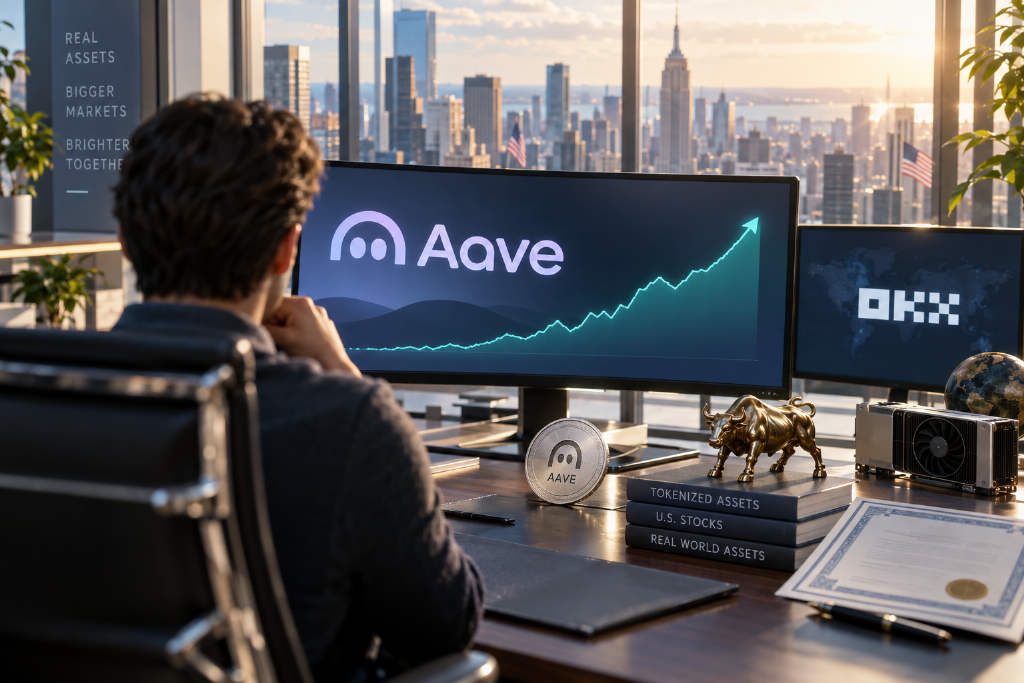
AAVE2026-10-02 06:26:33AAVE climbs 9.20% in 24 hours, hits an intraday high of 187.50 USDTAAVE rose 9.20% over the past 24 hours, with its intraday high reaching 187.50 USDT, according to OKX market data. The token was last quoted at 183.90 USDT. The move came as Aave’s business narrative continued to expand beyond crypto-native collateral. On the product side, Aave is extending collateralized lending from crypto assets into securities and physical assets. Aave V4 has already enabled collateralized lending against tokenized U.S. equities on Base. Founder Stani has divided Aave’s potential market into three stages — Crypto, Securities, and Abundance Assets — and said collateral could later expand to productive assets such as GPUs and robots. The market is also watching expectations around Aave tokenomics 3.0, which may introduce an AAVE burn mechanism. Those developments were cited alongside the token’s price strength in the latest market update from Odaily.20
Hunter Biden2026-10-01 02:21:47Hunter Biden says LAPTOP was built with tokenomics opposite to Trump family memecoinsHunter Biden said his LAPTOP memecoin was structured as the opposite of the Trump family’s memecoins, arguing that the project was designed to show a token launch could be done “the right way.” Speaking on the Unchained Podcast on Wednesday, Biden said insiders hold 30% of LAPTOP’s supply, versus what he described as 80% for the Trump tokens, and said half of LAPTOP’s allocation goes to the community. He also said the founder tokens have never moved and will not move, and that no money has left the foundation for insiders. Unchained reviewed Base blockchain data showing that two wallets were each funded with 300 million LAPTOP before launch, matching two allocations disclosed by the project: a founder share and a predictions pool whose tokens are burned when certain real-world predictions come true. One wallet has not moved any tokens, while the other sent 17.5 million tokens, or 1.75% of supply, to a burn address. The outlet said it could not confirm which wallet corresponds to which allocation or who controls them. Biden also addressed LAPTOP’s launch-day trading. The token has fallen more than 99% from its Sept. 9 peak on Base and was trading near $0.079 on Wednesday, above its planned $0.05 launch price. He said one of the project’s three market makers seeded the launch pool with about 29,000 tokens instead of 5 million, which he said briefly pushed the token from a $50 million fully diluted valuation to a $317 billion market cap within a minute.00
Fables2026-09-30 12:52:44Fables sets Oct. 20 TGE with initial circulating supply capped at 75 million tokensFables, a decentralized exchange on Robinhood Chain, said its FABLES token will hold its token generation event on Oct. 20, with the ve(3,3) mechanism going live at the same time. The project also said its points campaign will be extended by two weeks because work tied to its legal structure has been delayed, with points continuing to accrue at a rate of 250 million per week through Oct. 19. Between Oct. 12 and Oct. 19, points participants must choose whether to claim liquid FABLES or lock their allocation as veFABLES. Wallets that do not make a selection will lose eligibility to claim. Fables also said the PROLOGUE snapshot will take place from Oct. 17 to Oct. 18, and that every 40 PROLOGUE can be redeemed for at least 1 FABLES. The project outlined a maximum token allocation of 1 billion FABLES. At TGE, circulating supply will be capped at 75 million tokens, including 25 million tied to PROLOGUE redemption, while points claims of up to 45 million and the initial liquidity pool allocation of 5 million to 15 million will together remain within a combined ceiling of 50 million. Team tokens will not enter circulation at TGE.180
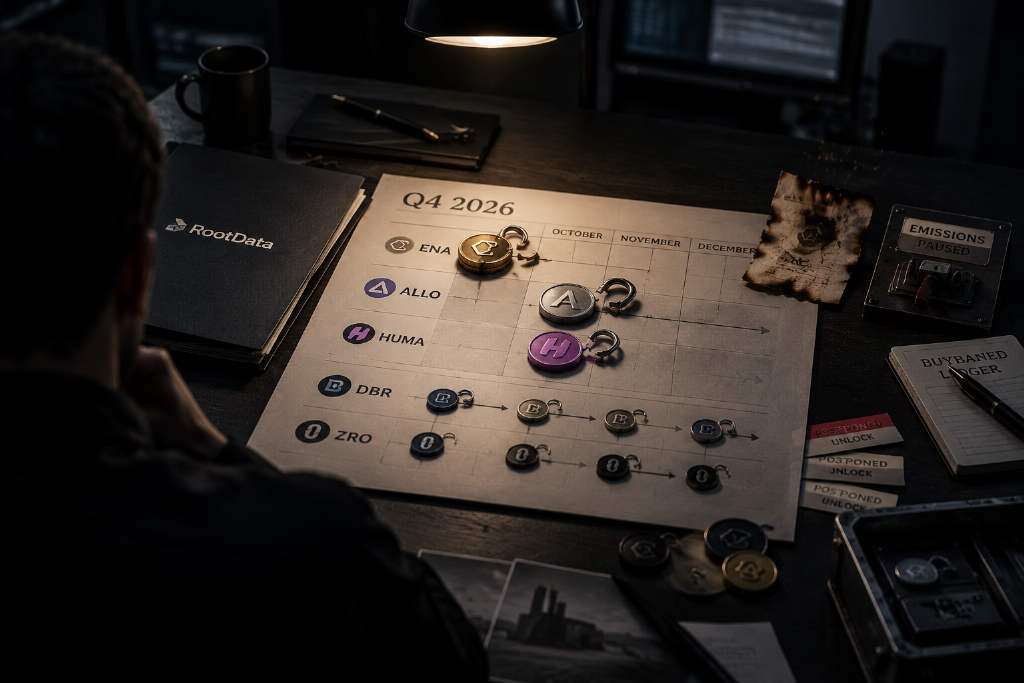
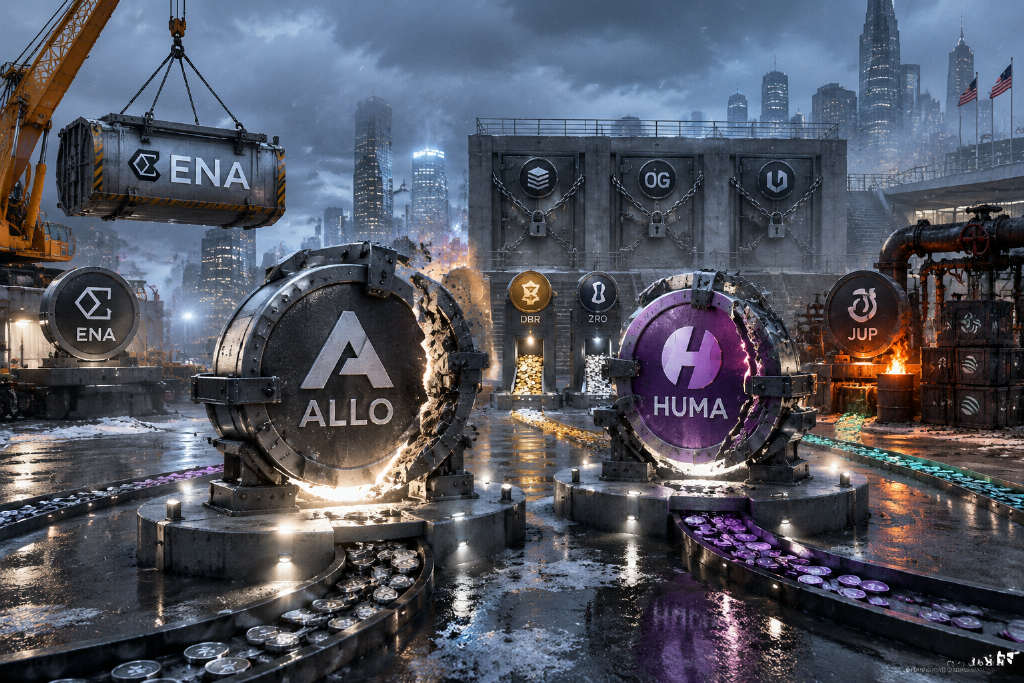
RootData2026-09-30 07:32:14RootData flags Q4 token unlocks as ALLO and HUMA approach first major insider releasesRootData has mapped out a new round of token unlock schedules heading into the fourth quarter of 2026, highlighting a sharp contrast between projects facing concentrated insider releases and those that have reworked token supply through delays, buybacks, burns, or revised lockups. The report, based on RootData data and project disclosures, draws from a broader sample of 1,537 projects with unlock plans. Among the most closely watched names, Allora’s ALLO and Huma’s HUMA are set for first-time cliff unlocks tied to investors, teams, and core contributors. deBridge’s DBR and LayerZero’s ZRO continue on quarterly and monthly release schedules, while Ethena’s ENA is set to accelerate the release of remaining investor allocations into a single batch on Oct. 5. RootData also notes that Story, now renamed DATA Network, and 0G have pushed back internal unlocks, while Jupiter has reduced net supply through a mix of token burns, halted emissions, and buybacks. The report does not treat unlock ratios as price forecasts. Instead, it frames them as a measure of supply entering circulation. Across 90 deduplicated front-end samples, 87 had valid next-unlock value ratios, and 16 of those were at or above 10%, accounting for about 18.4%.190
Token Unlocks2026-09-30 07:36:26Q4 2026 token unlocks: ALLO, HUMA, ENA and JUP show diverging supply pathsA new round of token supply events is approaching in Q4 2026, with several closely watched projects set to follow very different release schedules. According to RootData data and project disclosures cited by MarsBit, Allora’s ALLO and Huma’s HUMA are heading into their first major internal cliff unlocks tied to investors, teams, and core contributors, while deBridge’s DBR and LayerZero’s ZRO continue on quarterly and monthly release cycles. Ethena’s ENA stands out for a different reason: part of the remaining investor allocation is scheduled to be released in a single batch on Oct. 5 instead of being spread across later months. The report also tracks how tokenomics have shifted over the past two years. Story, now renamed DATA Network, and 0G both pushed back internal unlock timelines, though 0G also shortened the later release window. Jupiter’s JUP reduced net supply through a mix of token burns, paused emissions, and buybacks. Other projects, including UNITE, BABY, STABLE, LISTA, Aptos, and Wormhole, adjusted vesting structures, lockup rules, or value distribution mechanisms in ways that changed either total supply, circulating supply, or buy-side demand. The result is a Q4 landscape where headline unlock size alone does not fully capture how supply may enter the market.150