
Key Takeaways
- Leverage involves borrowing capital to increase the size of a trading position, magnifying both potential profits and losses.
- The primary leveraged instruments in the crypto market are margin trading, futures contracts, and options contracts.
- Key risks include extreme volatility, forced liquidation, interest costs, and counterparty risk.
- Effective risk management is essential; when used responsibly, leverage can enhance trading returns.
What Does Leverage Mean?
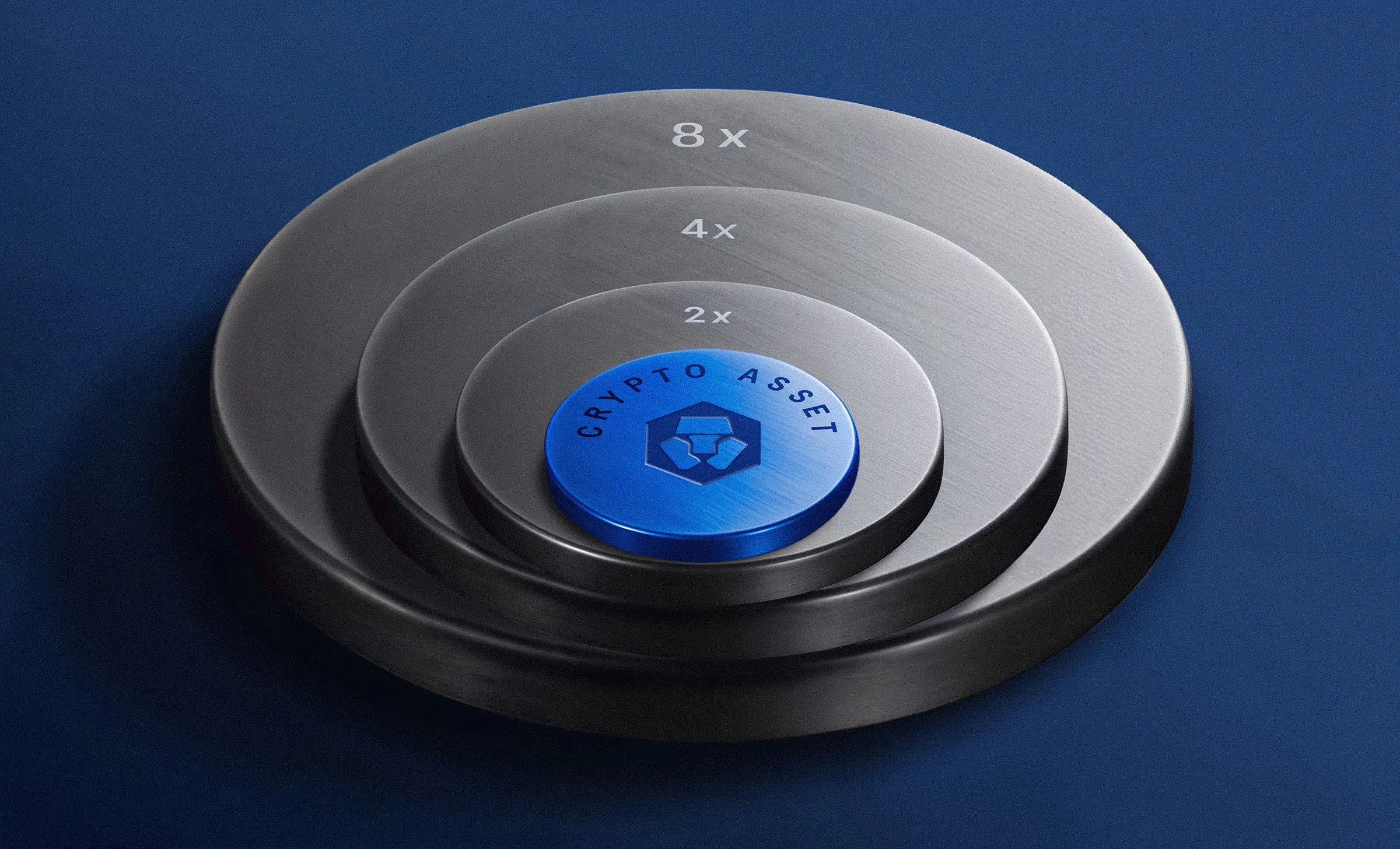
Leverage is a technique that allows traders to control a larger position than what their own capital would permit by using borrowed funds. For instance, with 10x leverage, a $1,000 deposit can command a $10,000 position. If the asset price moves in the trader's favor, the profit is calculated on the full $10,000, not just the original $1,000, which amplifies the return tenfold. Conversely, if the market moves against the position, losses are also magnified by the same factor. Leverage is a staple of traditional financial markets such as stocks, bonds, commodities, and real estate, but the inherent volatility of cryptocurrencies makes leverage trading especially high-stakes. In TradFi, a typical stock might offer 2x to 5x leverage for retail investors; in the crypto world, exchanges may offer 50x, 100x, or even higher, dramatically intensifying both the upside and downside.
How Does Leverage Trading Work in the Crypto Market?
Imagine you have $1,000 in your trading account. By selecting 10x leverage, you can open a position worth $10,000. A 1% price move in the underlying cryptocurrency would result in a $100 change in the position’s value — equivalent to a 10% gain or loss relative to your initial $1,000 capital. This multiplier effect is the core of leverage trading. The borrowed funds act as collateral, and the trader must maintain a minimum equity level; if the market moves sharply against them, they face the risk of liquidation, where the position is automatically closed to prevent further losses.
Example: BTC Leverage Trade
Let’s walk through a concrete Bitcoin example. Suppose you start with $1,000 and apply 10x leverage, allowing you to control a $10,000 position in BTC. The current Bitcoin price is $60,000 per coin.
Initial Capital: $1,000
Leverage: 10x (controlling $10,000)
BTC Price: $60,000
Profit Scenario: BTC rises 1% to $60,600. The gain is 1% × $10,000 = $100. That’s a 10% return on your $1,000 principal. In just a small price movement, your capital grew by a significant percentage.
Loss Scenario: BTC falls 1% to $59,400. The loss is likewise $100 — a 10% erosion of your initial capital. If BTC were to drop 10% from $60,000 to $54,000, your entire $1,000 would be wiped out, and your position would likely be liquidated before reaching that point.
This example underscores why leverage demands constant vigilance; even a minor adverse move can trigger a cascade of losses.
Different Types of Leverage Trading
The crypto market offers several ways to trade with leverage, each with distinct characteristics:
Contracts for Differences (CFDs)
CFDs are derivative products that allow speculation on price movements without owning the underlying cryptocurrency. A trader enters into a contract with a broker to pay or receive the difference between the entry and exit prices. Because CFDs are settled in cash, there is no need to handle wallet security or private keys. Leverage is built in: a small deposit (margin) controls a much larger notional value. While CFDs can be convenient, they often come with overnight financing charges and may not be available in all jurisdictions. For more details on CFDs, refer to dedicated educational resources.
Margin Trading
Margin trading is the direct borrowing of funds from an exchange to purchase crypto assets on spot. The trader deposits collateral, and the exchange lends additional capital, enabling the opening of a leveraged spot position. Exchanges set initial margin and maintenance margin requirements. If the account equity falls below the maintenance margin due to adverse price movements, the trader receives a margin call. Failure to deposit extra funds results in forced liquidation, where the exchange automatically sells the assets to repay the loan. Margins and liquidation levels are predetermined, making it critical to monitor open positions closely. Profits and losses are realized upon closing the position, and they reflect the total leveraged amount, not just the margin.
Crypto Futures
Futures contracts obligate the parties to buy or sell an asset at a predetermined price on a future date. In crypto, most futures are cash-settled, meaning traders exchange only the profit or loss in cash, avoiding physical delivery. Traders post margin, and exchanges calculate daily profit and loss through a process called “marking to market,” adjusting account balances accordingly. Leverage is expressed as the ratio of the notional contract value to the required margin. For example, if a Bitcoin futures contract worth $60,000 requires $600 in margin, the leverage is 100x. Because positions are marked to market continuously, an adverse price swing can quickly eat into the margin, triggering liquidation. Futures also often have funding rates that keep the contract price aligned with the spot price, adding a periodic cost or rebate for position holders.
Crypto Options
Options provide the buyer the right — but not the obligation — to buy (call) or sell (put) the underlying crypto at a specified strike price before expiration. The seller, or writer, is obligated to fulfill the contract if the buyer exercises the option. Leverage arises because the premium paid for the option is typically much smaller than the notional value of the controlled assets. If the market moves favorably, the percentage return on the premium can be extraordinary; however, if the market stays flat or moves against the position, the maximum loss is the premium paid. This asymmetric payoff profile makes options a unique risk management and speculative tool. However, options require understanding of concepts like intrinsic value, time decay, and implied volatility.
Is Leverage Trading Safe?
While leverage can accelerate gains, it magnifies losses just as powerfully. Crypto leverage trading carries several heightened risks:
- Volatility: Cryptocurrencies are infamous for double-digit intraday swings. Such sharp moves can turn a small leveraged loss into a total wipeout in minutes, especially when using high multipliers.
- Liquidation: With borrowed funds acting as collateral, a drop in equity below the maintenance margin triggers automatic liquidation. Exchanges often employ mark prices and maintain liquidation engines that close positions without warning if the margin buffer depletes. In extreme market conditions, even a temporary wick can cause cascading liquidations, leaving traders with nothing.
- Interest Costs: Margin and leveraged positions frequently incur funding or interest fees. For example, in perpetual futures, long and short positions may pay or receive funding rates every few hours. These costs can accumulate, particularly in ranging or unfavourable markets, eating into potential profits or deepening losses.
- Counterparty Risk: Leverage trading is typically conducted through centralized platforms. If an exchange suffers a hack, becomes insolvent, or freezes withdrawals, traders' collateral and unrealized profits could be at risk. Decentralized alternatives exist, but they carry their own smart contract risks.
To navigate these risks, traders must adopt disciplined risk management: set stop-loss orders, never risk more capital than one can afford to lose, use appropriate position sizing, and diversify exposure. Understanding market factors that influence crypto prices — such as regulatory news, macroeconomic trends, and on-chain data — can also improve trading decisions. Ultimately, leverage is a tool: in the hands of a knowledgeable and cautious trader, it can enhance returns; used recklessly, it can lead to ruin.
In summary, leverage trading in crypto offers a pathway to amplified profits but demands respect for its amplified risks. Education, strategy, and self-discipline are the trader’s best defenses.