
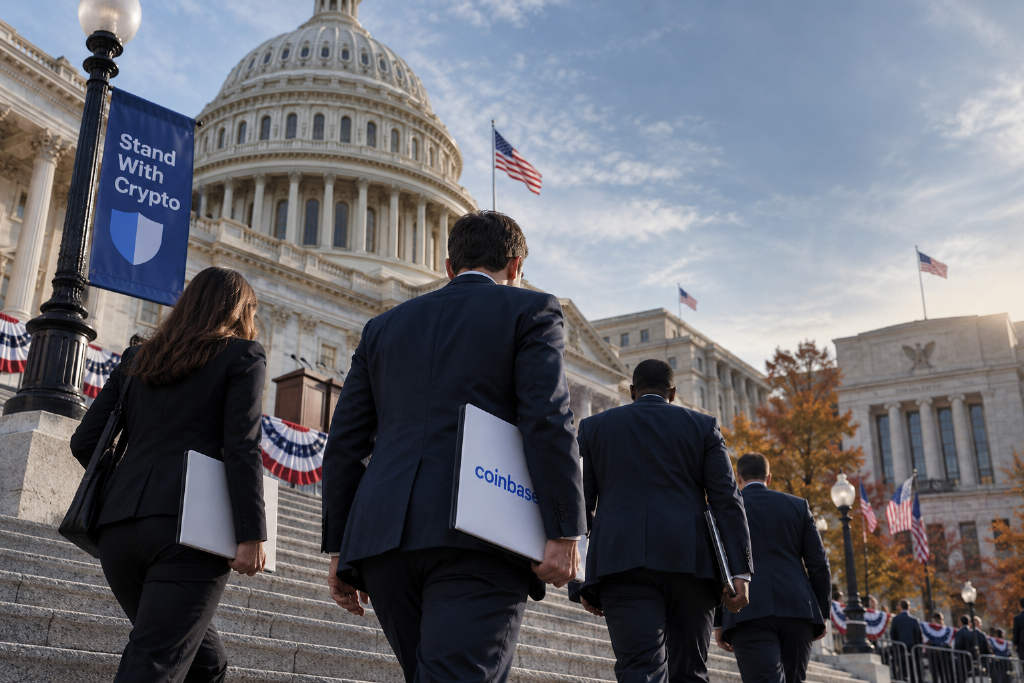
CoinDesk’s read of U.S. federal lobbying disclosures shows the crypto industry dropped more than $13 million on lobbying in the first half of 2026. Roughly $8 million of that was tied to the push for the CLARITY Act, a market structure bill that then died in a Senate procedural vote on Sept. 15, losing 49-50.
Then on Sept. 30, Stand With Crypto, the Coinbase-backed advocacy group, rolled out its first Senate endorsements and turned its attention toward the November midterm elections.
About $8 million was linked to the CLARITY Act push
CoinDesk said that, out of the nearly $8 million tied to the CLARITY Act, about $2.4 million went to outside lobbying firms, around $2.1 million went to in-house lobbyists employed by trade groups, and the remainder was spent by lobbying teams working inside crypto companies.
The filings only show that the lobbying activity referenced congressional crypto regulatory legislation. They do not spell out how much of the spending was tied to other matters.
Looking at single companies, Coinbase spent about $2.2 million lobbying for the bill, the biggest amount in the pack. Kraken was close behind at nearly $1 million. Other big spenders: Digital Currency Group, Jump Crypto, and Paradigm.
Outside lobbying payments were spread among at least 42 firms. Checkmate Government Relations took in about $1.8 million in crypto-related payments during the first half of the year, with most of that coming from Binance.
Different views emerged on the bill’s progress
Coinbase spokesperson Julia Krieger said the company’s efforts brought the bipartisan market structure bill "to the brink of passage" and also set the stage for regulatory actions now being pushed ahead by the SEC and CFTC.
But Corey Frayer, a former SEC official now serving as director of investor protection at the Consumer Federation of America, said the industry was defined by "serious infighting and a lack of unity" on major policy calls connected to the bill.
Stand With Crypto named its first Senate endorsements
The Block reported that the group’s first Senate endorsements covered three races: Ohio Republican Senator Jon Husted, Republican Representative Ashley Hinson in the Iowa Senate race, and Democratic Representative Chris Pappas in the New Hampshire Senate race.
Husted is running against Sherrod Brown, the former chair of the Senate Banking Committee, who has for years held a skeptical stance toward the crypto industry.
On the House side, Stand With Crypto backed Iowa Republican Mariannette Miller-Meeks and Alabama Democrat Shomari Figures. And it said it would ramp up advertising in six House races. The group had already endorsed 32 House members in August and said those picks were based on candidates’ crypto policy views, not party affiliation.
Executive Director Mason Lynaugh said: "After the Senate recently failed to move the CLARITY Act forward, Stand With Crypto’s more than 3 million advocates are fully turning their energy toward electing pro-crypto lawmakers so they can carry on our work to secure clear rules."
Stand With Crypto does not donate directly; Fairshake has spent $30 million against Brown
Decrypt said Stand With Crypto is not the same thing as a super PAC. It does not give directly to campaigns. Its main job is voter mobilization, and it grades candidates through its Voter Hub. Still, candidates with high scores often also get money from political action committees aligned with the industry’s position.
The crypto industry’s super PAC Fairshake has recently spent $30 million trying to stop Brown from getting back to the Senate.
Some lobbying resources are now shifting toward regulators
CoinDesk also said that after the bill went down, part of the industry’s lobbying effort shifted toward regulators. Lindsay Fraser, head of policy at the Blockchain Association, said the group was rethinking how it used its resources after the September Senate vote, and that part of the plan would involve "deepening engagement with the SEC and CFTC."