
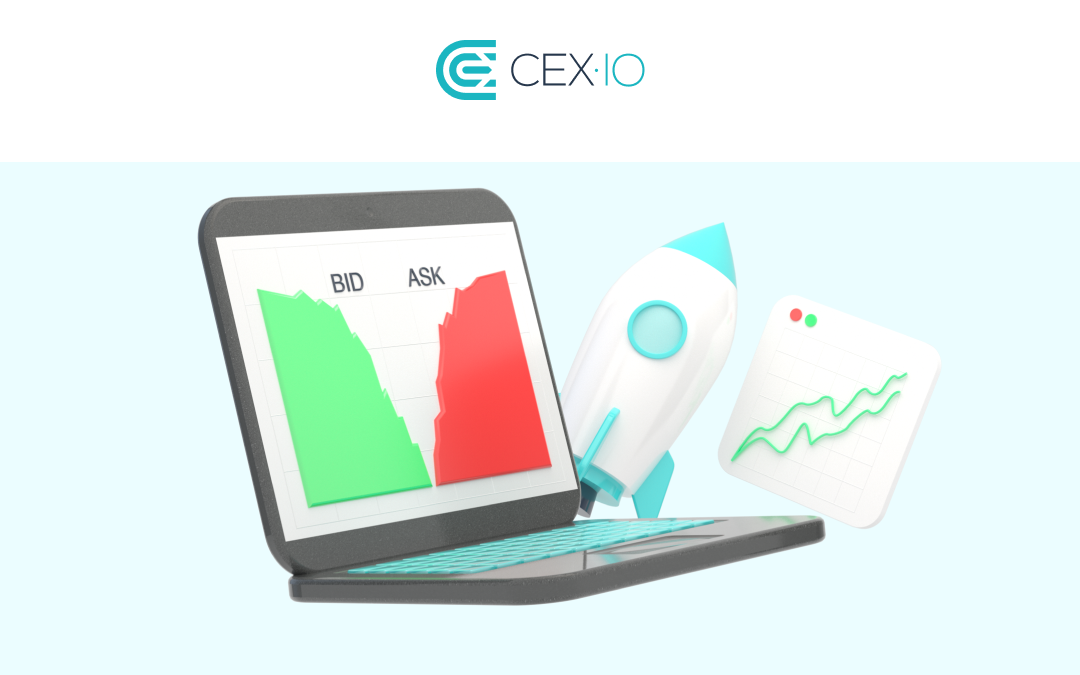
When trading on a cryptocurrency exchange's order book, the highest buy order and the lowest sell order for a given pair rarely match. The spread (or bid-ask spread) is the difference between the lowest sell price and the highest buy price. This gap directly measures supply and demand dynamics for a given asset.
Think of it like haggling for a car or renting an apartment: the buyer's willing price and the seller's asking price differ until a middle ground is found. That extra amount paid beyond the initial bid is the spread. In crypto, thousands of traders submit bids and asks, and the spread reflects the imbalance between buy and sell pressure.
Fixed vs Variable Spread
Exchanges generally offer two spread types: fixed and variable (floating). CEX.IO employs a variable spread mechanism on its order books, meaning prices are determined solely by competition among buyers and sellers without exchange intervention.
Liquidity and Volume Drive Spread Width
Spreads widen when liquidity or trading volume drops. A sudden flood of buy orders with too few sell orders also pushes the spread outward. Conversely, high liquidity and balanced order flow tighten spreads. Bid-ask spread is critical at trade entry—if it exceeds your expected profit, the trade may become unviable.
How Variable Spread Works
Variable spread means the difference between best ask and best bid is dynamic. CEX.IO aggregates prices from multiple liquidity providers (including user orders) and passes them directly to the order book without any price manipulation. The main advantage: no requotes—orders are never removed, and traders accept only their own limit prices. However, slippage persists: if your buy order exceeds the smallest sell order's size, the remainder fills at the next higher ask. Similarly, a large sell order over the highest bid will be filled at the next lower bid. This makes pricing transparent, as it reflects real-time market competition.
To avoid losing capital to spreads, trade only the most liquid cryptocurrencies or use limit orders and wait patiently for fills.