Echoes of 1958: The Credit Card Disaster and Crypto’s Parallel
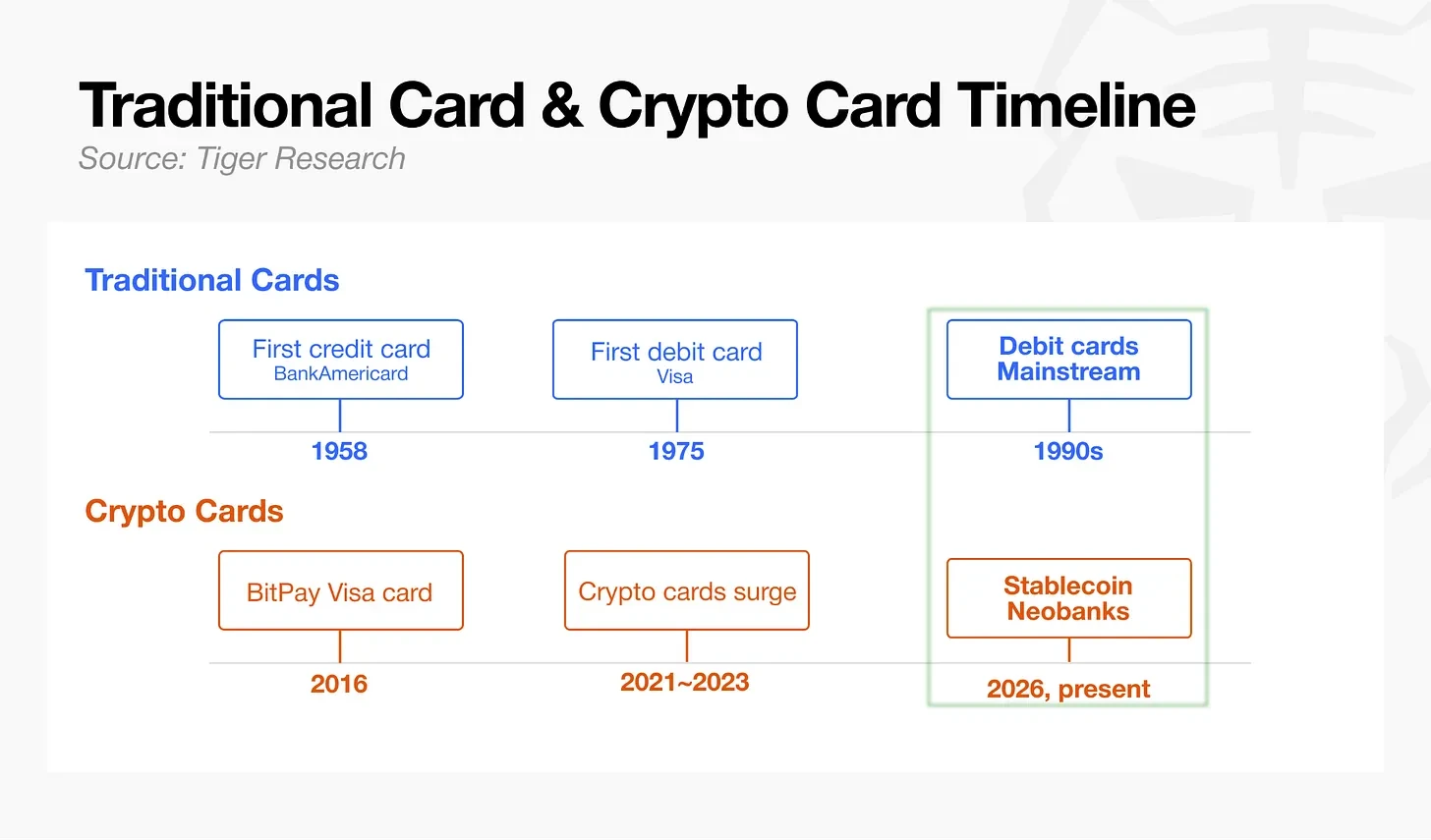
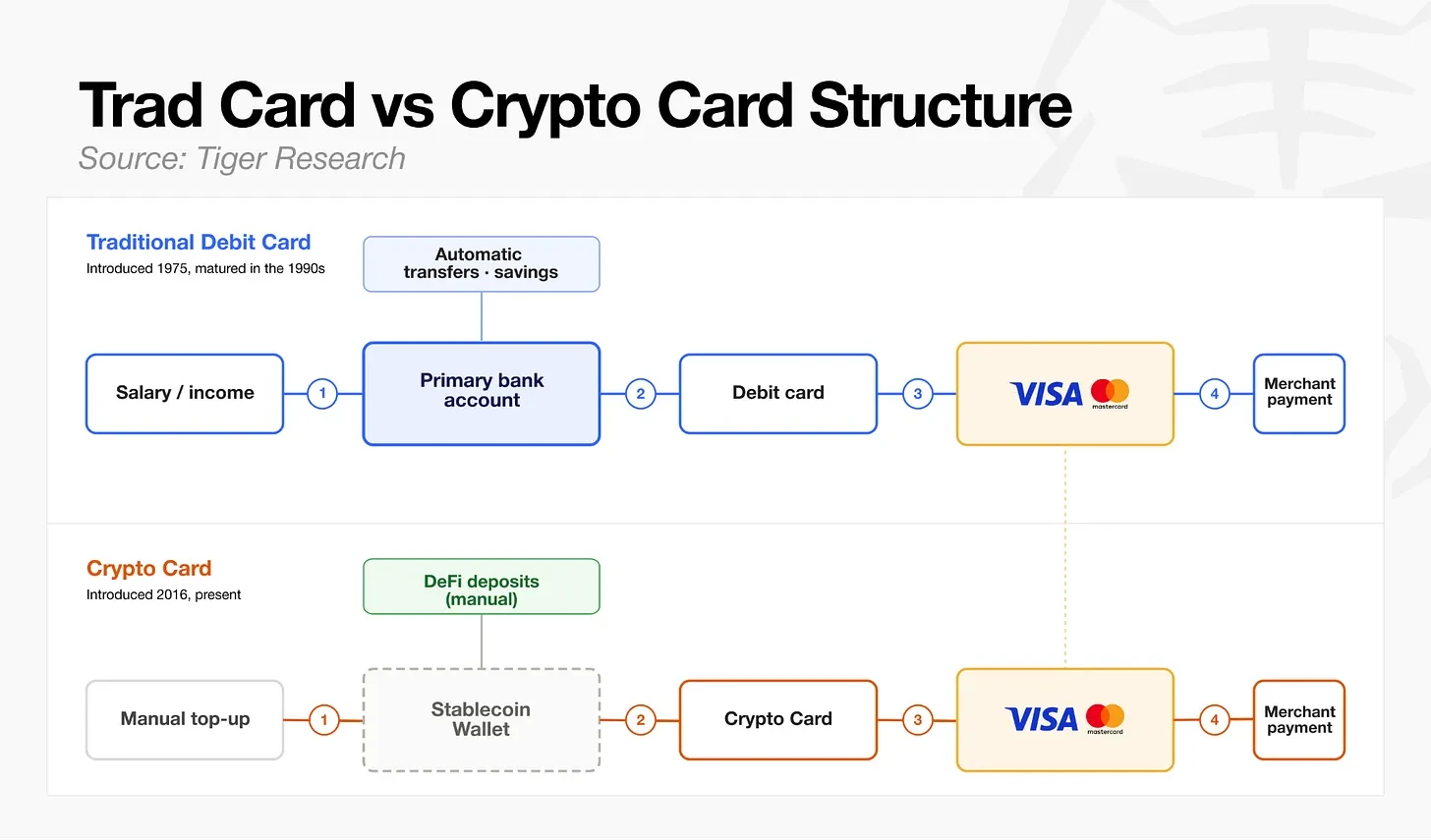
In September 1958, Bank of America mailed credit cards to 65,000 residents in Fresno, California—the first mass-issued card without supporting infrastructure. Within a year, the delinquency rate hit 22%, losses reached $20 million. It took the industry 15 years to build electronic settlement systems, 17 years for the debit card to launch, and 20 years for Visa to establish a global payment standard. The fundamental divide between traditional and crypto payments lies in whether a normalized financial account relationship is created. Debit cards only became a primary tool after payroll direct deposit became common in the 1990s. Today’s crypto payment cards are essentially prepaid cards—users top up stablecoins, but wallets can’t support payroll deposits, recurring bills, or regular cash flow. The industry is roughly at the stage of debit cards in the late 1980s.
The future leader in crypto payment cards will not be determined by issuance volume, but by who first builds a true primary account serving daily income and expenses, or finds a growth flywheel for long-term retention.
Data Explosion with Structural Concerns: A $18B Annualized Reality
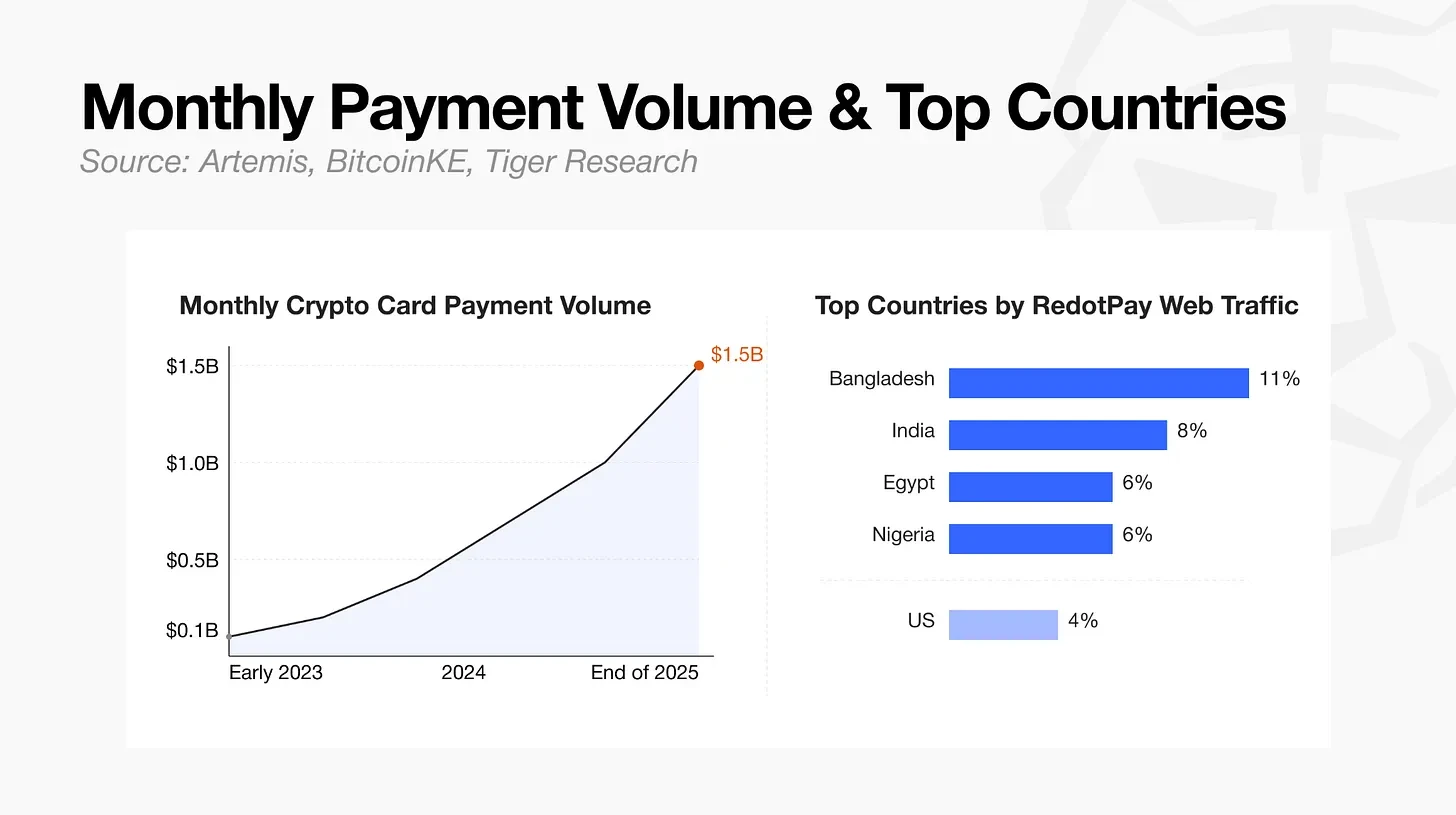
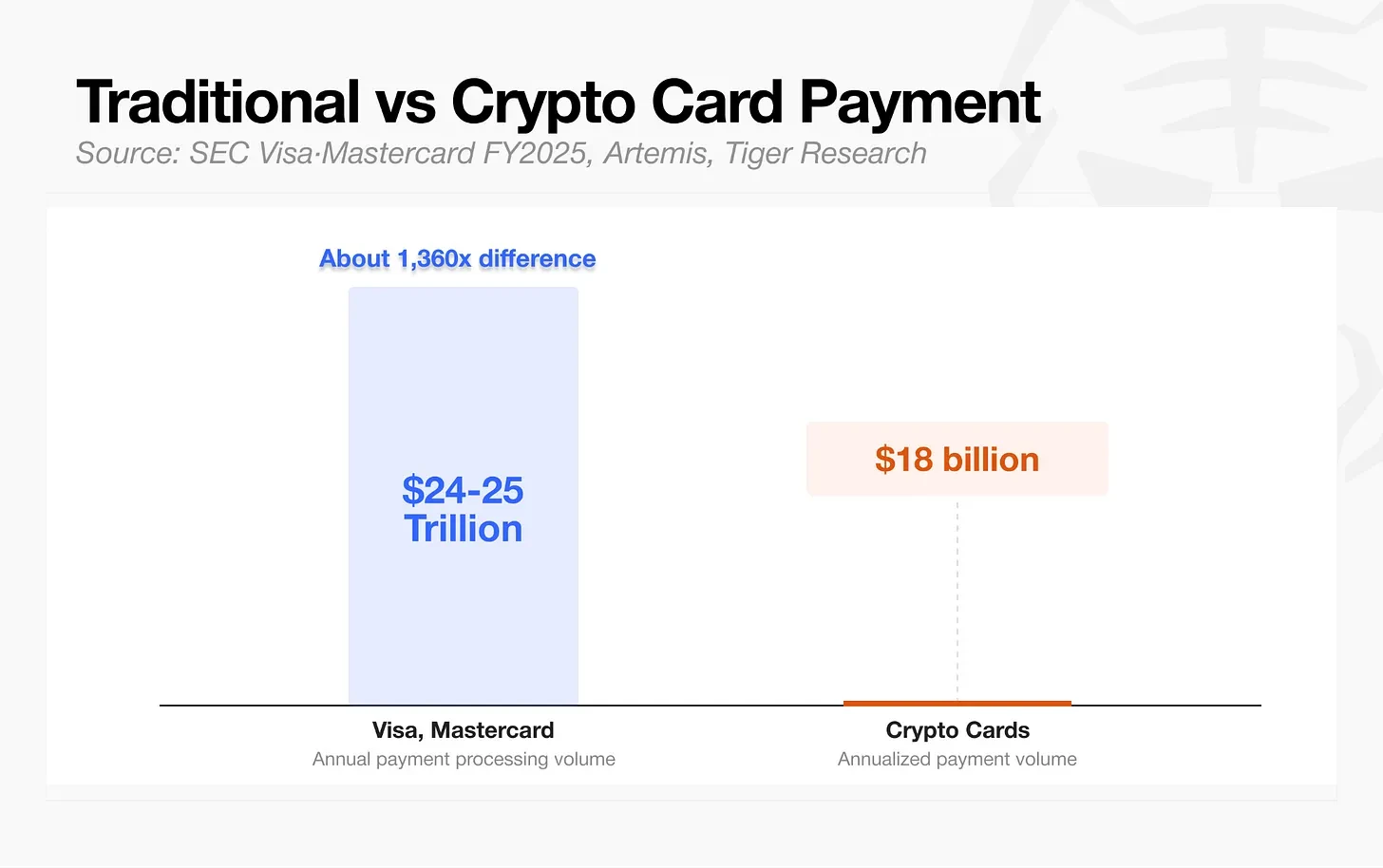
According to Artemis, crypto payment card monthly transaction volume grew from $100M in early 2023 to $1.5B by end of 2025, annualizing to ~$18B. However, services and geography are highly concentrated: RedotPay commands over half of all transaction flow; user traffic is dominated by emerging markets—Bangladesh 11%, India 8%, Egypt 6%, Nigeria 6%, while the US accounts for only 4%. Real demand comes not from developed countries but from regions with limited financial services and dollar access.
Compared to established payment networks, the scale gap is massive: Visa and Mastercard process $24-25 trillion annually. Stablecoin retail velocity on-chain is only 0.08, one-twentieth of M1 velocity (1.65). Users don’t follow a typical routine of salary deposit, daily spending, and top-up; instead, they make lump-sum deposits followed by sporadic card usage. Volume growth does not equate to a mature clearing system.
Four Business Models and Key Players
The crypto card industry breaks down into four models:
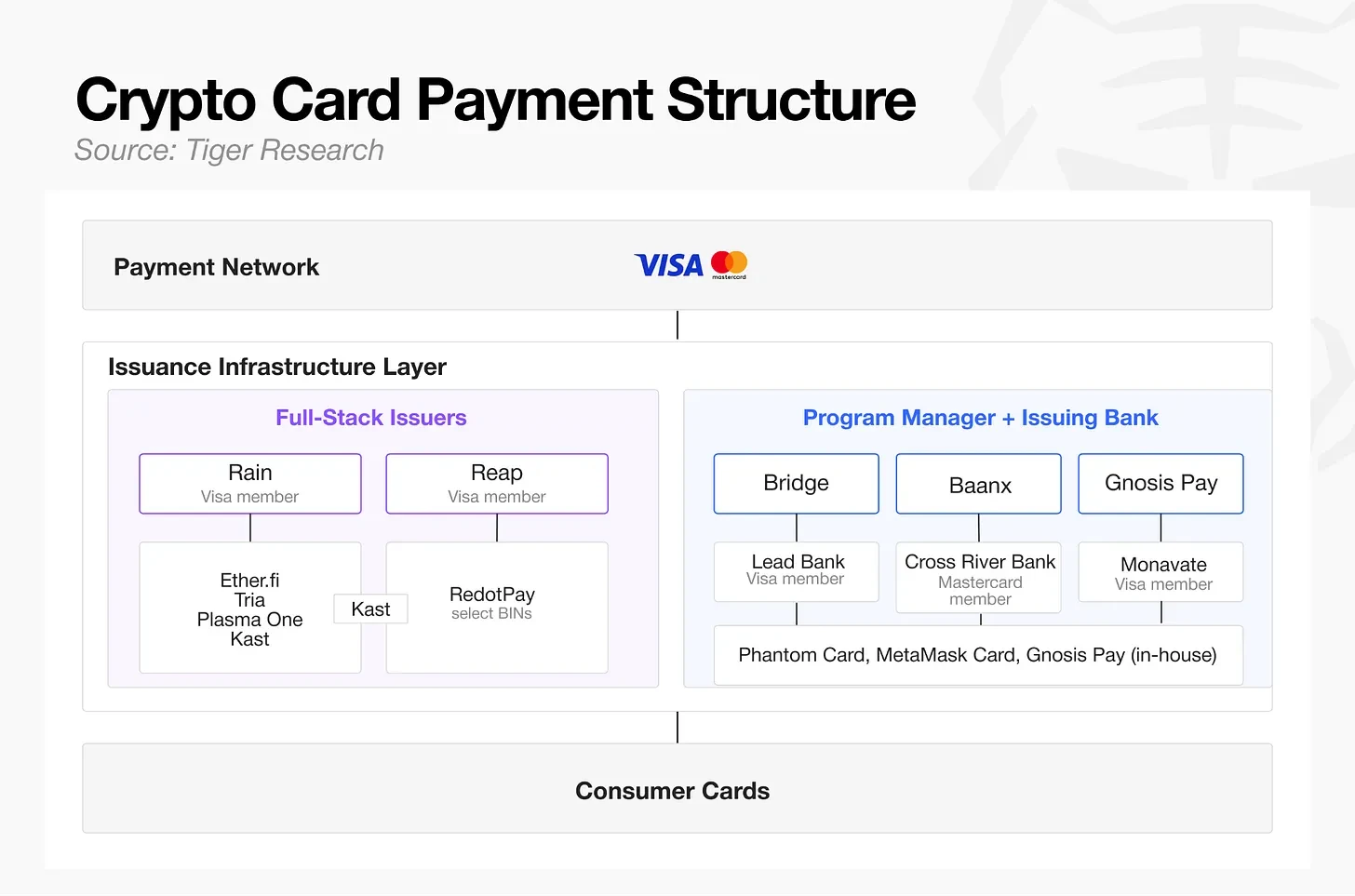
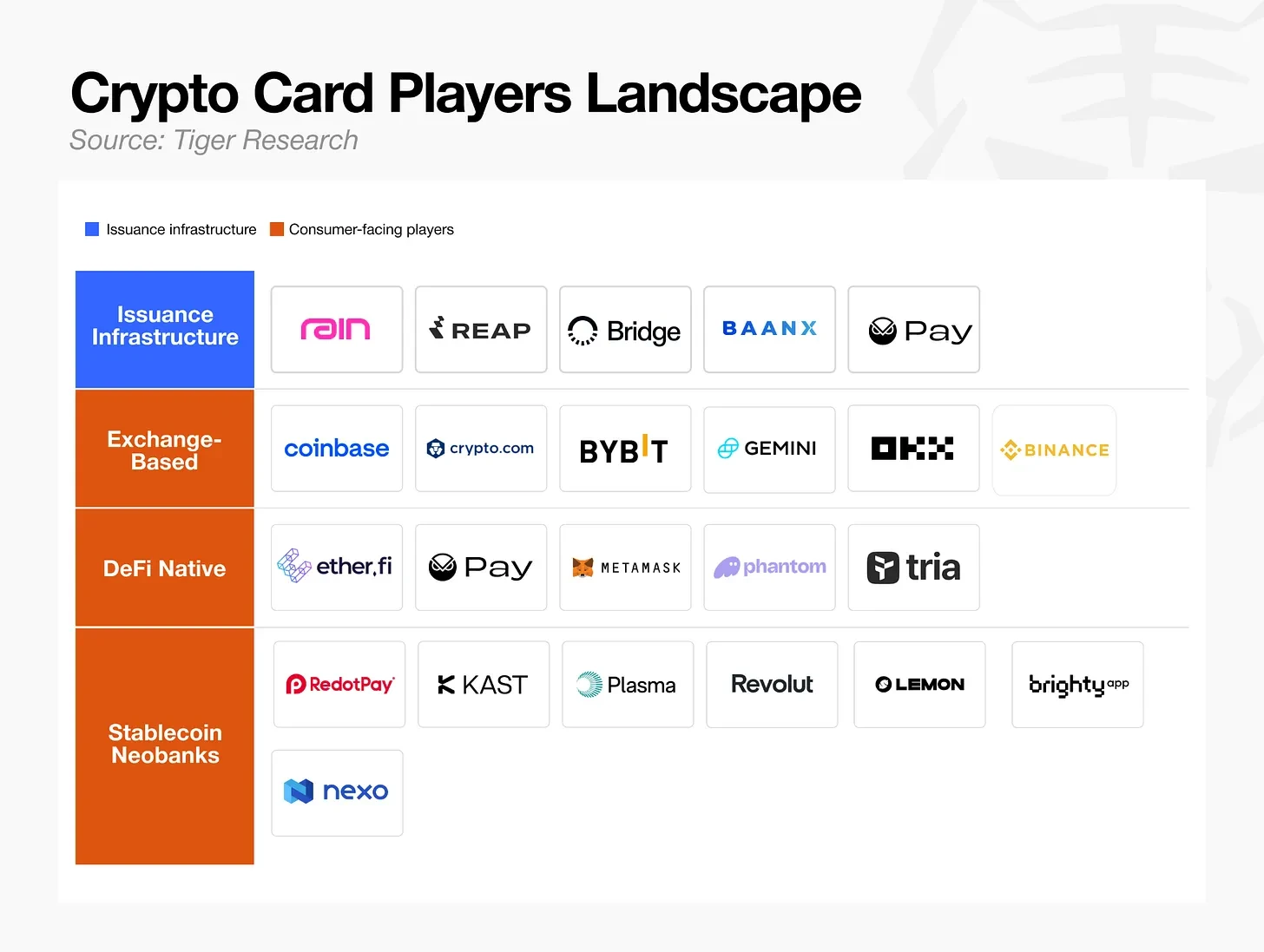
- Card Infrastructure Layer: Traditional two-tier (project manager + issuing bank separate) vs. full-stack issuers like Rain and Reap. Rain handles the majority of consumer card business, powering brands like Phantom Card, MetaMask Card, and Gnosis Pay.
- Exchange Cards: Binance, Coinbase—these cards aim to retain existing users. Real revenue comes from trading fees, lending, and custody, not card spend. Token-based cashback suffers from price volatility; stablecoin cashback is hindered by the US GENIUS Act banning interest-bearing stablecoins.
- Self-Custody Wallet Cards: MetaMask Card uses Linea L2 to reduce gas fees to ~$0.01 per transaction. However, users must manage collateral and liquidation risks, creating high friction that limits adoption to native crypto users.
- Stablecoin Account Cards: RedotPay integrates foreign exchange, cross-border remittance, and yield into the stablecoin balance, with the card as a spending vehicle. This model thrives in emerging markets with volatile local currencies and dollar access issues, but must escape the “prepaid card” paradigm.

Profit Ceilings and Regulatory Shackles
Traditional banking history shows that pure payment businesses have extremely low profit ceilings. Profitability only comes when primary account concepts and deposit-loan spreads are embedded. Crypto payment cards face the same inflection point, but regulations like the US GENIUS Act (prohibiting stablecoin interest) and EU MiCA constrain development. Cashback strategies vary: RedotPay and Revolut offer none; Kast, Plasma One use dollar or token cashback to attract users. But subsidies alone won’t drive daily integration.
Breaking Free: Control Upstream, Dominate Niches, Set Standards
To survive long-term under regulatory constraints, players must execute three strategic imperatives:
- Directly control the flow of funds upstream of the Visa clearing process;
- Capture first-mover advantage in niche markets (e.g., localized services in emerging economies);
- Follow the path of traditional banking account dominance—build consumer infrastructure and establish global standards from scratch.