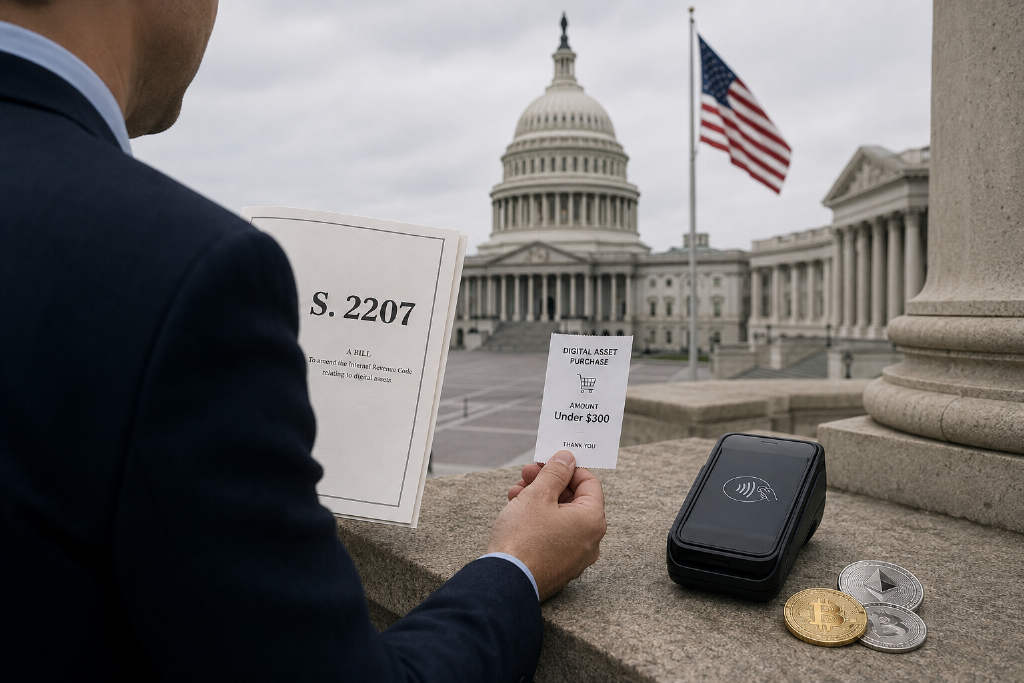
A new analysis from the Cornell Tech Policy Institute, highlighted by Bitcoin News on X, estimates that exempting small digital asset purchases from capital gains tax could generate approximately $859 million in additional federal revenue over the next decade. The study is based on the proposed S. 2207 bill by Senator Cynthia Lummis, which would exempt qualifying purchases under $300 from capital gains recognition, with an annual exclusion cap of $5,000. Under the analysis's core assumptions, each $100 in qualifying benchmark payments yields $3.18 in net federal revenue. The findings suggest a potential revenue-positive effect from exempting small crypto transactions.
According to a post on X by Bitcoin News, the Cornell Tech Policy Institute has released a new analysis estimating that exempting small digital asset purchases from capital gains tax could increase U.S. federal revenue by approximately $859 million over the next decade. The analysis is based on Senator Cynthia Lummis's S. 2207 bill, which would exempt qualifying purchases under $300 from capital gains recognition, with an annual cap of $5,000 in excluded gains. Under the core assumptions, the study finds that each $100 in qualifying benchmark payments would generate $3.18 in net federal revenue. The analysis projects that the net fiscal impact over 10 years would be positive, adding $859 million to federal coffers.
This article was originally published by Bit.Fan. For more cryptocurrency news and market insights, visit www.bit.fan. Disclaimer:
The market information, project data, and third-party content displayed on this platform are for industry information sharing only and do not constitute any form of investment advice or return commitment.
Cryptocurrency trading carries high risks. Users should fully assess their risk tolerance and make independent decisions. All profits, losses, and legal responsibilities are borne by the users themselves.