
Crypto projects are pouring hundreds of millions of dollars into buying back their own tokens. The harder question is whether those purchases create lasting value or simply make tokens look more valuable than they really are.

As the sector matures, more projects are borrowing from traditional finance, and token buybacks have become one of the clearest examples. The basic structure is simple: use protocol revenue to repurchase the native token.
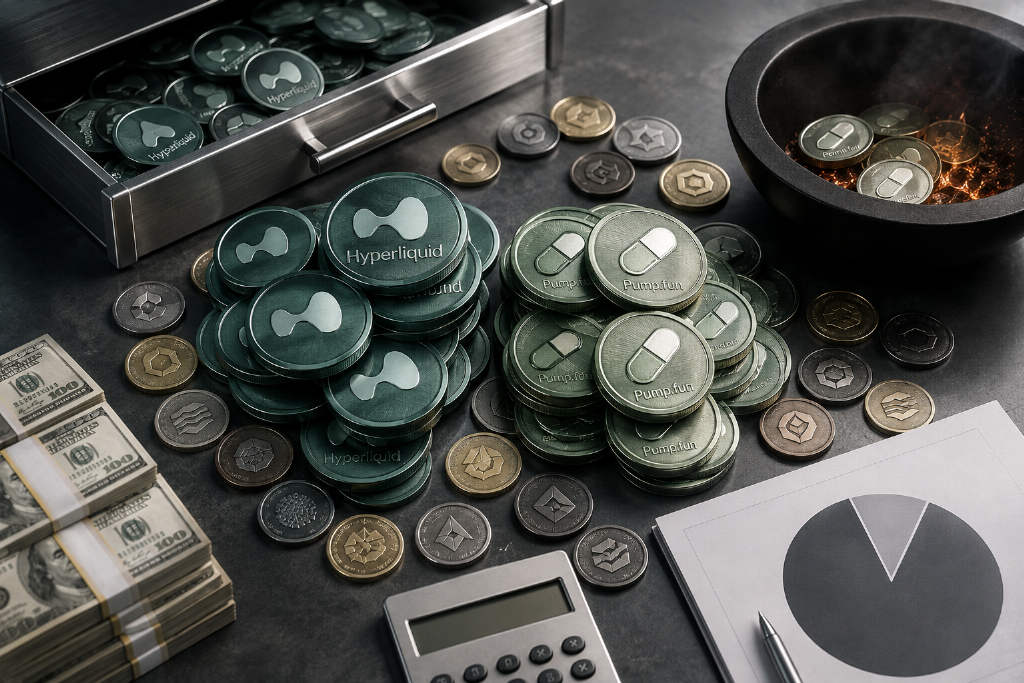
According to the article, crypto projects have spent about $640 million on buybacks so far in 2026, up about 17% from the same period last year. Against 2024, when the figure was just $366,000, the jump is far larger than a normal year-over-year increase. Hyperliquid and Pump.fun alone account for nearly 90% of current spending.
Why projects are leaning into buybacks
The appeal starts with straightforward mechanics. Buybacks create market demand for the token. If the tokens are later burned, circulating supply falls, which can make each remaining token more scarce. That dynamic can put upward pressure on price.
They also give tokenholders a more visible connection to the protocol’s economic activity. Orest Gavryliak, chief legal officer at decentralized exchange aggregator 1inch, told Magazine that when a project adopts revenue-backed buybacks and burns, it usually has one or two goals in mind: either to reduce circulating token supply or to show the market the logic of investing in protocol revenue.
He said telling users that a project bought back and burned tokens is far more direct than explaining how governance works, how fees are set, or how the protocol is used.
Why buy back a token that was sold in the first place
On its face, the practice can look circular. Projects often sell tokens to raise money for operating costs, then later spend money buying those same tokens back.
The distinction in the article is the source of funds. If a protocol uses generated revenue to repurchase tokens, then holds or burns them, it creates an implicit link between the protocol’s success and the token’s value. That has long been a weak point across much of crypto.
Max Shannon, senior research associate at Bitwise Europe, said buybacks and burns remain an effective way to accrue value to tokenholders because they create sustained public-market demand and tie token performance directly to platform adoption.
For a sector that spent years chasing narratives or leaning on a greater-fool setup, that represents a noticeable change. The article points out that people buying Fartcoin or Peanut the Squirrel were not doing so because of robust economic models.
Hyperliquid, Pump.fun and Spark are taking different paths
Not every protocol is using the same playbook. Some are much more aggressive than others.

Hyperliquid, for example, sends 99% of its revenue to buy back and burn HYPE. Pump.fun directs 50% of revenue to repurchases and burns of its own token, and $446.65 million worth of PUMP has already been removed from circulation.
Spark, a DeFi infrastructure protocol, has adopted a different model. Co-founder and CEO Sam MacPherson said Spark has bought more than 143 million SPK through open-market repurchases funded by protocol surplus.
Those tokens have not been burned. They are being kept in Spark’s treasury and used to reward long-term participants in the ecosystem. MacPherson told Magazine that the point is not simply to shrink supply. "Tokenholders should participate in the protocol’s long-term economic success, not receive a dividend every time the protocol generates revenue."
He added that buybacks let Spark build that alignment while preserving flexibility over how and when the purchased SPK will eventually be deployed, giving the token economic meaning rather than turning it into a basic dividend mechanism.
The article also notes that buybacks can be a tax-efficient way to return revenue to tokenholders because users do not immediately face the tax burden that can come with dividends or reward distributions.
Buybacks may not be the best use of capital
That still leaves a practical capital-allocation question: is buying the token really the highest-value use of the next dollar of protocol surplus?
MacPherson’s answer is no, not in every case. He said the real question is, "What is the highest-value use of the next dollar of surplus?" If a protocol can reinvest capital at an attractive rate of return, that may be more valuable than distributing value as soon as revenue arrives.
One of the article’s central points is that buybacks can support token economics without improving the underlying business.
There is also no guaranteed line from buybacks to higher prices. Pump.fun has been buying back and burning PUMP heavily since July 2025, yet the token is still down about 50% from its September 2025 all-time high. UNI also gave back about half of the gains it posted after Uniswap introduced its UNIfication proposal in November 2025.
Shannon said many factors shape those price moves, so they do not prove buybacks failed. Still, they have opened a debate over whether startup-style crypto projects should commit a smaller share of revenue to buybacks and burns and put more back into their teams and products.

Investors, the article argues, should separate a buyback plan that lifts price from a business model that is actually working.
A protocol with real surplus and a sustainable model may decide that spending part of that money on token purchases is the right move. A struggling project may also try to use buybacks to push price. MacPherson was direct: "Buybacks will not make an unsustainable protocol sustainable."
Do tokens start to look like equities?
The article says the surface resemblance between token buybacks and stock buybacks should not be read too literally. Tokens are not automatically becoming stocks.
Shareholders own part of a company and may have voting rights, dividend rights or claims on residual assets. Tokenholders generally do not have equivalent legal rights. Gavryliak said that distinction is critical. "This is a market mechanism, not a legally enforceable right," he said.
MacPherson described SPK as a form of onchain "pseudo-equity." There is no legal ownership structure in the traditional corporate sense, he said, but Spark is trying to create many of the same economic features: governance participation, long-term alignment, and a mechanism through which the protocol’s most committed participants can benefit from its success.
As buybacks start to resemble dividends, regulation enters the picture
As crypto borrows more heavily from traditional finance, regulatory questions are getting harder to ignore.
Gavryliak said the 2025 CLARITY Act remains a draft and should not be treated as settled law, but the framework it proposes points to the key issue: where does a token’s value come from?
If value comes from the functionality of the network itself, the asset looks more like a commodity, he said. If value depends on the project team’s efforts in delivery, marketing or returning value to tokenholders, then it starts to look like a security. "At the end of the day, don’t dress a token up as a stock and expect it to still be a commodity."
The article closes on a basic question for crypto investors: what actually sits underneath the token? Revenue, users, a sustainable economic model, and a credible way for the token to benefit from those foundations still matter more than the financial wrapper.
Buybacks may offer one answer. They may also be another form of financial engineering that makes a token appear more valuable without fixing deeper weaknesses. Gavryliak put it plainly: "If the buybacks stopped, would there still be a reason to hold the token? If the answer is no, then the problem goes deeper than tokenomics."
