
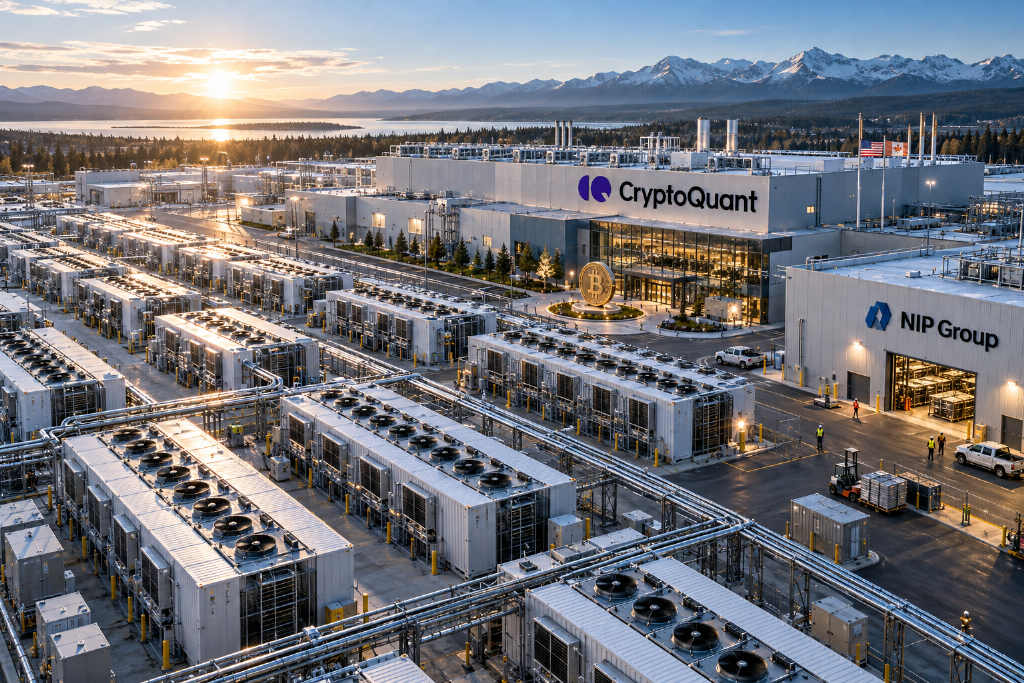
Bitcoin’s rising hashrate is an “indirect bullish signal” from institutional investors backing public mining companies, according to CryptoQuant founder and CEO Ki Young Ju.
In a Thursday post on X, Ju wrote, 「Higher hashrate means stronger security and better fundamentals as a store of value」. He said he views the trend as bullish because public miners are largely backed by traditional finance institutions.
Hashrate measures the computational power of a blockchain network, or how many hash calculations are performed each second.
CryptoQuant data shows Bitcoin’s hashrate has recovered about 45% from summer lows, rising from around 726 exahashes per second, or EH/s, in July to roughly 1,050 EH/s on Wednesday.
Ju said that rebound reflects institutional support for Bitcoin’s security and long-term value. It is also commonly viewed as a sign of confidence from BTC miners.
Global hashrate is still below the peak of 1,305 EH/s recorded in October 2025, when Bitcoin traded above $111,000. At the open of US equities trading on Thursday, Bitcoin was last changing hands at about $81,843.
NIP Group adds mining capacity
Public Bitcoin miners are still expanding, adding to the increase in network hashrate. One example is Nasdaq-listed NIP Group (NIPG).
In a Tuesday announcement, NIP Group disclosed a third tranche on-rack asset purchase agreement to acquire about 4.47 EH/s of already-deployed Bitcoin mining hardware.
If the transaction closes, the machines are expected to lift the company’s Bitcoin production immediately. Across all three tranches, total hashrate is expected to reach 13.85 EH/s.
According to Ziven data, NIP Group currently ranks as the 16th-largest public Bitcoin miner by operating hashrate, at 3.11 EH/s. Bitdeer ranks first with 79.9 EH/s.
Yahoo Finance data shows NIP Group shares fell 6.8% on Wednesday to close at $6.10, extending the stock’s one-year decline to 86%.
Other large Bitcoin miners also moved lower. During Wednesday’s sharp US stock market selloff, the steepest since July, shares of TeraWulf, Core Scientific, Cipher Mining and IREN each dropped about 12%. The report said hotter-than-expected inflation data pressured Bitcoin miners and AI infrastructure companies.



