Bitcoin
Nov 4, 2026

VanEck research head says Bitcoin may need a $100,000 average price for miners to break even

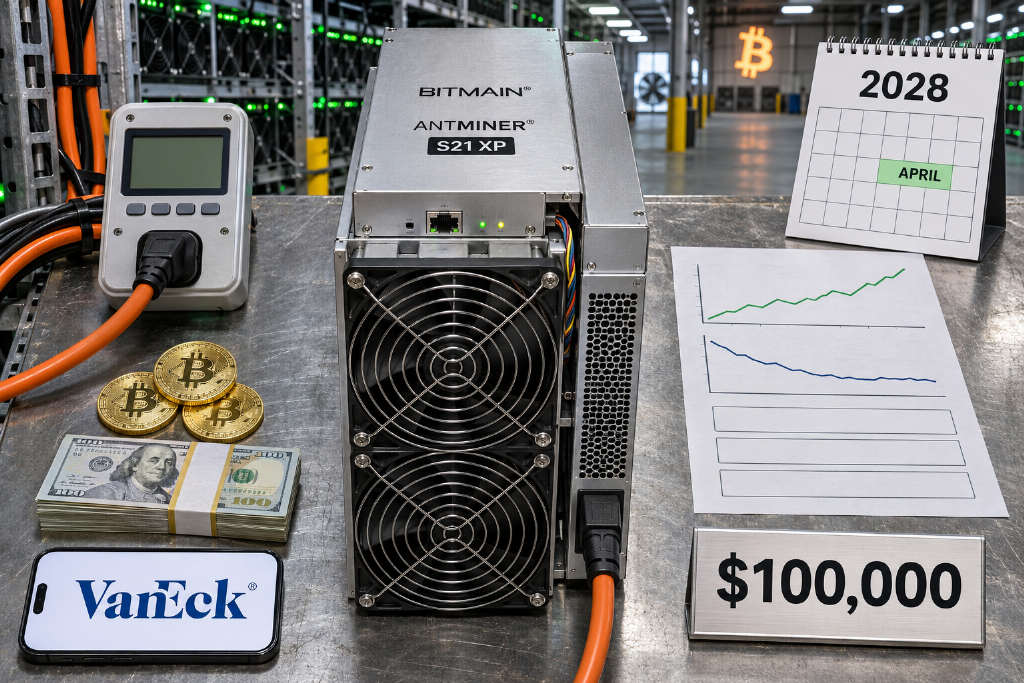
Matthew Sigel, head of digital assets research at VanEck, said Bitcoin network hashrate is near an all-time high at 1,038 EH/s, with the next halving expected in April 2028. Based on his assumptions, miners may need a much higher Bitcoin price to make new hardware economics work. Sigel said that under an electricity cost of $0.08, unchanged network hashrate, and a three-year depreciation schedule, an S21 XP miner priced at $3,459 would require Bitcoin to average about $100,000 from now until the next halving just to break even. He added that if the goal is to recover cash costs by the end of 2028, Bitcoin would need to trade at roughly $116,000. At the time of his comments, BTC was priced at $77,500. The figures frame the pressure on mining profitability under current network conditions and hardware costs, using a specific machine model and a fixed set of operating assumptions.
920
VanEck research head says Bitcoin may need a $100,000 average price for miners to break even
Bitcoin
Nov 1, 2026

Bitcoin miners brought in $1.215 billion in October, the highest level in 11 months

Bitcoin miners generated $1.215 billion in revenue in October, marking the strongest monthly total since November 2025. The figure came even as Bitcoin’s price fell 7.3% during the month, leaving miner revenue still slightly above the roughly $1.2 billion recorded in December 2025. Data cited by Bitcoin.com News also showed that hashprice, a metric used to estimate daily income per unit of computing power, declined over the period. As of Nov. 1, hashprice stood at $33.18 per PH/s per day, down 17.54% from $40.24 on Oct. 1. At the same time, the Bitcoin network’s total hashrate was 1082.24 EH/s, while average block time was about 9 minutes and 52 seconds. For comparison, miner revenue in November 2025 was reported at $1.26 billion. The update points to a month in which miner income rose to an 11-month high despite weaker Bitcoin pricing and lower hashprice.

600
Bitcoin miners brought in $1.215 billion in October, the highest level in 11 months
PEARL
Oct 31, 2026

PEARL Mining Economics Split as Price Pullback and Hashrate Retreat Squeeze Late Entrants

Pearl, a public blockchain that gained traction on the back of its PoUW, or Proof of Useful Work, narrative and rich mining returns, is now facing a sharp reversal. In an analysis published by MarsBit and written by PANews author Jae, PEARL fell more than 35% within 10 days after hitting an all-time high of $2.43, while network hashrate pulled back after a rapid influx of GPU miners. The report argues that the lag between price moves, hashrate migration and difficulty adjustment sharply reduced miner profitability, especially for operators renting GPUs by the hour. The piece breaks miners into three groups with very different cost structures: home miners with sunk hardware costs, industrial mining farms that can switch GPUs to AI inference rentals, and cloud hashrate renters who were hit first when margins turned negative. It also points to broader concerns around Pearl’s model, including research claiming that more than 90% of PoUW hashrate is not running real AI workloads, daily token emissions that may create persistent sell pressure, and mining pool concentration that leaves the network close to the 51% attack threshold. The result is a network at a turning point, where the durability of the “useful work” story may depend on whether real AI demand materializes.

770
PEARL Mining Economics Split as Price Pullback and Hashrate Retreat Squeeze Late Entrants
BiXBiT
Oct 29, 2026

BiXBiT rolls out custom Antminer firmware with up to 40% hashrate gain

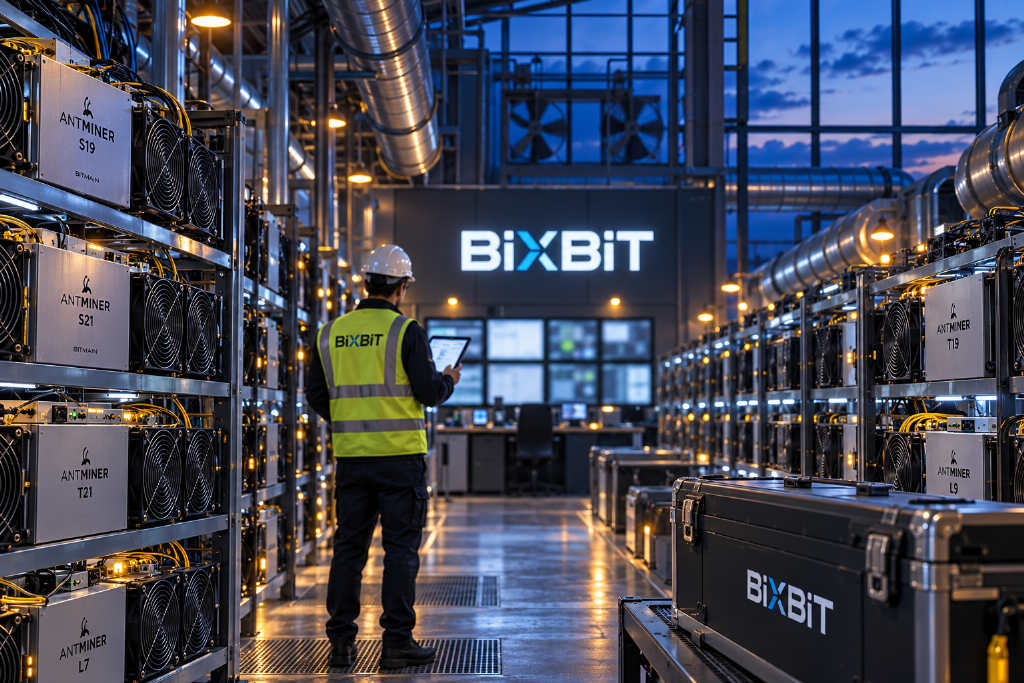
Bitcoin mining services provider BiXBiT has released custom firmware for Antminer S21, S19, T21, T19, L9, and L7 series machines. According to the company’s early deployment data cited by Techub News and attributed to CryptoPotato, the firmware can lift hashrate by as much as 40% and improve energy efficiency by up to 35%. The product is designed around automatic performance tuning, flexible power targets, and upgraded thermal management. BiXBiT also said the firmware comes integrated with its AMS 3.0 centralized farm management platform, which supports miner monitoring, batch operations, and real-time alerts. New users are eligible for reduced development fees during the first 30 days. The firmware is compatible with Bitmain stock firmware versions released before August 2026.

740
BiXBiT rolls out custom Antminer firmware with up to 40% hashrate gain
Bitcoin
Oct 28, 2026

Bitcoin Hashrate Climbs Back Within 6.5% of Record High Despite Miners Shifting Power to AI

Bitcoin’s network hashrate has recovered to within 6.5% of its all-time high, according to Glassnode data cited by Techub, suggesting that the broader mining market has absorbed capacity shifts by some large public miners toward AI customers. The report said private and international operators have filled the gap, keeping aggregate computational power near peak levels even as parts of the listed mining sector redirect electricity. Analyst Will Clemente wrote on X that hashrate is quietly moving back toward record territory despite the AI pivot among miners. The 14-day moving average of Bitcoin hashrate peaked at about 1.135 ZHash/s in late 2025, then fell roughly 22% between October 2025 and February 2026. It later found support near 870 EHash/s, rebounded in February, and retested that level in June and August before rising again to around 1.06 ZHash/s. Mining difficulty is showing the same pattern. Data from mempool shows the network raised difficulty by 5.92% to 140.58T on Oct. 16, with another increase of about 5% to 6% projected for Oct. 29. If that estimate holds, difficulty would reach roughly 148T to 150T, the highest level since late 2025 and only 4% to 5% below the historical record.

750
Bitcoin Hashrate Climbs Back Within 6.5% of Record High Despite Miners Shifting Power to AI
Tether
Oct 27, 2026

Tether lines up 15 mining players behind MDK as it pushes AI into bitcoin mining operations

Tether said on Oct. 24 that 15 companies across the bitcoin mining industry had committed to join its open-source Mining Development Kit, or MDK, in a bid to create a common interface for mining machines, pools and site operators. The move brings together rival hardware makers, major mining pools, operating companies and protocol teams around a shared framework aimed at fixing a long-running problem in the sector: fragmented management systems that do not work across brands. The article says the backdrop is an industry that has grown into large-scale industrial data centers while still relying on disconnected firmware, dashboards and custom integrations. Tether first open-sourced its mining operating system MOS in February, then launched MDK on April 27. The framework, built with JavaScript and React, lets each participant write an "MDKWorker" plugin to translate its own machine or pool data into a standard format. Tether has already connected its in-house QVAC mining AI agent to MDK, and CEO Paolo Ardoino said future software should not just monitor machines but manage them directly. Still, the report points to three unresolved issues: the 15 companies have only committed so far, competing standard-setting efforts may clash, and handing operational control to AI raises security and governance questions if bugs or attacks affect real-world equipment and power usage.

800
Tether lines up 15 mining players behind MDK as it pushes AI into bitcoin mining operations
Bitcoin mining
Oct 24, 2026

Five Public Bitcoin Miners Cut Output 47% This Year as AI and HPC Take Priority

A CryptoQuant report says five major publicly listed Bitcoin mining companies — IREN, Core Scientific, Bitfarms, TeraWulf, and Cipher — are shifting resources toward artificial intelligence and high-performance computing, pushing their combined Bitcoin production sharply lower this year. According to the report, output fell 47% from 13,263 BTC in the same period of 2025 to 7,075 BTC this year. IREN, Core Scientific, and TeraWulf each posted production declines of more than 50%. The report also says these companies have announced more than $50 billion in AI and HPC leasing agreements. One example cited was IREN’s $9.7 billion deal with Microsoft, with the company’s mining fleet expected to be largely shut down by year-end. Even with some listed miners redirecting capacity, Bitcoin network hashrate has continued to recover. Since its August low, hashrate has increased by 105 EH/s and now sits less than 9% below its all-time high. According to the report, private miners, sovereign-backed operations, and next-generation machines run by non-U.S. companies are filling the capacity gap.

750
Five Public Bitcoin Miners Cut Output 47% This Year as AI and HPC Take Priority
Bitcoin
Oct 22, 2026

CryptoQuant CEO says rising Bitcoin hashrate is an indirect bullish signal from institutions

Bitcoin’s recovery in network hashrate is being read by CryptoQuant founder and CEO Ki Young Ju as a positive signal tied to institutional backing of public mining companies. In a Thursday post on X, Ju said higher hashrate points to stronger network security and better fundamentals for Bitcoin as a store of value. CryptoQuant data shows Bitcoin’s hashrate has climbed about 45% from roughly 726 EH/s in July to around 1,050 EH/s on Wednesday. Even so, that remains below the 1,305 EH/s peak recorded in October 2025, when Bitcoin traded above $111,000. At Thursday’s US equity market open, BTC was changing hands near $81,843. The report also highlighted expansion by Nasdaq-listed miner NIP Group, which said it signed a third on-rack asset purchase agreement for about 4.47 EH/s of already-deployed mining hardware. If the deal closes, NIP said its total hashrate across three tranches is expected to reach 13.85 EH/s. Shares of NIP and several other public miners fell Wednesday as hotter-than-expected inflation data weighed on Bitcoin mining and AI infrastructure names.

900
CryptoQuant CEO says rising Bitcoin hashrate is an indirect bullish signal from institutions
Total 232 items
Go topage