

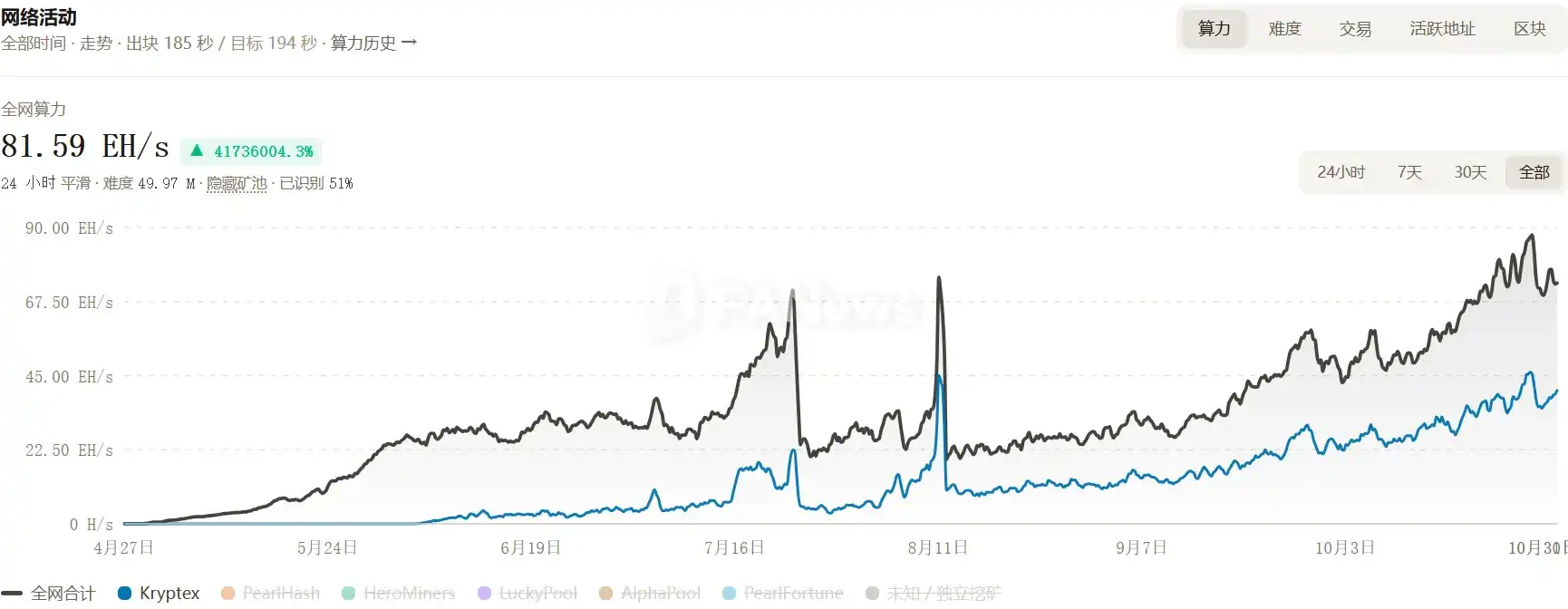
Pearl, a blockchain that quickly drew attention with its PoUW (Proof of Useful Work) narrative and high mining yields, has run into a market reversal. In an analysis published on MarsBit, PANews author Jae wrote that PEARL hit an all-time high of $2.43 10 days ago, drawing in a large wave of GPU hashrate. The token then fell more than 35% in the following 10 days, dropping to around $1.5, while total network hashrate retreated from a record 87.79 EH/s to 66.34 EH/s.
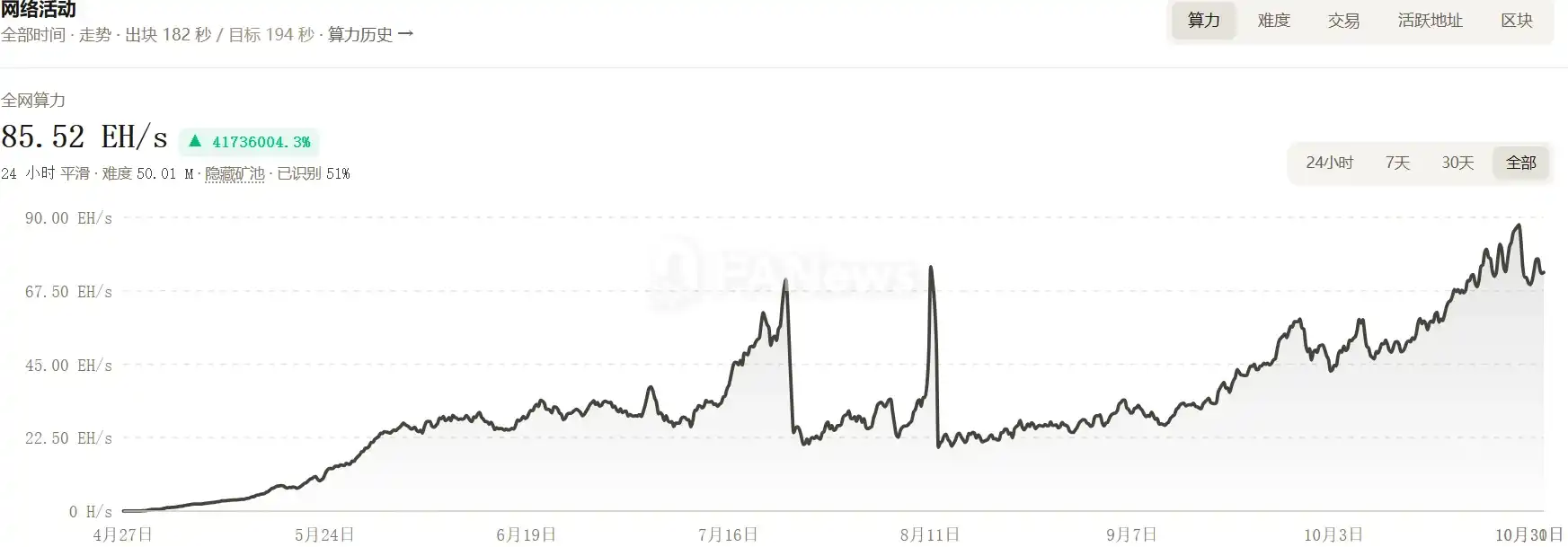
As network hashrate kept rising and mining difficulty climbed, per-card returns shrank sharply, the article said. More miners have started to complain that mining is no longer easy to justify, and for those renting GPUs, compute lease costs are now eating into profits. Some miners who entered later are already underwater. Jae framed the latest hashrate swing as a stress test that exposed the gap between low-cost miners with room to stay online and high-cost participants already near break-even.
Price moved first, hashrate and difficulty followed later
The report said that in PoW networks, price remains the main signal for hashrate allocation, but that signal does not reach miners instantly.
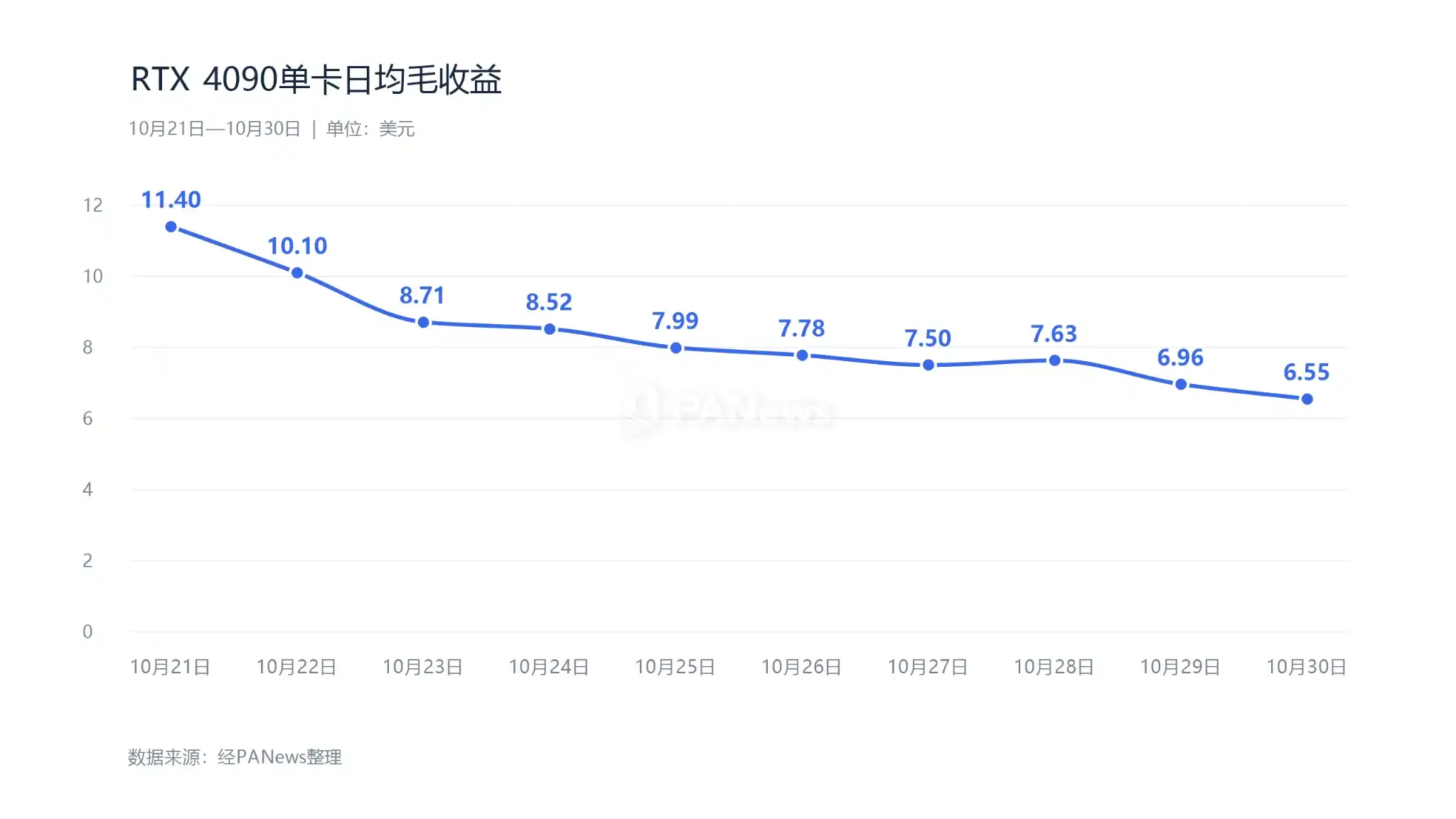
On Oct. 21, daily gross revenue for a single RTX 4090 reached $11.4, well above returns from other GPU-mineable coins at the time. That attracted idle compute from other networks. Total hashrate climbed from about 70 EH/s and reached 100.92 EH/s on Oct. 27. As of the article, it had fallen back to 85.52 EH/s.
The migration disrupted block production. Pearl’s target block time is 194 seconds, but during the most aggressive hashrate surge, actual block time was compressed to 160 seconds. That added nearly 40 extra blocks per day, pushing more than 1 million additional PEARL tokens into the secondary market each day, according to the article.
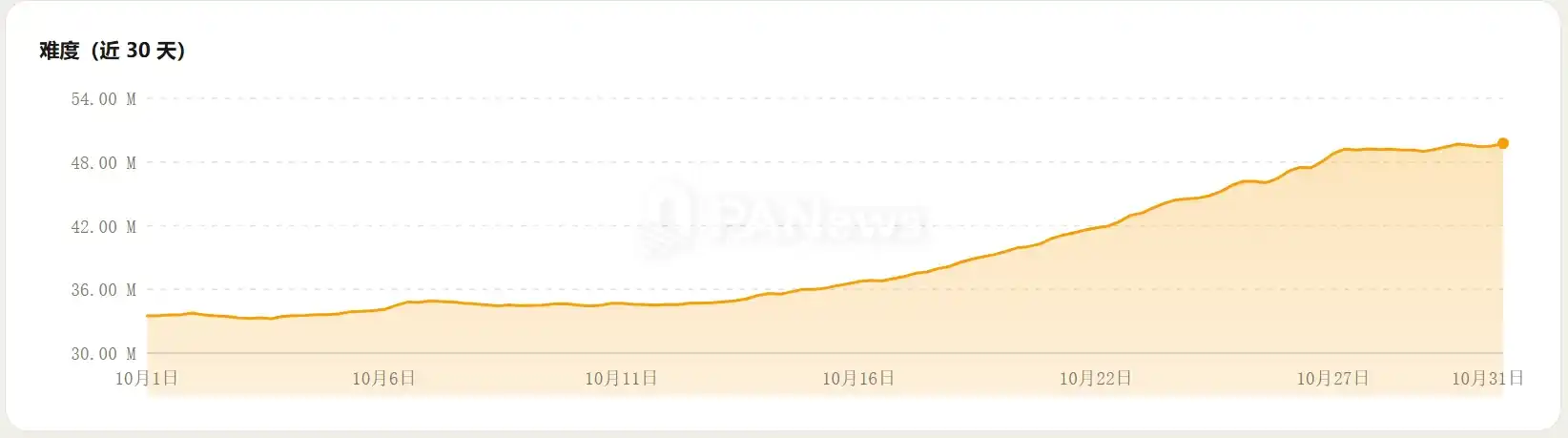
The deeper issue was the lag in difficulty adjustment. Network difficulty did not rise above 49M until Oct. 28, up nearly 20% from the day PEARL set its price peak, and it stayed elevated. By then, PEARL had already fallen to $1.75. That combination of a falling token price and rising difficulty cut directly into miner income, with average daily gross revenue per card down more than 30% from the peak. High-cost hashrate exited first, and total network hashrate shrank by nearly one-quarter in two days before block times moved back toward the protocol’s intended range.
Jae’s conclusion was straightforward: early miners captured most of the upside, while late entrants ended up paying for the reversal.
The same RTX 4090 produced very different economics depending on who owned it
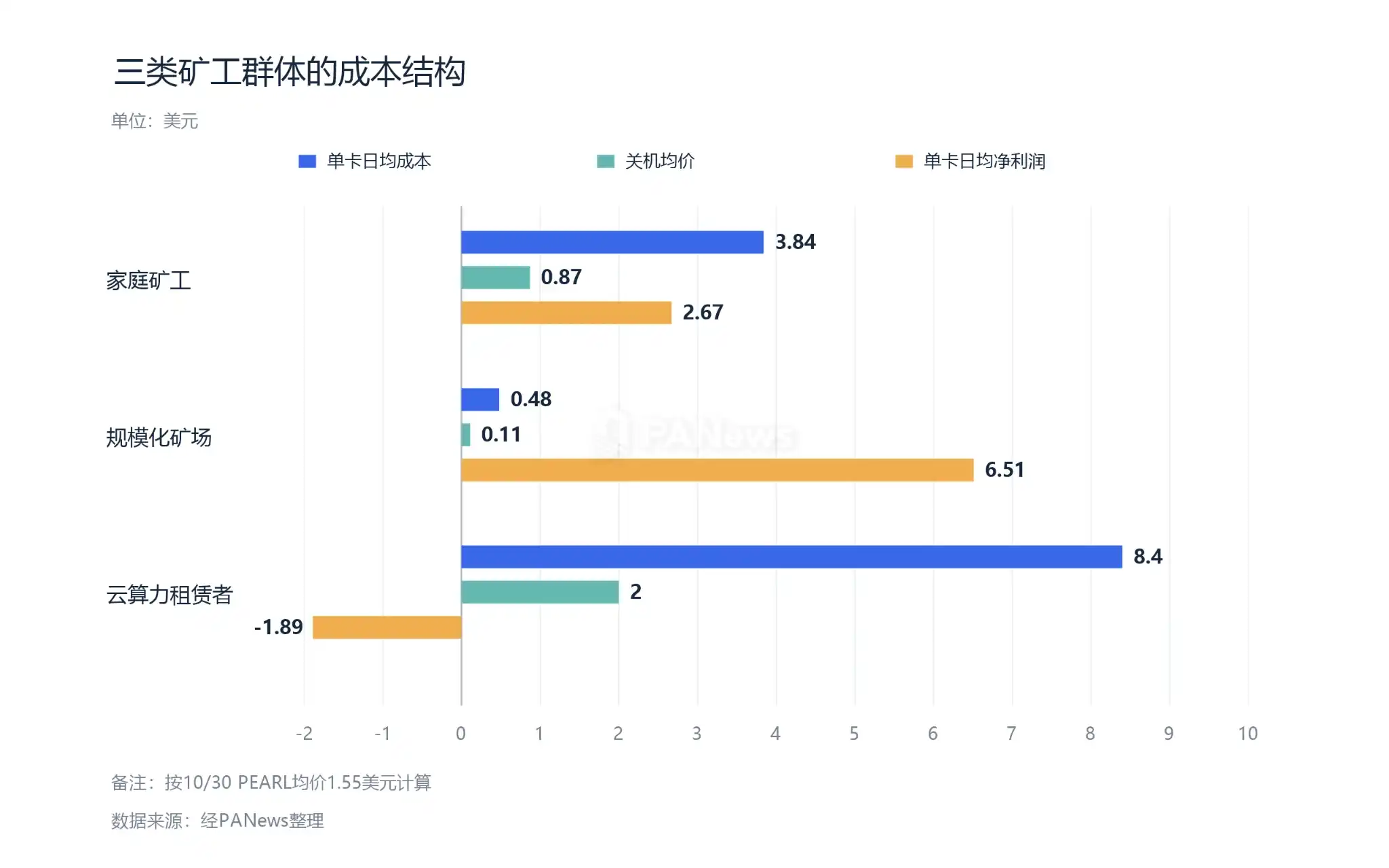
The article divides Pearl miners into three distinct groups: home miners, industrial mining farms and cloud compute renters. Using the RTX 4090, the network’s main GPU, as an example, Jae said that under the network difficulty and hashrate conditions on Oct. 30, one card could produce about 4.2 PEARL per day. What changed from one miner to another was the cost base and the shutdown price.
Home miners: sunk hardware costs created a buffer
For most home miners, the GPU was already bought for gaming or work, so the hardware cost was sunk. The only incremental expense was electricity. At an average residential power price of $0.16 per kWh, daily electricity cost per card came to just $3.84, implying a shutdown price of about $0.87. As long as PEARL stayed above that level, these miners were still profitable.
Even after the token had fallen more than 35%, net daily profit per card was still around $2.67, with a margin of about 70%, the article said. For home miners, this drawdown did not amount to a deep downturn. As long as cash flow remained positive, they were likely to keep machines online unless PEARL fell much further or another coin offered better returns.
Industrial mining farms: electricity was only part of the equation
Large mining farms operate with lower industrial power costs. According to the article, power purchased under PPA agreements can be as low as $0.05 per kWh. After adding site and operations expenses, the all-in daily cost per card was about $0.48, implying a shutdown price near $0.11. On mining economics alone, that gave farms an even larger cushion than home miners.
But farms also measure opportunity cost. Because the cuPOW algorithm is compatible with AI inference tasks, the same hardware can switch between mining and renting out compute for AI workloads. At present, one RTX 4090 can generate net cash flow of about $0.35 per hour in AI inference rental, or roughly $8.4 per day. On Oct. 30, PEARL mining revenue per card had fallen to $6.51 a day, below the return from AI inference rental.
That changed the decision. Rather than keep mining while taking token price risk, some lower-risk farms began redirecting hardware to AI rental markets or to other PoW networks with stronger returns. The article said this was one factor behind the retreat in total hashrate. For mining farms, opportunity cost and per-unit GPU revenue matter as much as electricity cost.
Cloud compute renters: the first group to leave
Jae described short-term compute renters as the most decisive sellers in the latest hashrate washout. These miners do not own hardware. They rent GPUs by the hour on platforms such as Vast.ai, mine, withdraw and sell on the same day, and try to capture intraday spreads. At an average rental rate of $0.35 per hour, daily cost per card reaches $8.4, implying a shutdown price of about $2.
Once PEARL fell to $1.75, renters as a group were already losing money. With no sunk cost in hardware, the decision to stop was immediate. The article said that during the three-day drop in hashrate, most of the miners exiting at scale were these short-term speculative renters.
Not all cloud miners left, though. Some had signed non-refundable weekly or monthly contracts. Since the rental cost had already been paid, continuing to mine could still recover part of the loss, and a rebound in PEARL might offer a path back to break-even. That left a portion of longer-term renters still holding on.
Pearl’s PoUW narrative is also under pressure
Beyond the hashrate retreat, the article said Pearl is facing questions about its core story. The network presents mining as useful AI computation, but the gap between that vision and current practice remains wide.
Research said more than 90% of PoUW hashrate was idle in practical terms
Jae cited empirical research by scholar Abhinaba Basu, who sampled 8,012 active mining machines and found that more than 90% of network hashrate was not running any deep learning model or real inference task. Instead, miners were continuously computing meaningless random matrices.
The reason, according to the article, is economic. Real AI inference requires context scheduling, model weight loading and network I/O, which can reduce effective hashrate by 10% to 30%. If block rewards depend only on hash difficulty, rational miners are pushed toward abandoning real workloads and running random matrices instead. In that reading, “useful work” remains largely theoretical at this stage.
Daily token issuance may keep pressure on the market
Pearl is currently producing about 1 million tokens a day, the article said. At market prices at the time, that translated into more than $1.55 million in fresh daily miner sell pressure. On an annualized basis, inflation exceeded $565 million, close to the protocol’s circulating market capitalization.
Spot trading, meanwhile, is concentrated on a small number of mid-sized and smaller exchanges, with average daily spot volume below $10 million. Daily miner sell pressure alone accounts for close to one-fifth of that turnover. With limited depth, concentrated selling could hit liquidity hard.
The article also pointed to an earlier overhang. During the six-day low-difficulty period before mainnet launch, the network mined nearly 122 million tokens, more than 35% of circulating supply. Those early holdings were not subject to lock-up restrictions, leaving a large block of potential supply hanging over the market.
Mining pool concentration raised security concerns
On-chain data cited in the article showed that a single mining pool, Kryptex, has long controlled nearly half of the network’s hashrate, close to the 51% attack threshold. For PoW systems that rely on hashrate competition for security, such concentration increases exposure to risks tied to centralized hashrate, transaction censorship and potential attacks.
A turning point for Pearl
The article said Pearl is now at a critical juncture. As mining windfalls fade and enthusiasm around the narrative cools, the next question is whether the network can attract enough real AI inference demand to give “useful work” commercial value.
For miners and investors, the latest rise and fall in hashrate also offered a simple lesson. Chasing short-term returns matters less than knowing where your own cost line sits. Market conditions set the ceiling for returns, but cost determines who can stay through the cycle.



