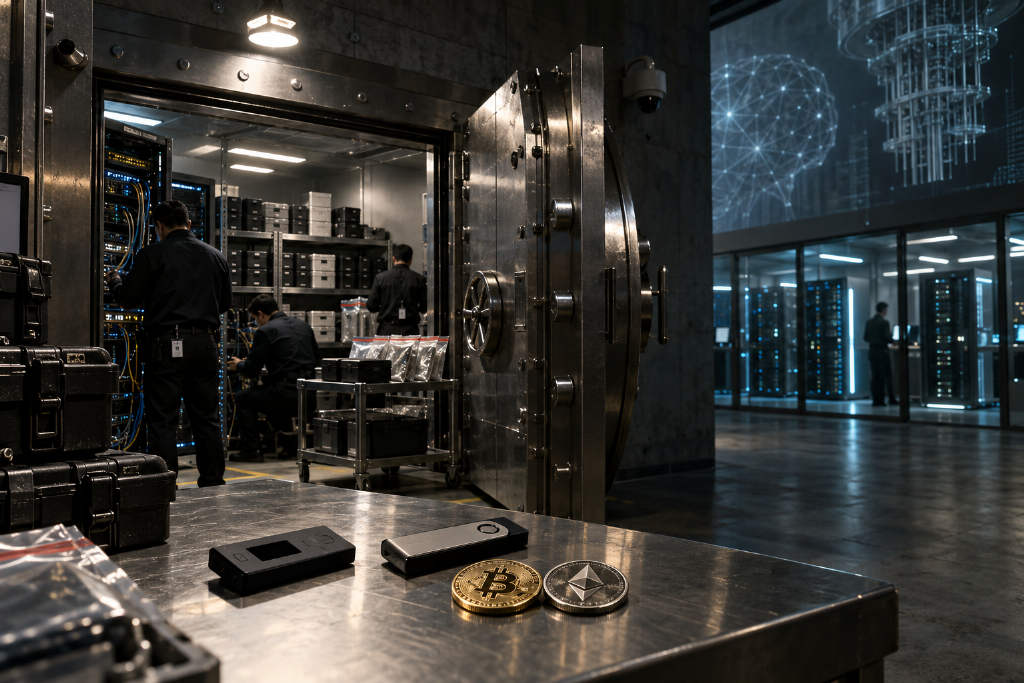
CoinDesk reported that a separate pressure is building for institutional crypto custody providers as the industry debates whether holders should move funds before advances in AI or quantum technology expose wallet keys. The article says the core issue for institutions is not simply whether assets need to be moved in an emergency. Instead, custody firms may have to upgrade their systems before any such migration becomes necessary.
That makes the so-called “bunker mode” problem more severe for institutions than for individual crypto holders, according to the report. While retail users may focus on the question of moving funds, firms responsible for custody infrastructure face the added burden of preparing operational systems in advance. The piece was written by Olivier Acuna and edited by Jamie Crawley, and was published on Oct. 8, 2026.
As the crypto industry debates whether holders should move funds before advances in AI or quantum technology expose wallet keys, custody firms are dealing with a different problem, according to CoinDesk.
The report says the harder task for institutional custody providers is upgrading systems before an emergency migration is needed, rather than the migration itself.
CoinDesk framed that situation as “bunker mode” and said it is a much greater challenge for institutions than for individual crypto holders.
The article was written by Olivier Acuna, edited by Jamie Crawley, and published on Oct. 8, 2026.
This article was originally published by Bit.Fan. For more cryptocurrency news and market insights, visit www.bit.fan. Disclaimer:
The market information, project data, and third-party content displayed on this platform are for industry information sharing only and do not constitute any form of investment advice or return commitment.
Cryptocurrency trading carries high risks. Users should fully assess their risk tolerance and make independent decisions. All profits, losses, and legal responsibilities are borne by the users themselves.