
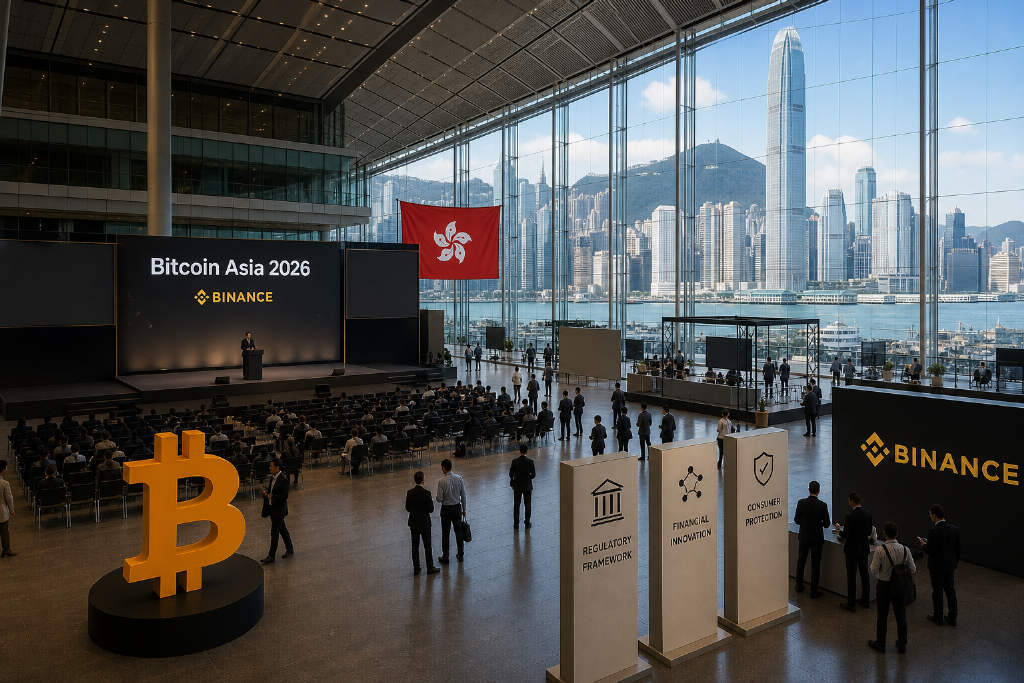
Changpeng Zhao said at Bitcoin Asia 2026 in Hong Kong that Bitcoin itself does not weaken or strengthen government power, according to on-site reporting from Foresight News. He said the deciding factor is how governments choose to respond.
Zhao said history shows that weaker governments have at times delivered better economic performance. He cited the United States as an example, saying its relatively weaker government helped produce one of the world’s strongest economies. On regulation, he said the current chair of the U.S. Securities and Exchange Commission, or SEC, gave up part of the agency’s regulatory power and the industry then saw growth. He contrasted that with former SEC Chair Gary Gensler, who, in Zhao’s words, tried to control everything and ended up holding back industry growth.
Bitcoin may expand individual sovereignty, but traceability remains a weakness
Zhao said Bitcoin, as a decentralized technology, gives individuals more sovereignty. At the same time, he said Bitcoin’s privacy design has shortcomings because on-chain transactions are easy to track, and governments can choose whether to make use of those features.
Policy choices can either support or choke the sector
He said governments could take steps that would kill industry development. As examples, Zhao said declaring Bitcoin ownership illegal or imposing a 36% tax on every transaction would stifle the sector.
He added that governments may appear powerful, but taxing zero still produces zero. By contrast, applying a 6% tax to a trillion-dollar market would generate a large amount of revenue.
Governments are paying more attention, but frameworks are still missing in many places
Zhao said most governments have become relatively more attentive to Bitcoin. Even so, many countries still do not have crypto regulatory frameworks, and only a small share of government officials truly understand Bitcoin. He also said some countries are led by older generations, which has contributed to more conservative attitudes.
Still, Zhao said he does feel that change is underway, even though some people continue to hold the view that Bitcoin is mainly used by drug traffickers.