Market Cycles: Higher Lows, Previous Highs as Support
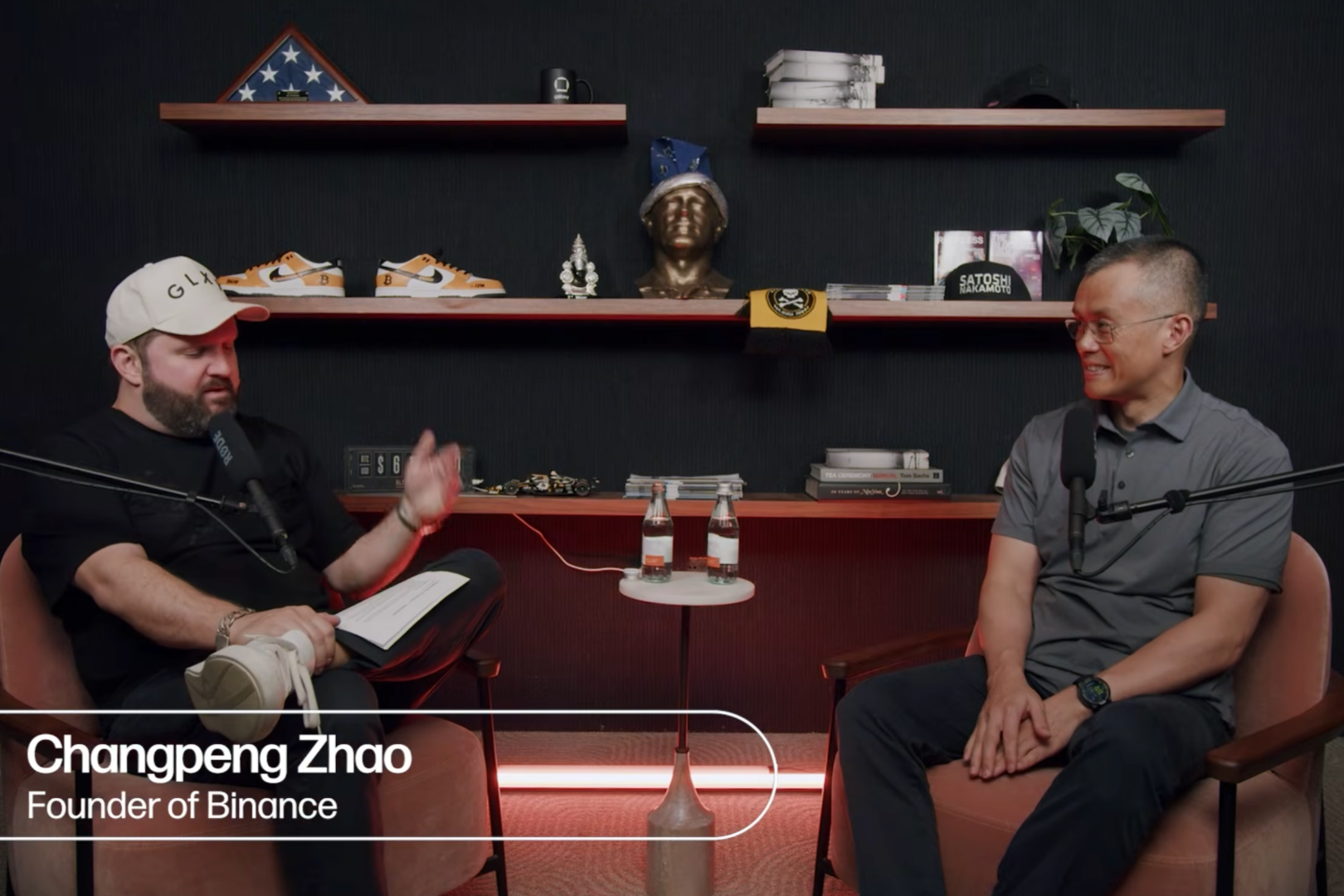
CZ believes the four-year crypto cycle pattern remains valid. Current prices are down ~50%, far less than the 80% drawdowns in prior cycles (e.g., Bitcoin fell to $16,000 after Luna’s collapse and FTX’s implosion in 2022). Bitcoin is now 4-5 times higher, and each cycle starts from a higher base, forming a cycle of rising bottoms. He notes that previous highs (e.g., $60,000) often become technical support for the next low—though he admits he is not a great technical analyst, the pattern holds historically.


Institutions and Leverage: Healthier Industry, No Bankruptcies
More countries now embrace crypto, institutions like BlackRock have launched BTC ETFs, BNB ETFs are listed, and developers are returning to the U.S. CZ highlights that no institution has disclosed near-bankruptcy in the past six months, indicating better leverage control. While high-yield stablecoin products using circular lending exist, their scale is small relative to the overall industry—a positive sign.
Centralization vs. Decentralization: Coexistence Ahead
CZ argues that crypto is not a standalone industry but a technology revolutionizing financial transactions. Traditional finance and crypto will inevitably merge into a unified fintech sector. He asserts that every platform, company, or team inherently has centralization elements, but technology will push toward decentralization. Centralized players can attract users via network effects if they offer low-cost, secure, high-quality services. However, abusing monopoly power creates opportunities for new entrants. A decentralized world should accommodate centralized participants, and both will coexist long-term.

Investment Allocation: 70% Crypto, 20% AI, 10% Biotech
CZ reveals Yzi Labs’ guiding principle: roughly 70% in cryptocurrency, 20% in artificial intelligence, and 10% in biotechnology. The goal is 'impact' rather than financial return—e.g., investing in cheap cancer treatments that may lose money but cure millions. He highlights two early-stage biotech projects: an “artificial womb” (tested on rats, 5-10 years from human application) and “knee cartilage regeneration” (3D-printed scaffolds to regrow knee cartilage, entering human clinical trials). The team also invests in AI robotics but finds biotech most exciting.

AI and Crypto: Synergy, Not Competition
Regarding hot money flowing into AI, CZ is unconcerned. He believes AI, blockchain, and the internet will collaborate to build a better financial system. Current payment systems are not AI-friendly (cannot swipe credit cards, require KYC passports), but blockchain is API-driven and easier for AI agents. He personally uses multiple AI apps (OpenAI, Anthropic, Claude, Deepseek, Kimi) and notes US LLMs are more precise while Chinese models are good but sometimes less comprehensive. He warns that AI development requires cautious regulation because AI can hack computers, design nuclear weapons, and potentially destroy civilization—unlike crypto, which only facilitates global trade.

CZ concludes that crypto will not die; it will become a massive industry. Even if some capital moves to AI, it will eventually flow on blockchain.