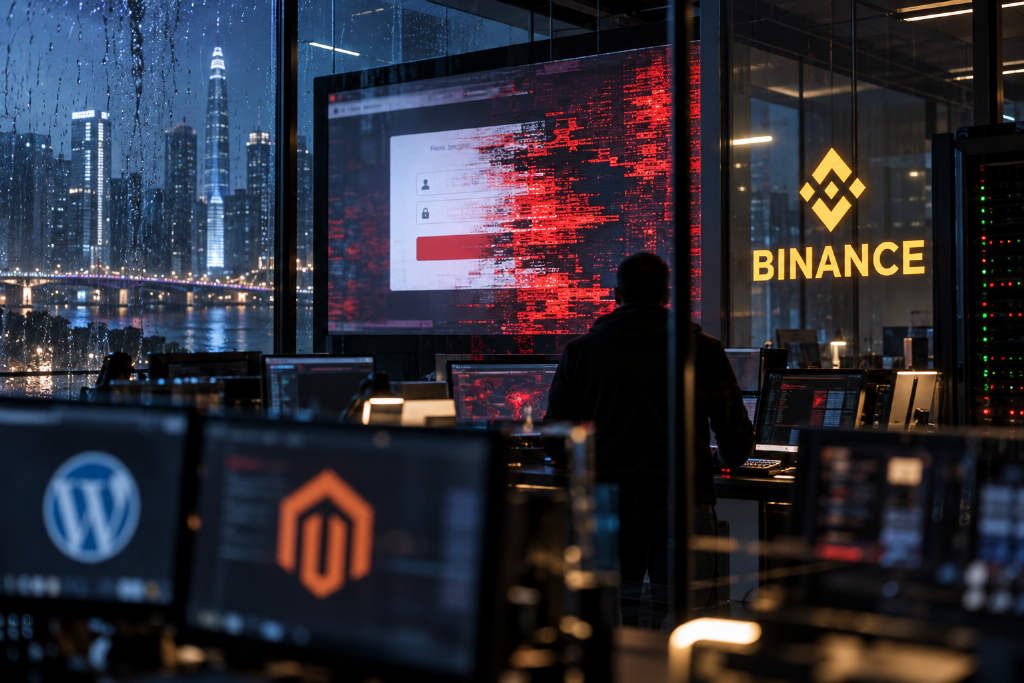
Binance founder Changpeng Zhao said users should be careful when visiting websites over the next few days, warning that some site administrators may not install security patches quickly enough. His comment followed the disclosure of two PHP vulnerabilities, tracked as CVE-2026-109618 and CVE-2026-109619, which affect servers running widely used applications including WordPress and Magento. Zhao said patch details had leaked before release, and that fixes were issued on Oct. 21. Exploitation has already been confirmed. According to the post, unauthenticated attacks could turn a visited website into a vehicle for credential theft or device exploitation. The warning points to short-term risk for ordinary web users while patch adoption remains uneven across affected servers.
Changpeng Zhao said in a post on X that people should be cautious when visiting any website over the next few days, saying some website administrators may not update security patches in time.
He pointed to two disclosed PHP vulnerabilities, CVE-2026-109618 and CVE-2026-109619, which affect servers running popular applications including WordPress and Magento.
Because details of the flaws were leaked early, patches were released on Oct. 21. Exploitation has already been confirmed. Zhao said unauthenticated attacks could turn a visited website into a vehicle for credential theft or device exploitation.
This article was originally published by Bit.Fan. For more cryptocurrency news and market insights, visit www.bit.fan. Disclaimer:
The market information, project data, and third-party content displayed on this platform are for industry information sharing only and do not constitute any form of investment advice or return commitment.
Cryptocurrency trading carries high risks. Users should fully assess their risk tolerance and make independent decisions. All profits, losses, and legal responsibilities are borne by the users themselves.