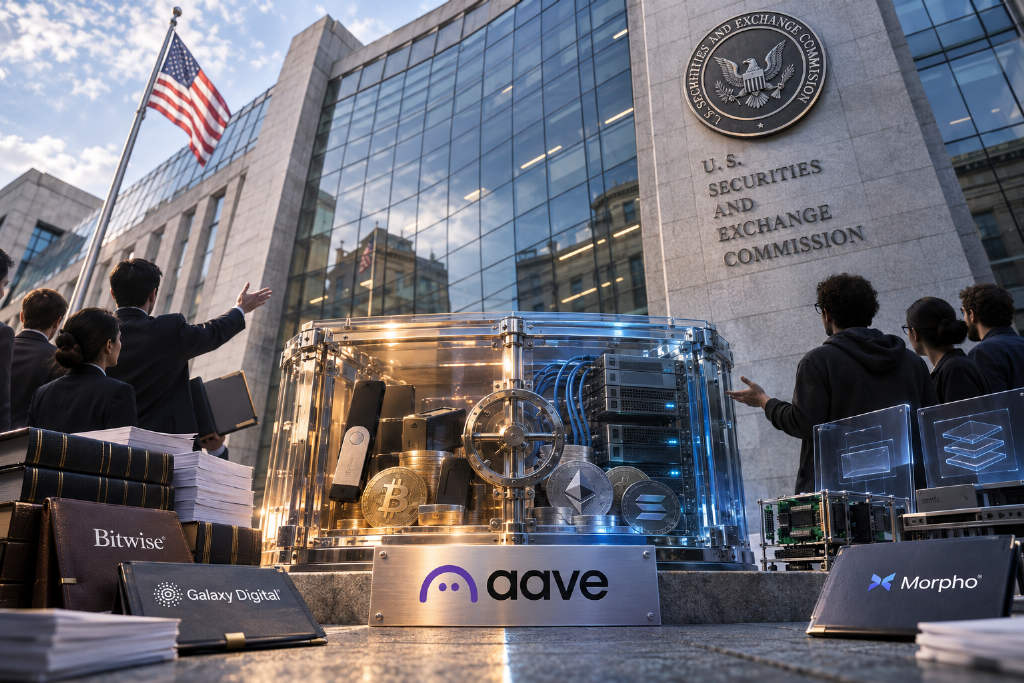
A policy split has emerged inside the DeFi sector over how the U.S. Securities and Exchange Commission should assess crypto vaults. Crypto Council for Innovation, together with Bitwise, Galaxy Digital and Morpho, previously sent the SEC a 238-page report laying out a framework for deciding when a crypto vault should be treated as a security. In that filing, the degree of control and discretion exercised by a human manager over a vault’s investment strategy was presented as an important factor.
Aave Labs, Veda Tech Labs and Kamino Foundation responded with a separate legal analysis that pushed back on that approach. Their position is that active human management alone should not trigger securities regulation for a DeFi protocol if users still retain rights to their assets and there is no legally recognized common investment enterprise or issuing entity. Both sides, however, agree on one point: paid investment advice involving securities may still fall under the Investment Advisers Act. The disagreement highlights the difficulty the SEC faces in drawing a line between decentralized finance software and regulated investment products.
A disagreement has opened up in the DeFi sector over whether crypto vaults should fall under U.S. Securities and Exchange Commission oversight.
Crypto Council for Innovation, or CCI, previously joined Bitwise, Galaxy Digital and Morpho in submitting a 238-page report to the SEC. The filing proposed a framework for determining whether a crypto vault should be classified as a security.
Two legal filings take different approaches
Aave Labs, Veda Tech Labs and Kamino Foundation later submitted a separate legal analysis opposing the idea that human management and decision-making authority should serve as the main test for whether a DeFi protocol is subject to securities law.
CCI said the level of control and discretion a human manager has over a vault’s investment strategy is an important factor in deciding whether the product should be treated as a security.
The Aave-backed group argued that even if a vault is actively managed by humans, securities regulation should not automatically apply as long as users retain rights to their assets and there is no legally recognized common investment enterprise or issuing entity.
One area of agreement remains
Both sides agree that paid investment advice involving securities could still be regulated under the Investment Advisers Act.
The split highlights the challenge facing the SEC as it tries to define the boundary between decentralized finance software and regulated investment products.
This article was originally published by Bit.Fan. For more cryptocurrency news and market insights, visit www.bit.fan. Disclaimer:
The market information, project data, and third-party content displayed on this platform are for industry information sharing only and do not constitute any form of investment advice or return commitment.
Cryptocurrency trading carries high risks. Users should fully assess their risk tolerance and make independent decisions. All profits, losses, and legal responsibilities are borne by the users themselves.