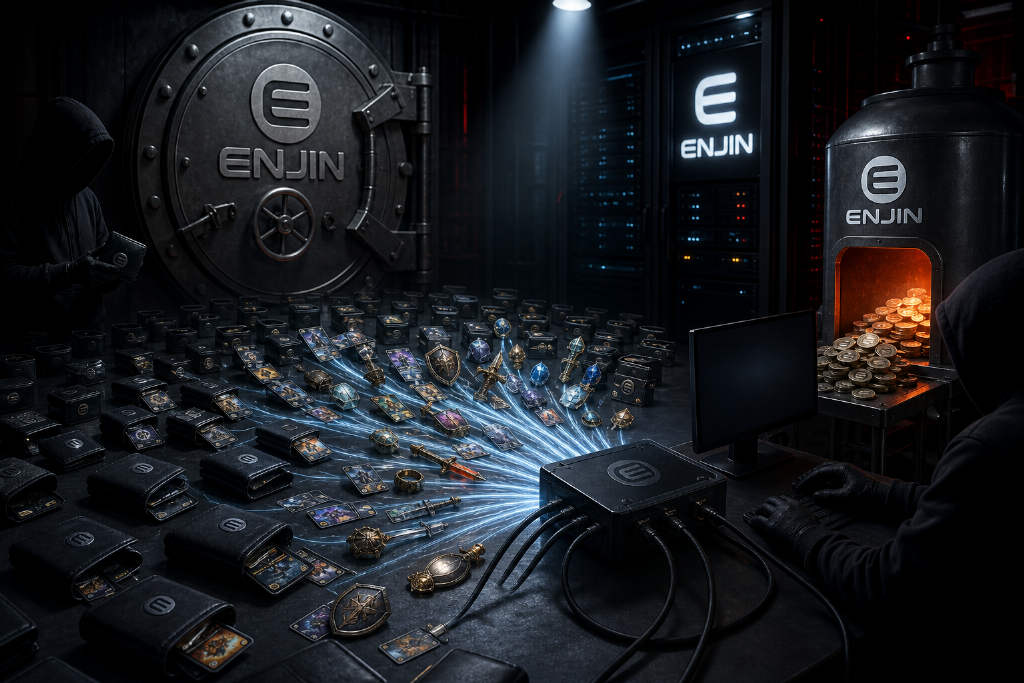
Defimon said it detected an exploit affecting Enjin, a Web3 gaming ecosystem development platform, with losses estimated at roughly $142,000. The issue involved Enjin’s ERC-1155 “Crypto Items,” which route transfers through item-specific adapters. According to Defimon, the attacker registered or used a malicious transfer adapter that bypassed owner approval checks. That allowed an exploit contract to call transferFrom and pull ENJ-backed items from around 52 unrelated holders’ wallets without approval. Defimon said the transfers were genuine TransferSingle events and did not require setApprovalForAll. After taking the items, the attacker called melt() on each stolen asset and redeemed the 500 ENJ backing tied to each item from the platform reserve. The disclosure outlines a mechanism-level failure in the transfer adapter flow rather than a user approval issue, based on the details provided by Defimon in its alert.
Defimon said it detected an exploit on Enjin, the Web3 gaming ecosystem development platform, with losses estimated at about $142,000.
According to the alert, Enjin’s ERC-1155 “Crypto Items” allow each item to route transfers through a dedicated item adapter. The attacker registered or used a malicious transfer adapter that bypassed owner approval checks.
That let the attacker’s exploit contract call transferFrom and extract ENJ-backed items from the wallets of around 52 unrelated holders without approval. Defimon said these were real TransferSingle events and did not require setApprovalForAll.
After that, the attacker called melt() on each stolen item and redeemed the 500 ENJ backing for each asset from the platform reserve.
This article was originally published by Bit.Fan. For more cryptocurrency news and market insights, visit www.bit.fan. Disclaimer:
The market information, project data, and third-party content displayed on this platform are for industry information sharing only and do not constitute any form of investment advice or return commitment.
Cryptocurrency trading carries high risks. Users should fully assess their risk tolerance and make independent decisions. All profits, losses, and legal responsibilities are borne by the users themselves.