
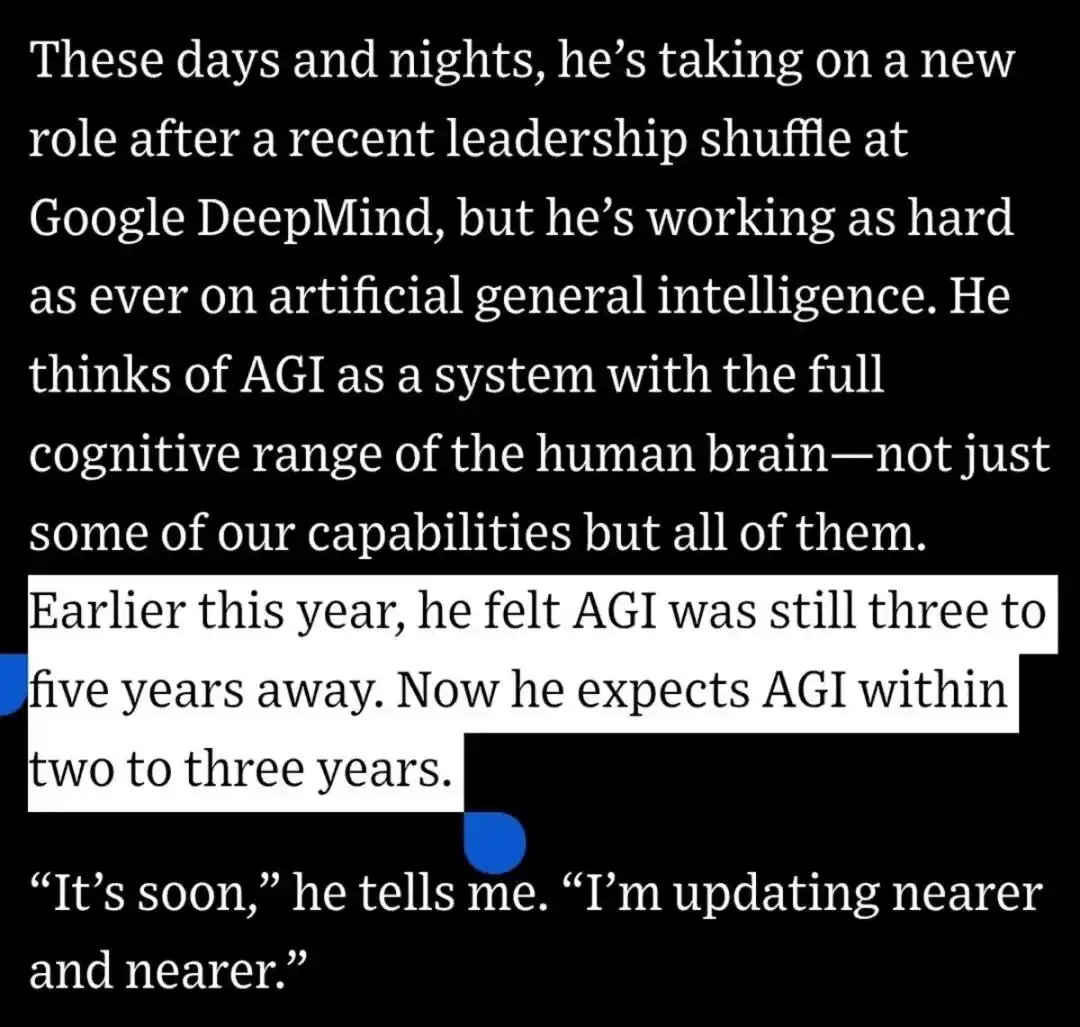
Demis Hassabis, chief executive of Google DeepMind and a Nobel laureate, said artificial general intelligence could arrive within two to three years, a much shorter timeline than the one he had given in earlier public comments.
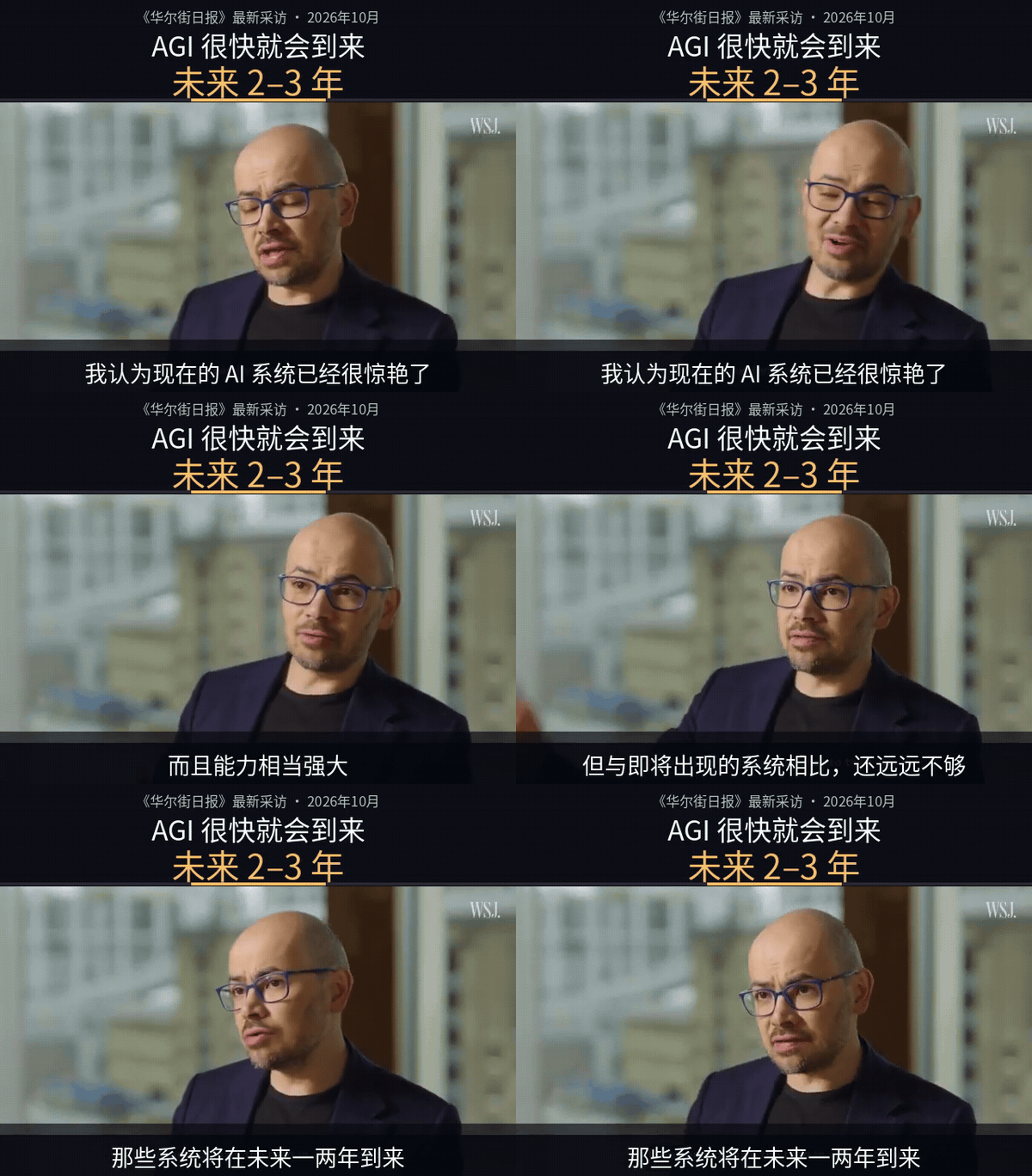
He made the remark in a Wall Street Journal interview. It drew attention in part because Hassabis has often been viewed as one of the more cautious figures in the AI field, and because his own forecasts have shifted quickly over less than two years.
His AGI forecast has moved forward repeatedly
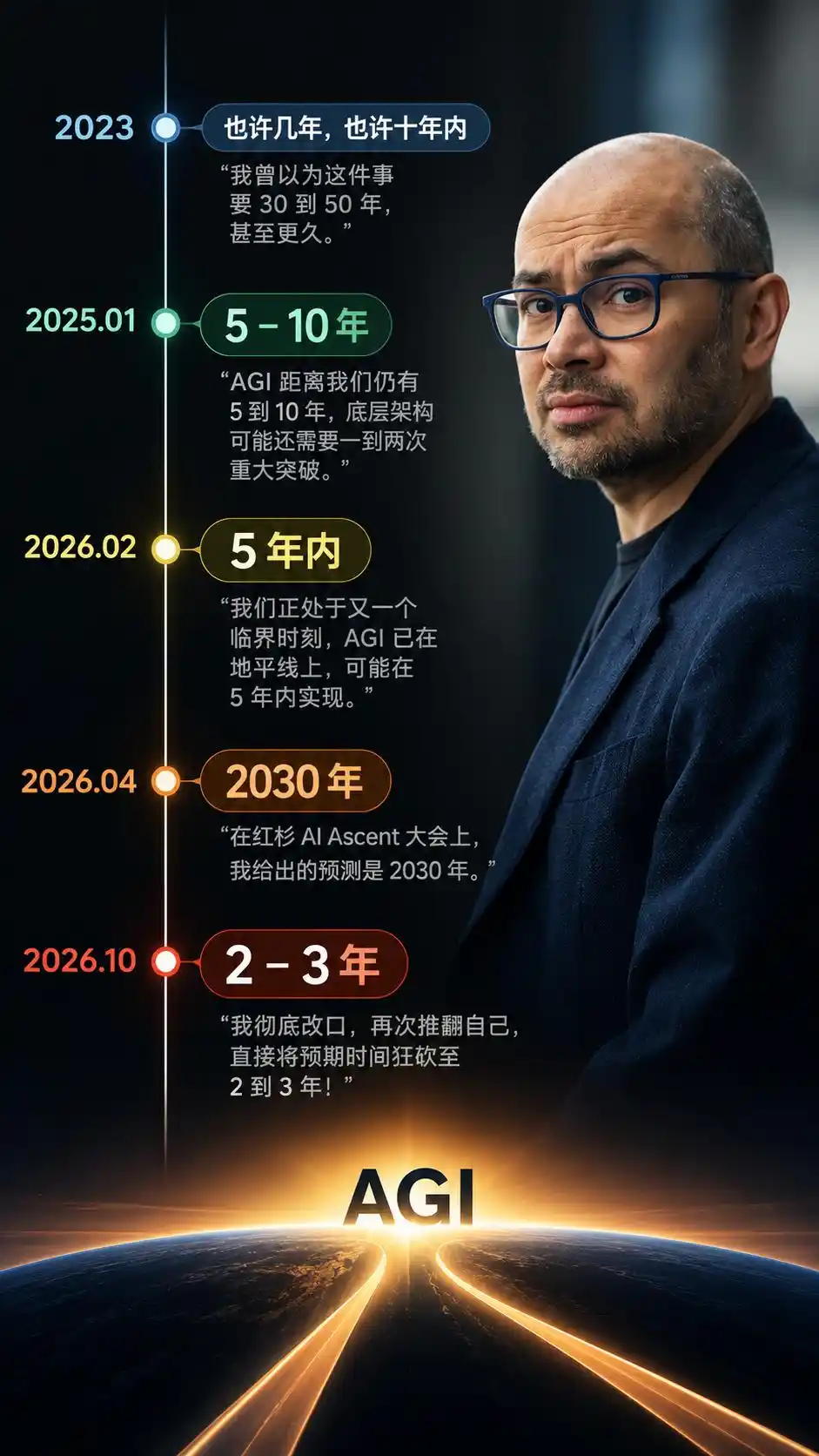
According to the report, Hassabis said in 2023 that AGI might arrive in a few years, or in a decade. He also said that earlier in his career he had thought it could take 30 to 50 years, or even longer.
In January 2025, he still said AGI was five to 10 years away and that the underlying architecture might require one or two major breakthroughs.
By February this year, his language had softened. He said the field was at another critical moment, that AGI was on the horizon, and that it could be achieved within five years.
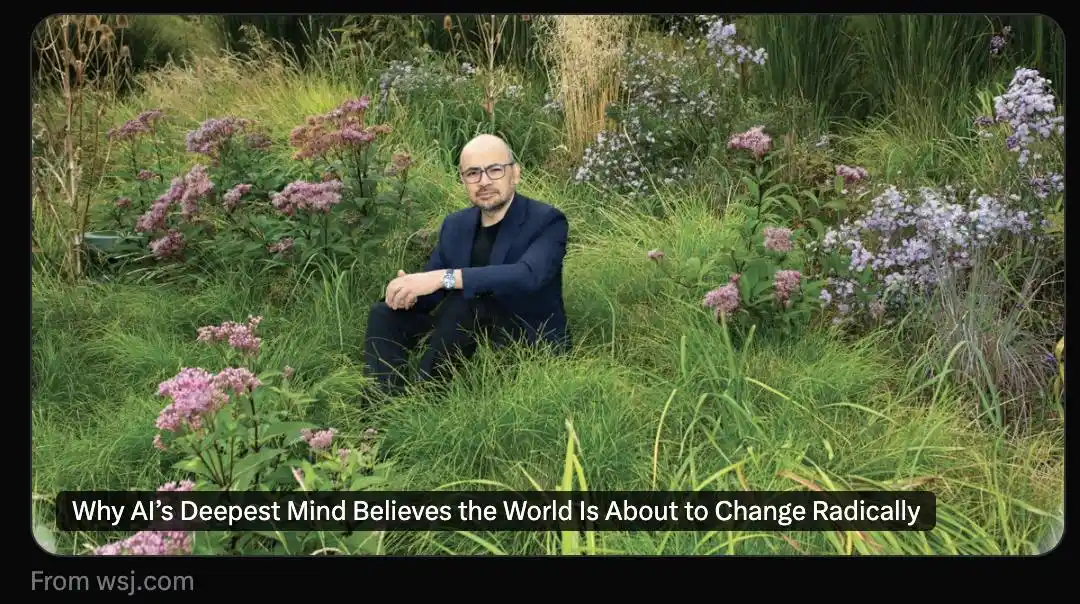
In April, at Sequoia’s AI Ascent conference, he gave 2030 as the timeline.
Now, only months later, he has cut that estimate again, saying AGI could come in two to three years.
Hassabis uses a strict definition of AGI
The article says Hassabis does not use the term loosely. In his view, AGI is not a narrow tool that excels at one task. It would need the full range of human cognitive dimensions, not just some human abilities but all of them, including genuinely original thought.
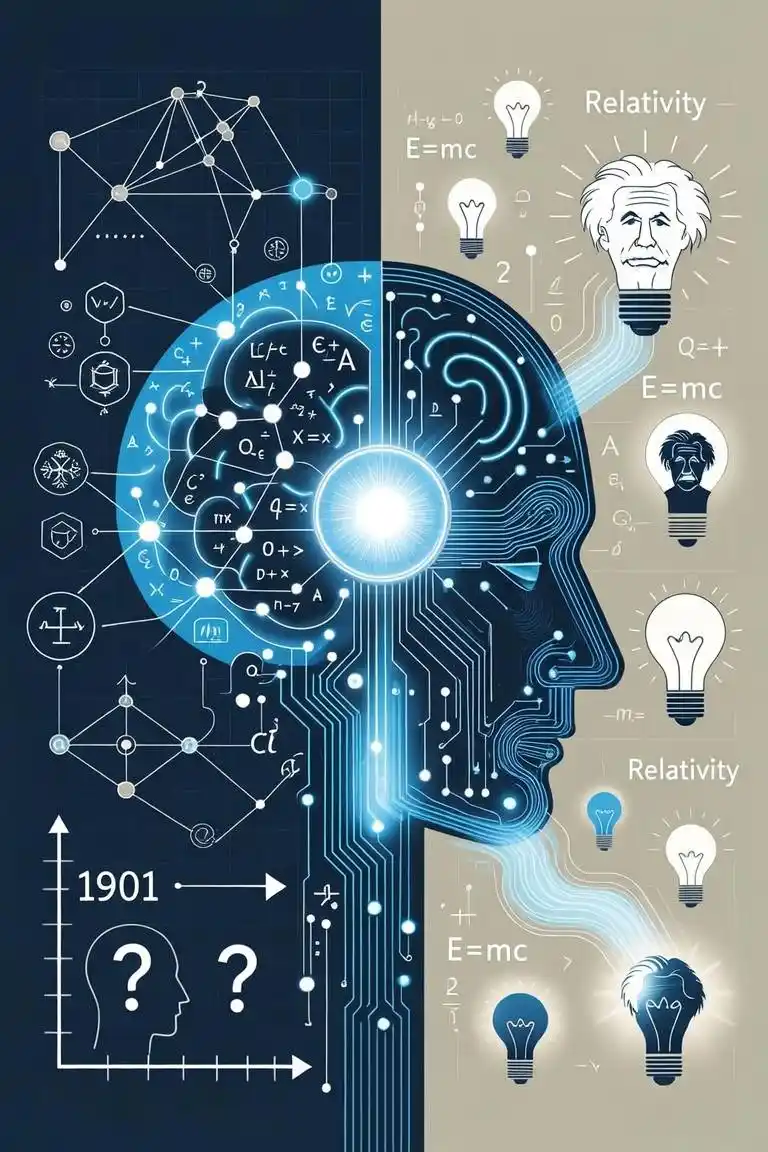
To judge whether AGI has really arrived, he proposed what he called an "Einstein test."
The test asks whether an AI system, given all human knowledge up to 1901, could use reasoning and originality to independently derive the modern physics breakthroughs Einstein published in his 1905 "miracle year."
Hassabis said AI is still years away from independently inventing modern physics.
He says he has seen this pattern before
Hassabis linked his confidence in a compressed timeline to a pattern he says he has witnessed many times: progress looks slow for a long stretch, then capability jumps arrive all at once.
The report revisits his background, from being a chess prodigy at age 4 to a game programming talent at 16 and later a computer science student at Cambridge. He has long believed AI would reshape the world, and he summed up his life’s mission in two steps: solve intelligence, then use intelligence to solve everything else.
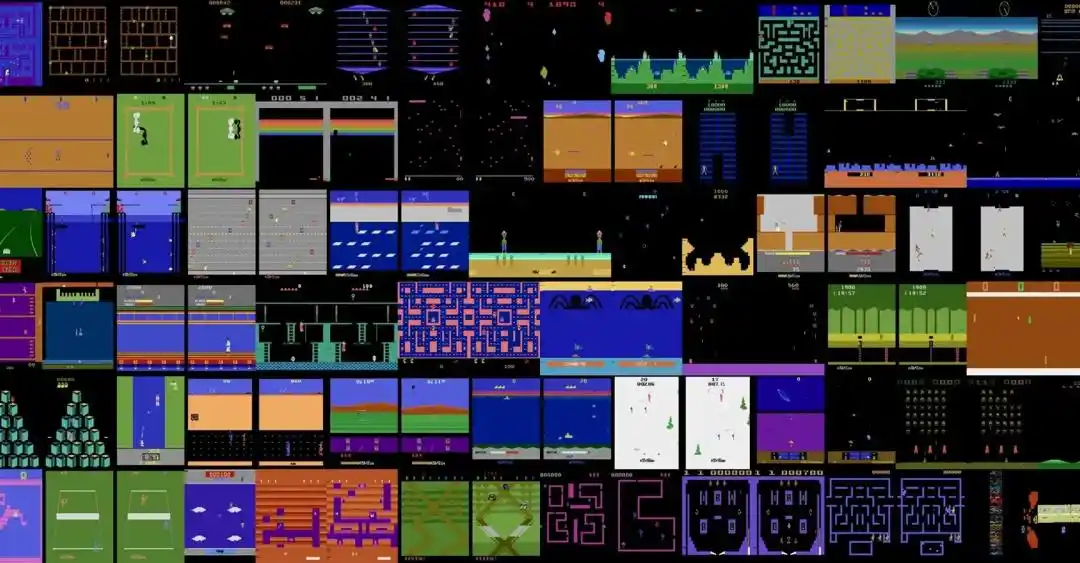
More than a decade ago, he founded DeepMind. Early on, the team trained AI systems on games such as Tetris. For months, the systems performed poorly and often failed to score at all. Then the curve changed: after 100 games the AI still struggled, after 300 it reached top human level, and after 500 it surpassed human players.
The same pattern, the article argues, appeared again in later DeepMind projects. In 2016, AlphaGo stunned the world with move 37 in its win over Lee Sedol. In 2020, AlphaFold solved the 50-year protein-folding problem in biology and predicted the structures of more than 200 million proteins.
To accelerate what he calls the second step, Hassabis also founded AI drug discovery company Isomorphic Labs inside Google. As described in the piece, the aim is not just to treat one disease, but to change the underlying logic of drug development with AI.
Asked about the pace at which AI could save lives, Hassabis said: "I’ve seen this movie before. It always starts slow, slow, slow — and then suddenly, full takeoff."
On AI risk, he rejects both extremes
Outside the lab, debate over AI risk has intensified. The article notes that some researchers have recently offered bleak forecasts, including claims that the probability of human extinction over the next decade is very high.
Speaking at the Dublin international AI summit a week before the interview, Hassabis warned that the industry could face a serious safety incident in about two years if governments and companies do not raise safety standards substantially.
"It’s not all doom, and it’s not all utopia," he said. "I’m in the business of solving problems. If you raise problems and don’t solve them, that’s deeply irresponsible; if you don’t have solutions, you’re not working hard enough."
He compared AI to "thinking sand," saying humanity has essentially found a way to make sand think, and argued that its impact could be comparable to fire or electricity.
He drafted a proposal for pre-release testing of frontier models
To reduce the risks around frontier systems, Hassabis said he drafted a proposal this summer on the responsible development of AI. The proposal calls for an industry-funded body under federal oversight to carry out strict testing before the most advanced models are released.
His argument is that the technology is moving so quickly that trying to impose rigid rules on something that is still not fully understood is likely to produce the wrong kind of regulation, and that bad regulation can be worse than no regulation.
The article says the proposal won public praise from both Sam Altman and Elon Musk.
When a Wall Street Journal reporter asked whether AI company chiefs had a private group chat, Hassabis laughed and said: "No. I mean, I get along with each of them individually, but some of them really don’t get along with each other."

His answer to public fear: cure cancer
Asked how to ease deeper public fears about AI, Hassabis gave a direct answer: cure cancer.
"If we really cure cancer, people will feel the benefits of AI in their own lives," he said. "At the moment, I don’t see any insurmountable barriers. It’s hard, but it’s not impossible."
Google used "singularity" prominently in an official setting
The report also points to Hassabis’ closing remarks at Google I/O 2026, where he said Google’s frontier research and products would help unlock the vast potential of AGI for the benefit of the world.
He said that when future generations look back on this period, they may realize humanity was already standing at the foot of the mountain leading to the singularity. He described it as a profound moment in human history, one in which the technology could multiply human intelligence and creativity, open a new golden age of scientific discovery and progress, and improve life for people across the world.
According to the article, this was the first time Google had used the term "singularity" so prominently in an official context.
If AGI arrives in two or three years, he wants to study the next dimension of physics
The piece ends with a portrait of Hassabis’ working life. At 50, it says, he has given up much of his sleep to the effort. He no longer reads for leisure, the last TV series he watched was Chernobyl before the pandemic, and he relies on red tea to reach a flow state at 3 a.m.
At the end of the interview, the reporter asked him to imagine a scene two or three years from now, after AGI has arrived: he walks into an attic before dawn with a cup of Yorkshire tea. What would he be thinking about?
Hassabis answered: "I’d want to use AGI to understand the nature of reality. I hope that by then I’m sitting with my AGI system and a few great human scientists, trying to derive the next dimension of physics. That would probably be the first thing I’d do."
He then added: "But that would only be the first thing. We still have far too much work to do. Even if I got all my nights back for thinking, there still wouldn’t be enough time."



