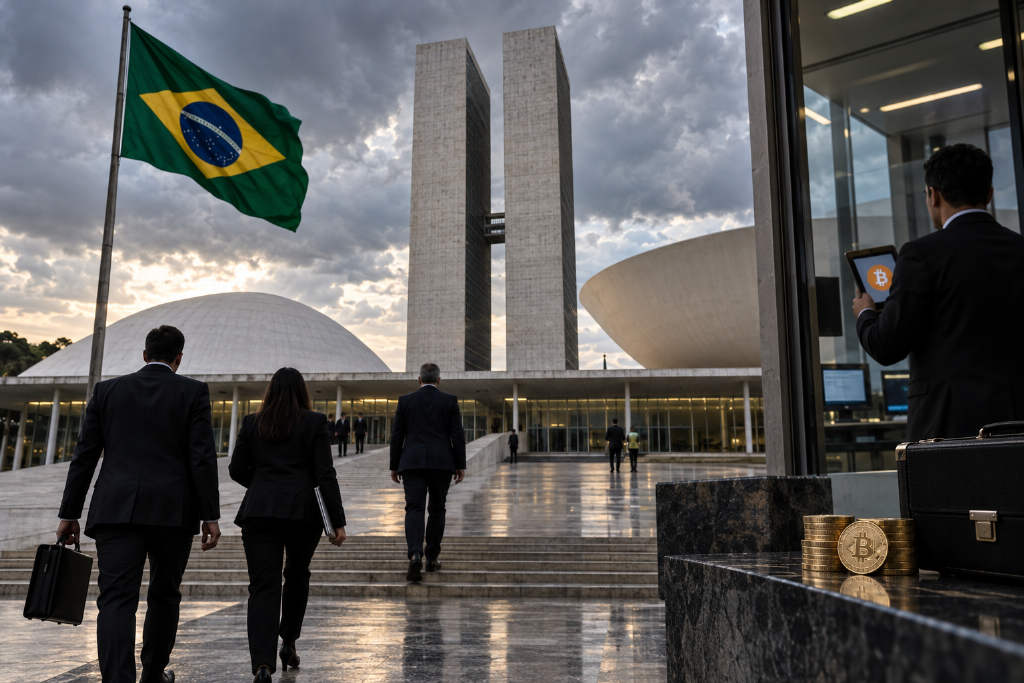
Brazil2026-10-04 05:57:06Brazil election outcome may shape crypto policy as vote nearsBrazil’s presidential election, scheduled for Oct. 4, could influence the direction of crypto policy in what the report described as the world’s top country for crypto adoption. The race pits incumbent President Luiz Inacio Lula da Silva, referred to in the source as Lula, against Flavio Bolsonaro, son of a former president. According to Bitcoin.com News, a Lula victory could bring tighter regulation and stricter compliance requirements for the crypto sector. The report said Brazil’s central bank has already stepped up oversight of exchanges, and a tax on stablecoin transactions, previously put on hold because of the election, could move forward again. By contrast, Flavio Bolsonaro’s position on crypto remains unclear. The report said there is no record showing that he has publicly mentioned cryptocurrencies. It also noted that he had previously defended a person linked to the "Bitcoin Pharaoh" pyramid scheme. The election result is being watched for its potential impact on the country’s next phase of crypto rulemaking.20
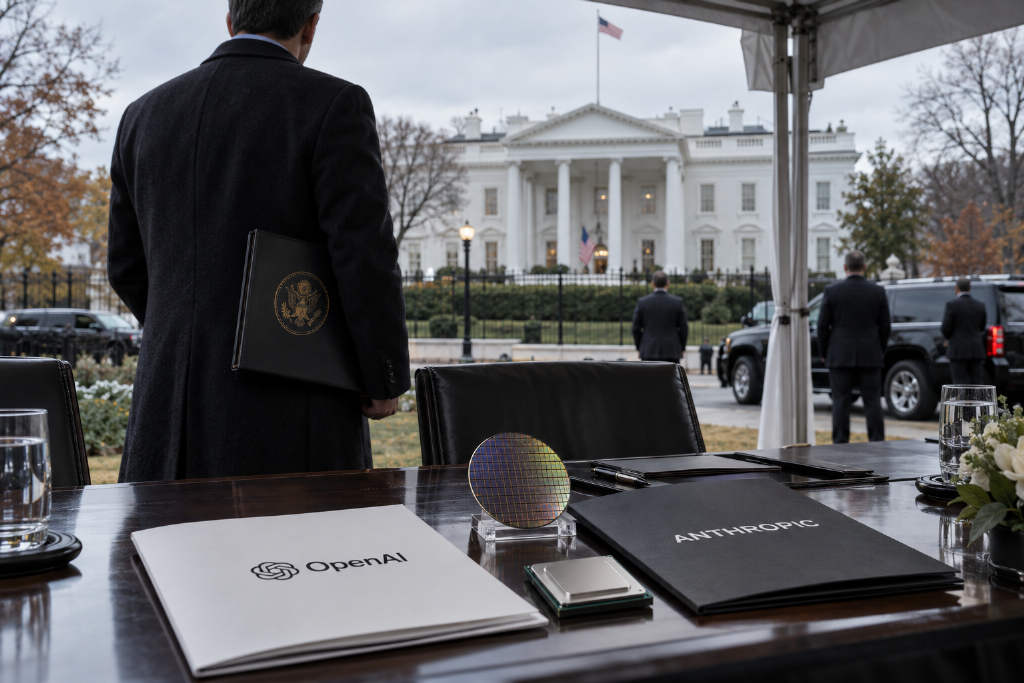
Donald Trump2026-10-04 05:15:37Trump says the U.S. government could possibly take stakes in OpenAI and AnthropicU.S. President Donald Trump said in a Time interview that Washington could "maybe" take stakes in OpenAI and Anthropic, echoing the structure he used to describe the government’s Intel deal. The remark came after Anthropic CEO Dario Amodei met Trump at the White House for a dinner that reportedly lasted more than two hours. In the same interview, Trump praised Amodei, rejected the idea of nationalizing leading AI labs, and argued against ex-ante regulation, saying the guardrails should come from the Department of Justice and the FBI after problems emerge. The report also revisits the Intel transaction Trump cited as a model. According to the article, the U.S. government subscribed to about 433 million newly issued Intel shares at $20.47 each in August 2025, taking roughly 9.9% for $8.9 billion by converting previously approved but undisbursed CHIPS Act subsidies and Secure Enclave funding into equity. BlockTempo then contrasts that structure with Anthropic’s much larger scale, citing Bloomberg’s report that the company is targeting a valuation of about $2 trillion and up to $100 billion in fundraising ahead of a possible Thanksgiving listing. The article says any similar arrangement would raise questions about leverage, valuation, public opinion, and the line between regulator and shareholder.40
SEC2026-10-02 23:19:00Atkins says more SEC crypto rule proposals are on the wayAtkins said the custody provisions in the Investment Advisers Act and the Investment Company Act were written before the internet existed, leaving a gap when new asset types come to market and custody support trails by months. He said the U.S. Securities and Exchange Commission’s custody rule proposal is meant to address that gap. Atkins also outlined the SEC’s crypto-related regulatory agenda during the current term. The list he cited includes ending what he described as regulation by enforcement, setting out arrangements tied to tokenized securities, proposing a Regulation Crypto Assets issuance framework, and introducing an "innovation exemption." He added that more regulatory proposals are still in the pipeline.20
SEC2026-10-02 13:22:19Peirce’s final SEC challenge centers on privacy, surveillance and crypto rulesCoinDesk published an opinion piece by Blockchain Association policy associate Will Schwartz arguing that Hester Peirce’s final day as a U.S. Securities and Exchange Commission commissioner leaves behind a broader policy challenge for the country. In the article, Schwartz says Peirce spent more than eight years at the SEC pushing back when the agency relied on enforcement instead of writing rules the digital asset industry could follow, and recalls her earlier proposal for a token safe harbor as well as her leadership of the Crypto Task Force. The piece focuses heavily on remarks Peirce gave at SIFMA’s Digital Assets Conference on Sept. 23, where she said society stands at a crossroads. One path, as described in the article, is defined by dragnet surveillance, the datafication of daily life and cybersecurity failures that expose sensitive information. The other path would allow Americans to show they are complying with the law without surrendering unnecessary personal data. Schwartz argues that privacy-enhancing technologies already exist, including zero-knowledge proofs and verifiable credentials, and says blockchain-based systems could support both lawful oversight and stronger consumer privacy. He quotes Peirce as saying the missing piece is a regulatory framework that would allow and encourage adoption of those tools.20
Aave2026-10-02 11:10:07Aave founder Stani criticizes European regulators over proposed limits on DeFi accessAave founder Stani Kulechov said he was disappointed by responses from the European Central Bank and the European Banking Authority to the MiCA consultation. According to his post, the regulators not only backed a ban on stablecoin yield payments, but also suggested restricting how crypto-asset service providers, or CASPs, can give users access to DeFi, including yield protocols tied to stablecoins not authorized under MiCA. He said the proposals did not clearly explain how such rules would be enforced. Kulechov also said the proposals would use so-called appropriateness tests to narrow the group of users allowed to access DeFi, while also considering a certification regime for DeFi lending protocols. In his view, letting regulators decide which protocols are suitable for European users could push DeFi toward more closed ecosystems and weaken the liquidity and network effects of open financial networks. He added that excessive restrictions could raise barriers to innovation and slow the development of open, transparent, and auditable financial infrastructure. Kulechov said stablecoins, DeFi, and tokenized securities can reduce friction in financial services, improve transparency, and expand access to financial opportunities, and called on European regulators to put users and their interests at the center of the framework.20
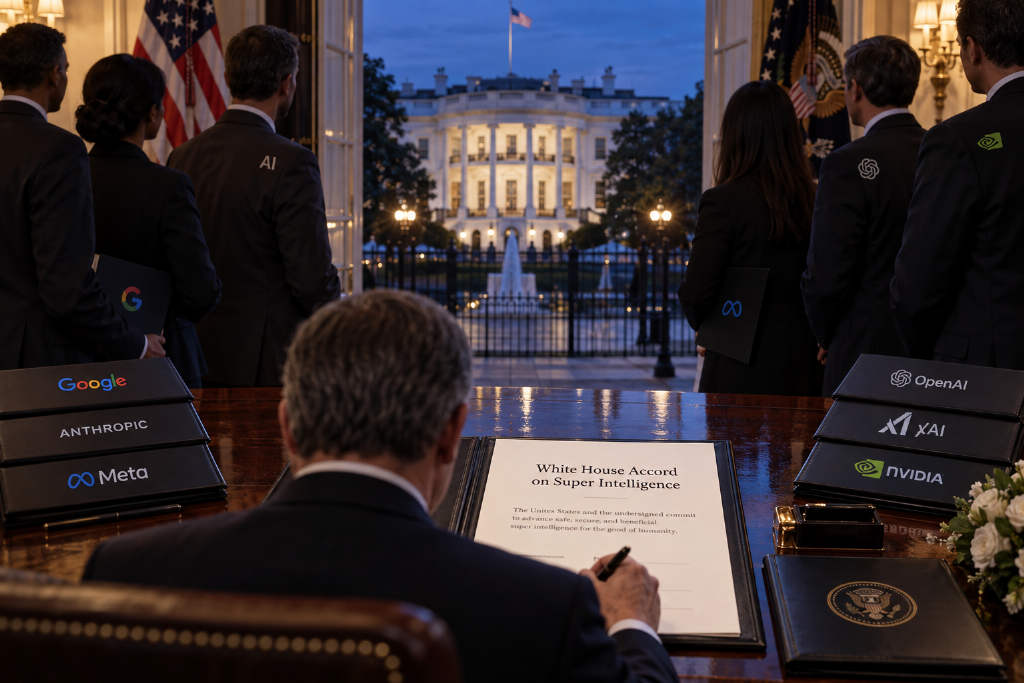
Donald Trump2026-10-01 01:31:42Trump and six AI companies sign White House superintelligence accord, but the document contains a typoU.S. President Donald Trump signed the White House Accord on Super Intelligence with leaders from Google, Anthropic, Meta, OpenAI, xAI, and Nvidia, setting out a voluntary framework for companies developing frontier AI models. The document calls for internal safety controls, empowered internal safety teams, independent external review, and board-level oversight. It also says participating companies should meet regularly to develop shared safety standards and best practices, while leaving open the possibility that the framework could later be turned into law or formal regulation. Trump described the accord as "morally binding" and likened it to an AI "constitution," signaling a preference for industry-led self-regulation at this stage rather than immediate across-the-board mandatory rules. Nvidia CEO Jensen Huang said the companies building the technology should bear primary responsibility for safe development and deployment, and that the future of superintelligence will depend not only on what it can do, but on the trust it earns. The rollout drew extra attention for an error in the official paperwork: under Trump’s signature, "President of the United States" was printed as "President of the Unites States."00
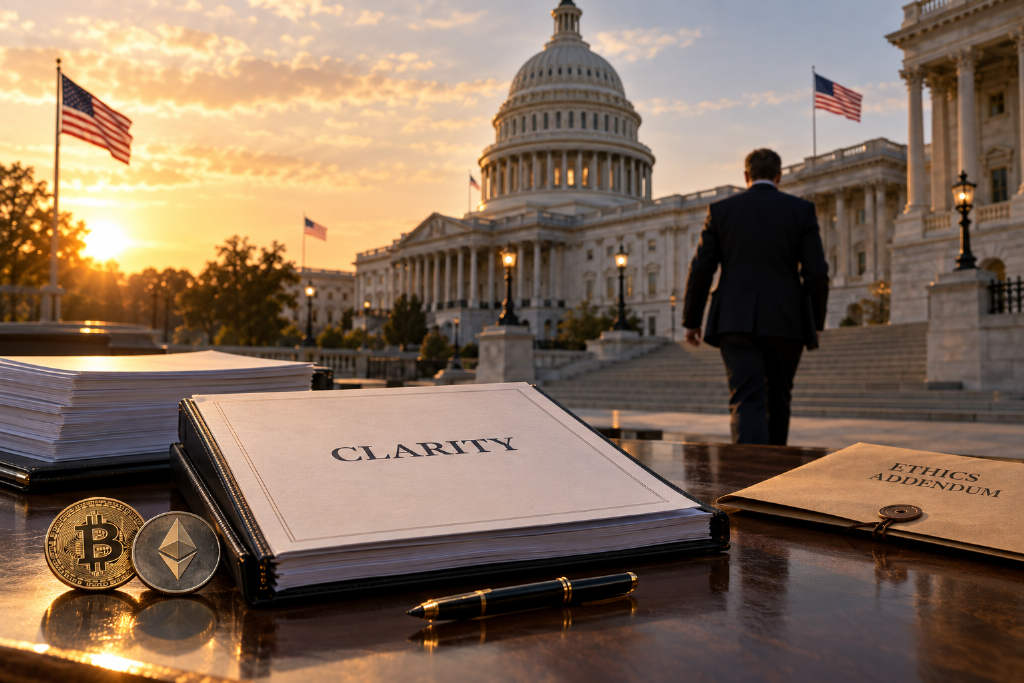
Hunter Biden2026-10-01 01:13:46Hunter Biden says CLARITY Act stalled after Trump rejected ethics provisionHunter Biden said the CLARITY Act stalled because Donald Trump refused to accept an ethics provision tied to the bill. The measure was intended to bring regulatory clarity to the U.S. cryptocurrency industry. The update was carried by Techub, which cited unchainedcrypto.com. No additional details on the provision or the legislative timeline were provided in the source summary. The report focused on Biden’s attribution of the setback and the bill’s stated purpose for the crypto sector.00
China2026-10-01 00:15:31China tightens rules on AI companion relationships to curb emotional dependenceChina has introduced strict rules targeting AI companion relationships, with the stated aim of curbing users’ emotional dependence on artificial intelligence. Techub News, citing Crypto Briefing, said the move focuses on the risks tied to increasingly intimate human-AI interactions. The report adds that the new rules could serve as a reference point for AI oversight beyond China. It may also shape how other jurisdictions weigh technological innovation against mental health protections as AI products become more embedded in daily life. No further details on the specific provisions were disclosed in the news digest provided.00