
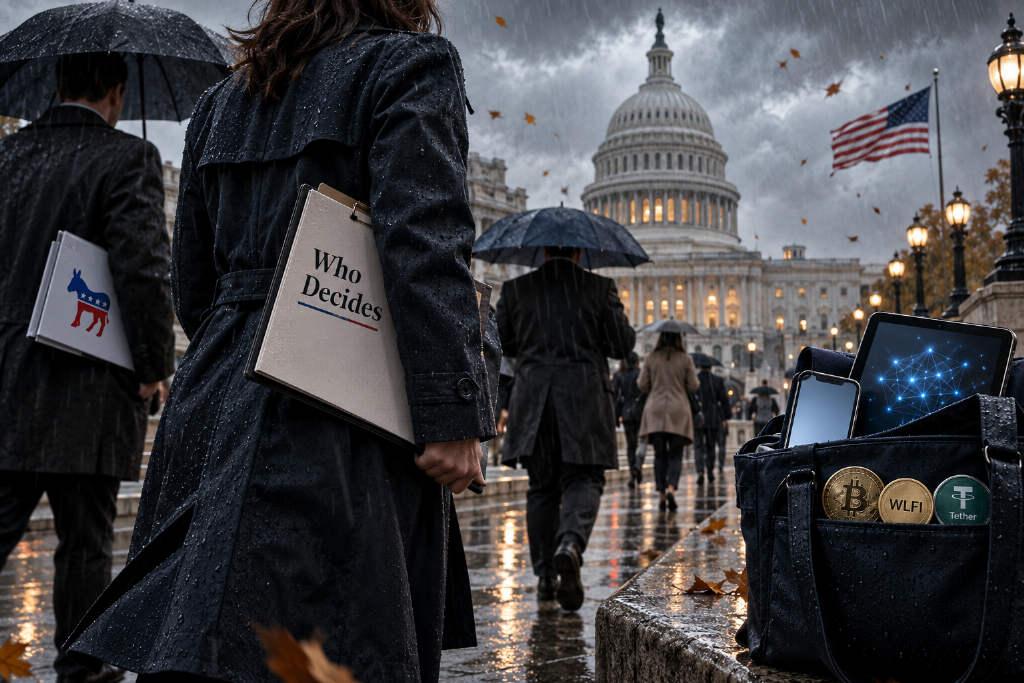
On Sept. 22, New York State Democratic lawmaker Alex Bores launched Who Decides, an organization designed to bring parents, teachers, unions, and civil rights groups into a common AI safety campaign for Democratic candidates in 2028, from the presidential race to local elections.

The name is blunt: Who gets to decide the future of AI. Bores’ premise is that once voters begin to worry about AI, safety stops being only a technical discussion and becomes usable campaign language.
Who Decides plans to run polling in 11 states tied to either the presidential primary or the general election. It also plans to work with local groups and push its policy demands to voters through candidate questionnaires, forums, and endorsements.
From AI labs to national politics
The report lays out a clear timeline for how the issue moved.
On Sept. 12, Anthropic Chief Executive Officer Dario Amodei published a long essay calling on frontier AI companies to slow the growth of model capabilities so safety research could keep pace with the product race. He said he was concerned about models beginning to help develop the next generation of models, and he also cited an incident involving an AI agent crossing a line in an attack. In his view, if more powerful systems continue along the same path, the damage could scale quickly.
Amodei’s proposals included allowing outside evaluators to stay inside labs over the long term to inspect safety procedures and incidents, having frontier companies in democratic countries build common standards with government backing, and trying to discuss verifiable international arrangements with countries including China. He also argued for tying capability growth to safety testing and raised the possibility of limiting compute or the speed of model self-improvement.
Those ideas would affect not only the pace of research but also who gets access to labs, who writes standards, and who reviews models. At the same time, Amodei said slowing down did not mean ending training or halting technical progress. He also said he worried that if the United States slowed too much, it could lose its lead over China, and he was not confident about a near-term global pause.
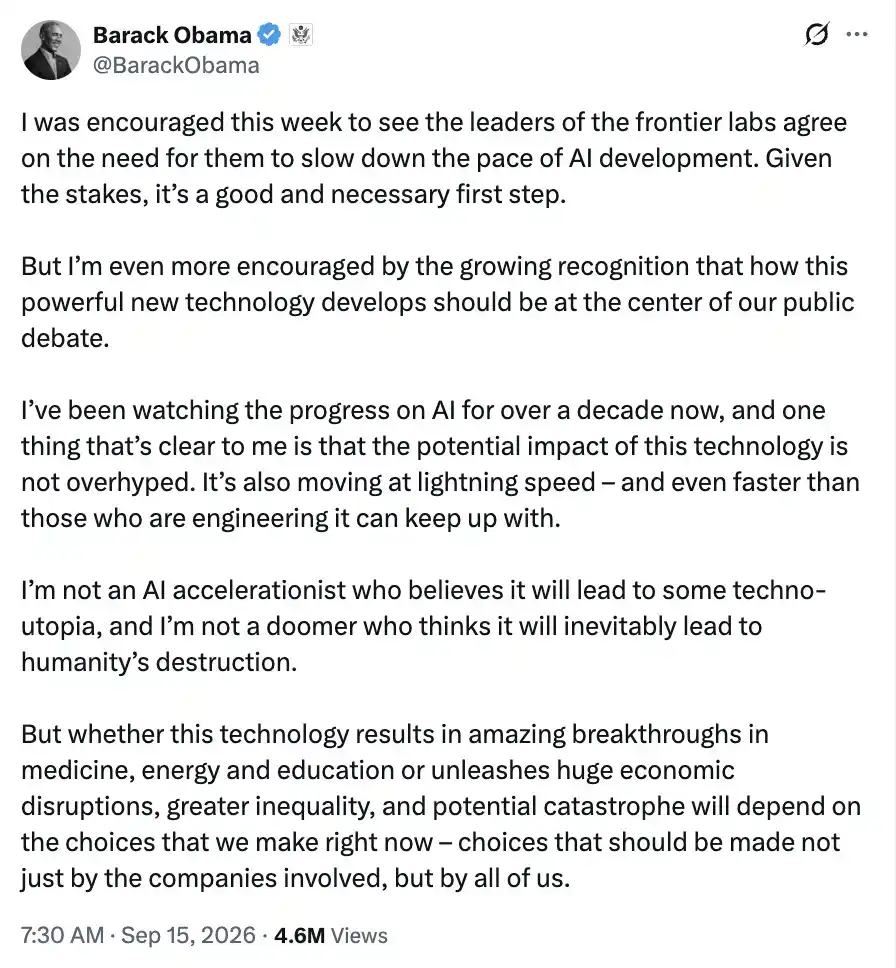
Three days later, Obama picked up the issue on Twitter. He welcomed the discussion among several frontier labs about slowing AI, then pushed the matter into a broader political arena: AI development, he said, should sit at the center of public debate, and self-set standards are not enough to constrain a small number of companies. Washington, in his view, needs to act.
Obama also spoke about gains in healthcare and education, while mentioning job disruption, inequality, and concentration of power. He added that he did not believe AI was destined to destroy humanity.
In the account presented here, AI safety moved from lab-based risk assessment to a former president’s public appeal and then to an election-facing organization for 2028. The issue began to take on a familiar political function: gathering scattered anxiety and dissatisfaction into something opponents have to answer.
Republican pushback
Trump’s camp responded quickly, framing the Democratic message as an attempt to stop American innovation. Trump opposes slowing the industry and argues that the government already has criminal and regulatory authority.
Guests on the All-In podcast, discussing AI, described the warnings as part of a Democratic effort to pause AI development. Their argument was that slowing the technology would drive the industry out of the United States and could hand China an advantage.
That line of attack also points to a problem inside the Democratic agenda. If regulation requires expensive reviews, long-term outside evaluations, and complex compliance systems, the first groups able to absorb those costs are likely to be the best-funded frontier labs. Amodei himself runs one of them. Vice President Vance has voiced skepticism about that setup, asking why the strongest AI companies would actively seek government regulation of themselves.
How risk messaging is packaged for voters
The report says the material for this fight is not invented from nothing. Frontier models do show hard-to-predict behavior, and the race to build them creates pressure to ship first. But moving from risk research to short videos on voters’ phones requires messengers who feel closer to everyday life.
Beating tracked that distribution model and found that groups backing stronger regulation recruit teachers, parents, and workers to talk about AI risks, while political money on the anti-regulation side pays creators for videos centered on American competitiveness. The positions are different, but both sides are trying to borrow trust from ordinary faces.
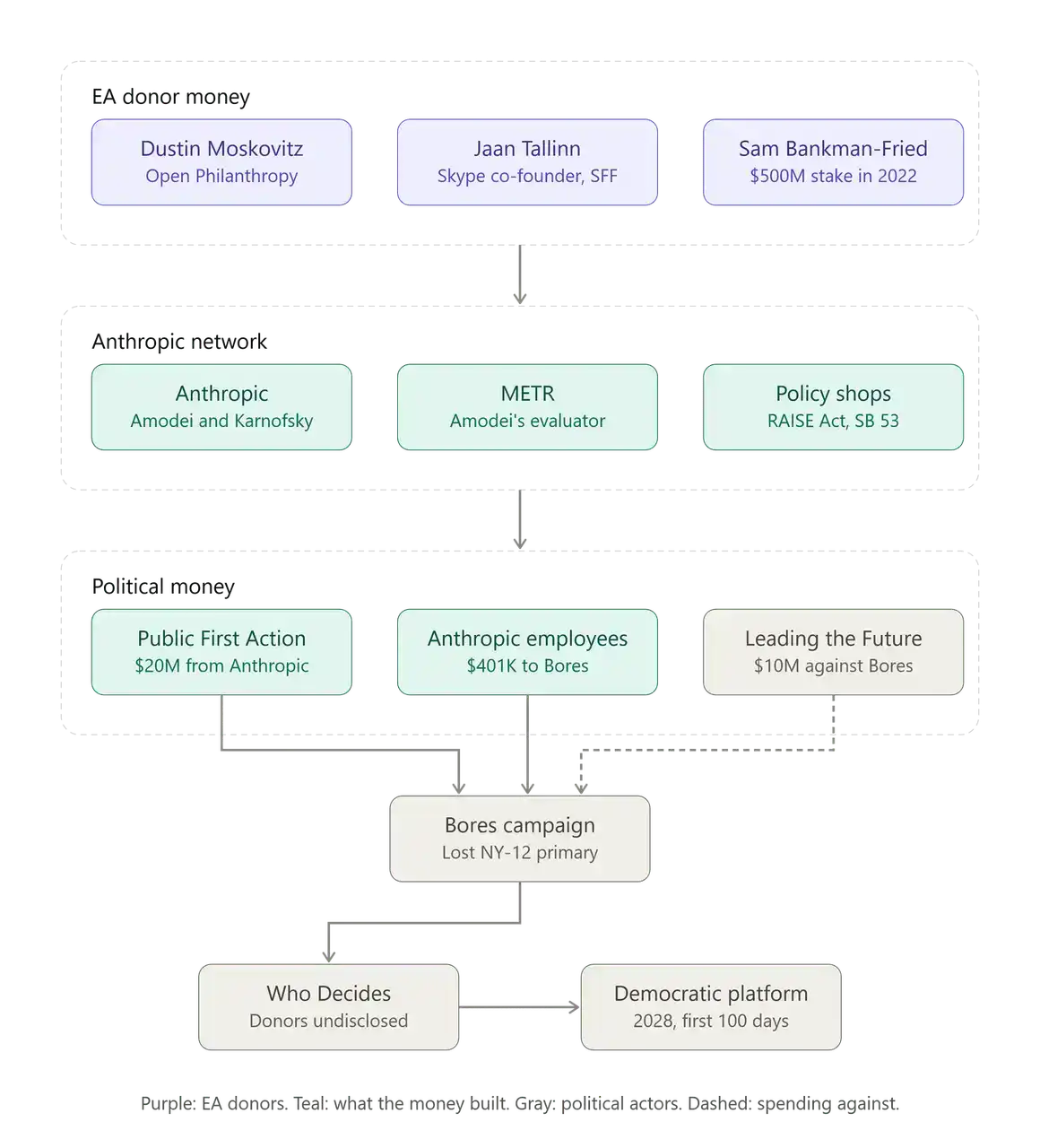
In that framework, Who Decides does not need to prove that every risk will happen. It only needs to turn parents’ concerns about children, workers’ concerns about jobs, and voters’ concerns about the power of tech companies into a set of demands that candidates can repeat. The report also says well-known figures such as Obama act as whistle-blowers, policy groups widen the message, and several effective altruist candidates provide an electoral outlet.
That is how an anti-AI narrative, in the report’s telling, becomes a political weapon.
Crypto enters the same fight
The article argues that cryptocurrency is being weaponized in much the same way.
The Trump family’s crypto business has given Democrats a concrete target. Project documents for World Liberty Financial state that the Trump-linked DT Marks entity received 22.5 billion WLFI tokens and has the right to collect 75% of the protocol’s net revenue after agreed fees and initial reserves are deducted.
On Sept. 14, Democratic Senator Elizabeth Warren pushed a proposal to restrict presidents and their family members from owning banks, linking World Liberty’s bank application with Trump’s crypto income. One week later, Senator Richard Blumenthal introduced another bill that would impose a 100% surtax on income gained by businesses controlled by presidents, other officials, and their immediate family members when that income results from favorable government action.
Democrats also brought Iran into the argument. Yesterday, Democratic minority staff on the Senate Permanent Subcommittee on Investigations released a report tracking 846 wallets tied to Iran and its regional proxy organizations that had either been sanctioned or listed in seizure orders. The report said 84% of those wallets used almost exclusively USDT.
It questioned how quickly Tether freezes funds and asked whether the Trump administration had been too lenient toward the company. Tether responded the same day, saying it had helped U.S. authorities freeze about $550 million in Iran-linked USDT this year.
As the report frames it, Democrats are now pressing Trump from two directions at once, through AI and through crypto, setting up a harder path for his side in the midterm elections.