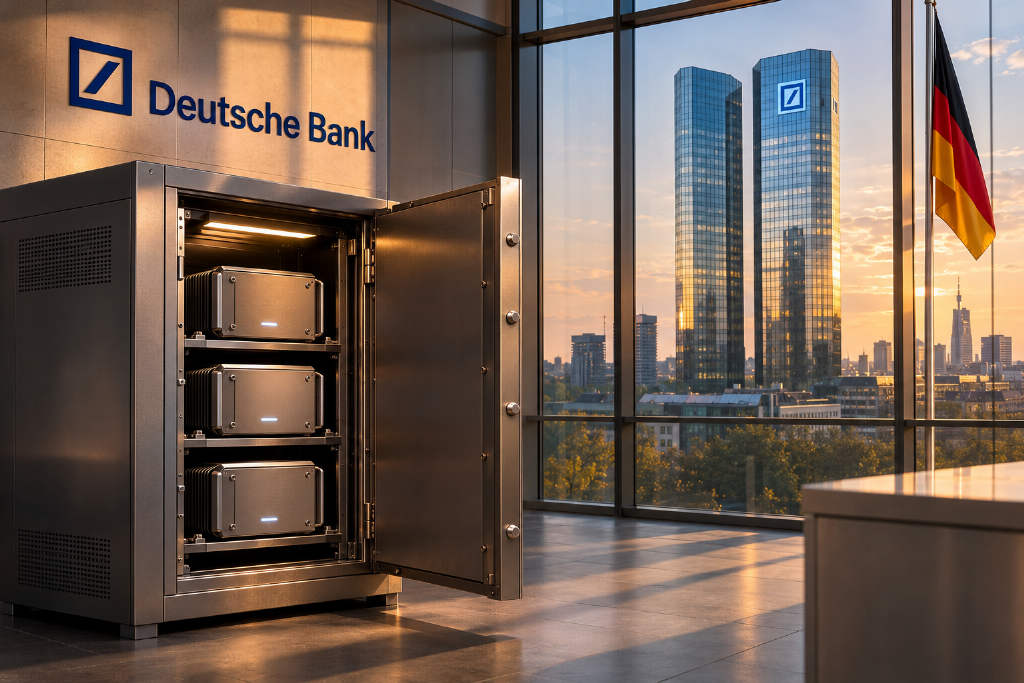
Deutsche Bank has launched a digital asset custody service for institutional and corporate clients in Germany, according to PANews, which cited unfolded. The service operates under BaFin/MiCA authorization and supports BTC, ETH and selected stablecoins, including USDC. The bank uses a multi-layer control system to manage private keys. Its current offering is limited in scope: retail users are excluded, deposits are not guaranteed, and it has not confirmed whether trading functions are available. Deutsche Bank plans to expand the service to Asia in 2027 and introduce tokenization services. The custody rollout is aligned with the bank’s target of achieving 8% compound annual growth in its corporate banking business by 2028. The report did not provide further details on the service’s transaction capabilities or the specific stablecoins supported beyond USDC. The service is currently aimed at German institutional and corporate customers rather than the retail market.
Deutsche Bank has kicked off a digital asset custody service for institutional and corporate clients in Germany, PANews reported, citing unfolded. The platform runs under BaFin and MiCA authorization and currently supports BTC, ETH, and a handful of stablecoins, including USDC.
The bank relies on a multi-layer control system for managing cryptographic keys. It aims to push the service into Asia in 2027 and add tokenization offerings to the mix. This rollout tracks with Deutsche Bank’s goal of hitting 8% compound annual growth in corporate banking by 2028.
For now, the product is tightly ring-fenced. Retail users are shut out, there is no deposit protection, and any trading functionality has yet to be confirmed.
This article was originally published by Bit.Fan. For more cryptocurrency news and market insights, visit www.bit.fan. Disclaimer:
The market information, project data, and third-party content displayed on this platform are for industry information sharing only and do not constitute any form of investment advice or return commitment.
Cryptocurrency trading carries high risks. Users should fully assess their risk tolerance and make independent decisions. All profits, losses, and legal responsibilities are borne by the users themselves.